الخميس، 6 مايو 2021

Subway Stations Reopen and Historic Streetcars Return May 15

Subway Stations Reopen and Historic Streetcars Return May 15
By Shalon Rogers

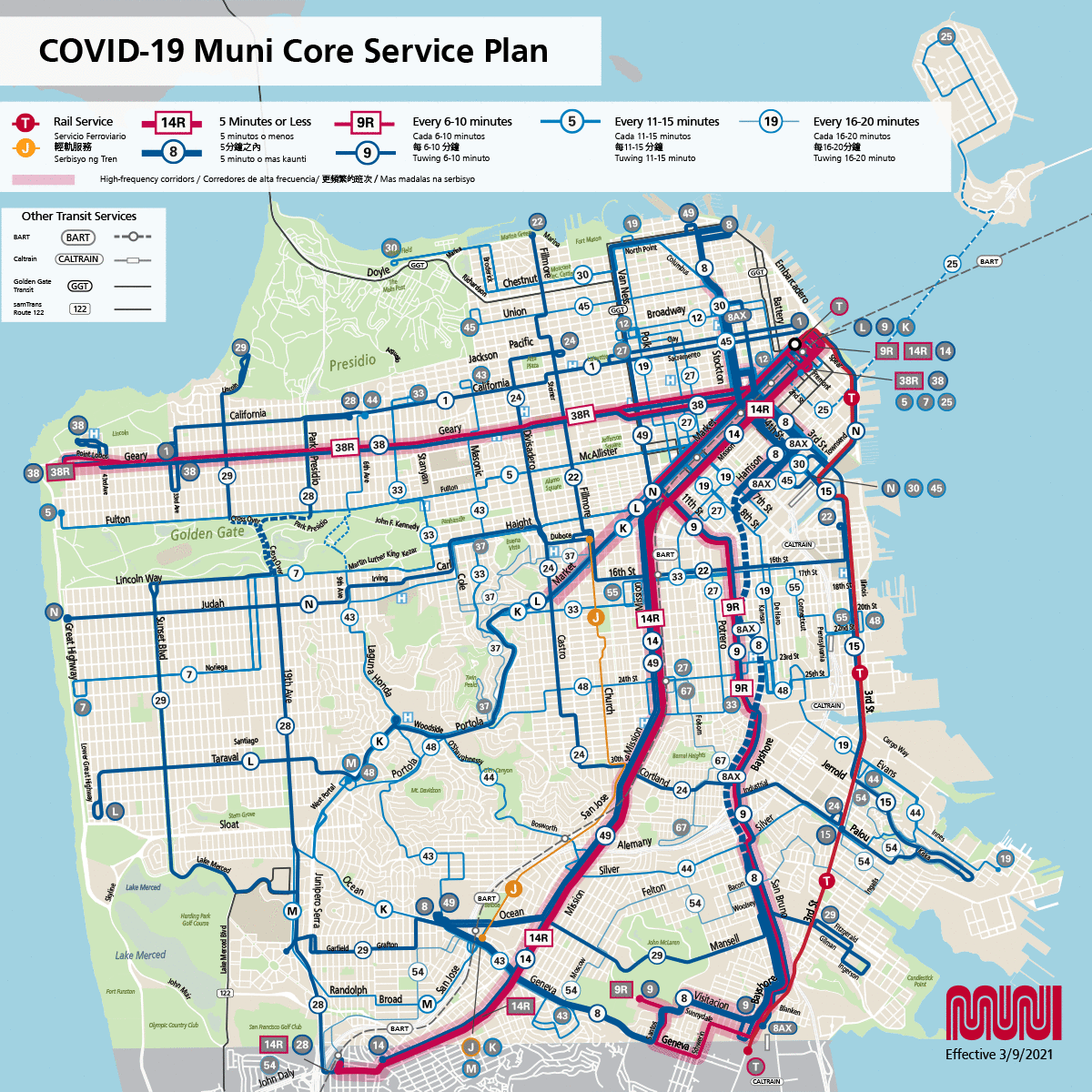
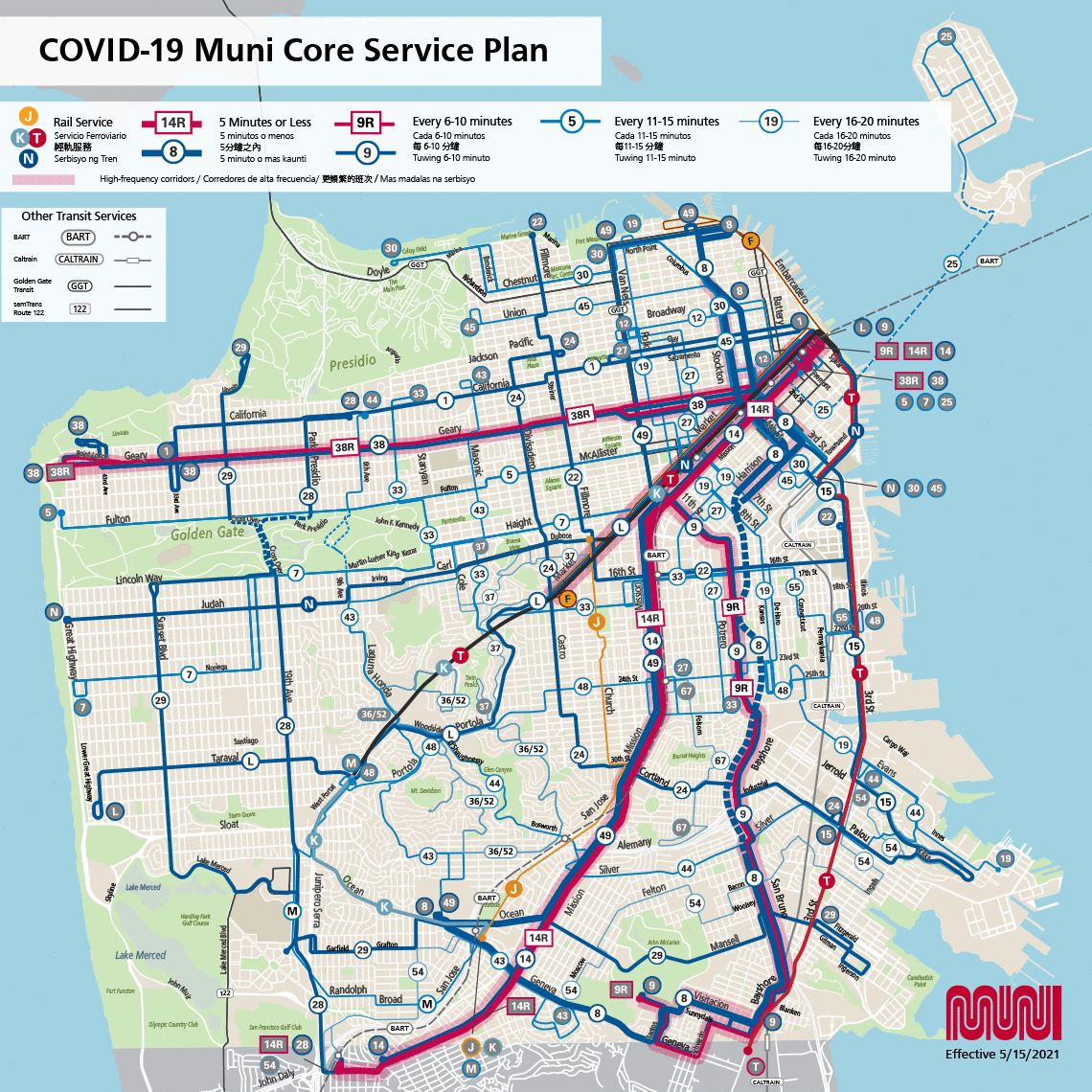
COVID-19 Muni Core Service Plan Map

PDF version

The COVID-19 Muni Core Service plan, effective May 15, showing all Muni service including new and returning Muni lines.

The SFMTA will reopen all of its Muni Metro subway stations on Saturday, May 15, with the return of rail service on the N Judah and KT Ingleside-Third routes.  To continue maximizing Muni access citywide, we’re also adding a new bus route: the 36/52 Special,  serving the hilltop neighborhoods of Forest Hill, Miraloma and Sunnyside. In addition, we are excited to bring back San Francisco’s historic streetcar route--the F Market & Wharves.

N Judah Metro rail service will resume its full route between Ocean Beach and 4th and King Street (Caltrain), and the T Third will be extended to West Portal and then continue on, running as the K Ingleside to Balboa Park Station. With the return of rail service to these routes, customers will have faster transit times downtown, as well as to other popular destinations including the Castro, City College, Ocean Beach, Golden Gate Park, Oracle Park, Chase Center, UCSF Parnassus, UCSF Mission Bay and Caltrain.

The J Church will remain a surface-only route from Balboa Park to Church and Market streets. For subway service, customers may transfer at Market Street to any train downtown, or the KT outbound, at the Church Street Station. The L Taraval and M Ocean View buses will continue to operate in lieu of rail service.

After working closely with Castro, mid-Market and Fisherman’s Wharf merchants, the full F Market & Wharves route from Fisherman’s Wharf to Market and Castro will return to service on our beloved, historic streetcars to help support the city’s reopening and return of tourism.

In response to customer feedback for improved service to connect hospitals, grocery stores and vaccination sites in hilly areas, we are also introducing a temporary new combined route--the 36/52 Special. This bus route will serve the hilltop neighborhoods of Forest Hill, Miraloma and Sunnyside in a loop between Forest Hill Station and Glen Park Station.

We continue to work closely with district supervisors, community members and other stakeholders to bring back additional service and modify existing service to serve customers’ needs as the city continues to reopen and recover. Since January 23 of this year, 91% of San Franciscans have been within 2-3 blocks of a Muni stop. And, this includes 100% of residents in San Francisco’s neighborhoods identified in the Muni Service Equity Strategy. By mid-August, SFMTA is aiming to add back additional routes to close service gaps so that 98% of San Franciscans will have access to Muni within 2-3 blocks .
 

Below is the complete list of service changes. Please note that details are subject to change. For the most up to date information with free language assistance and accessibility, please call 311 or (415) 701-4311 or visit the Core Service Plan webpage.

May 15 Muni Service Changes

Service hours for each route are noted below. Owl network service hours are 10 p.m. to 5 a.m. daily. For more information on frequency and hours of service, read more on the COVID-19 Muni Core Service Plan.

F Market & Wharves

  • The historic streetcar will return to service between 17th and Castro streets and Jones and Beach Streets. Service hours:
    • From Castro: Approximately 11 a.m. to 7 p.m. (first trip departing from Castro Station is 10:50 a.m.)
    • From Fisherman’s Wharf: Approximately 12 p.m. to 8 p.m.
  • Use the L Bus or L Owl for local service along Market Street during the hours when the F is not running.  

KT Ingleside-Third: The K Ingleside and T Third will interline as the KT Ingleside-Third, expanding service between Balboa Park and Sunnydale. This route will use the newly reopened Muni Metro subway, serving all stations between West Portal and Embarcadero.

  • Service hours
    • Weekdays: 6 a.m. to 9 p.m.
    • Weekends: 8 a.m. to 9 p.m.
  • Between the hours of Owl service (10 p.m. to 5 a.m.) and rail service, Muni Metro buses will provide service from 9 p.m. to 10 p.m. on weekdays, and 5 a.m. to 8 a.m. and 9 p.m. to 10 p.m. on weekends.
    • The K Bus will run between Balboa Park and West Portal Station from 9pm to 10pm daily.
  • During the weekend, for the hours between Owl service (10 p.m. to 5 a.m.) and rail service, the K Ingleside bus will run between Balboa Park and Embarcadero-Ferry Plaza from 5 a.m. to 8 a.m. and the T Third bus will run between Embarcadero-Ferry Plaza and Sunnydale.

N Judah

  • Rail service will resume for the entire route with two-car trains replacing Metro buses.
  • Service hours
    • Weekdays: 6 a.m. to 9 p.m.
    • Weekends: 8 a.m. to 9 p.m.
  • Muni Metro buses will cover the hours between Owl Service and rail service, running 5 a.m. to 6 a.m. and 9 p.m. to 10 p.m. on weekdays and 5 a.m. to 8 a.m. and 9 p.m. to 10 p.m. on weekends.

K Bus, L Bus and L Owl

  • These lines will no longer serve Forest Hill Station directly. Please visit K Bus,  L Bus and L Owl route pages for more information. 

36/52 Special*

  • Temporary new combined route between Forest Hill Station and Glen Park Station serving the Glen Park, Sunnyside, Midtown Terrace and Miraloma communities. The route will serve Laguna Honda Hospital.
  • The inbound (clockwise) route will include an additional loop on Clarendon.

8 Bayshore

  • The current 8AX Bayshore “A” Express service will become the 8 Bayshore short between City College and Kearny at Pacific. Service for this route ends at 7:30 p.m. daily.
  • The 8 Bayshore long will continue to travel between City College and Fisherman’s Wharf.
  • The 8 Bayshore will return to its pre-pandemic route traveling north on Kearny, instead of Stockton.

Frequency Adjustments 
The following routes will have reduced frequency after 7 p.m. to better match resources with observed ridership demand.

After 7pm only

Routes

Daily from 10 or 12 minutes to 15 minutes

  • J Church (Muni Metro)
  • 15 Bayview-Hunters Point Express
  • 22 Fillmore
  • 28 19th Avenue
  • 29 Sunset
  • 44 O’Shaughnessy

Daily from 15 minutes to 20 minutes

  • M Ocean View Bus
  • 12 Pacific
  • 55 Dogpatch

Daily from 20 minutes to 30 minutes

  • 37 Corbett

Weekday only from 12 minutes to 15 minutes

  • 30 Stockton
  • 43 Masonic
  • 45 Union-Stockton
  • 48 Quintara-24th St

Weekend only from 15 minutes to 20 minutes

  • 48 Quintara-24th St


36/52 Special*

  • Temporary new combined route between Forest Hill Station and Glen Park Station serving the Glen Park, Sunnyside and Miraloma communities. The route will serve Laguna Honda Hospital.
  • The inbound (clockwise) route will include an additional loop on Clarendon.

8 Bayshore

The current 8AX Bayshore “A” Express service will become the 8 Bayshore short between City College and Kearny at Pacific. Service for this route ends at 7:30 p.m. daily. 

  • The 8 Bayshore long will continue to travel between City College and Fisherman’s Wharf.
  • The 8 Bayshore will return to its pre-pandemic route traveling north on Kearny, instead of Stockton.

Frequency Adjustments 
The following routes will have reduced frequency after 7 p.m. to better match resources with observed ridership demand.


Published May 06, 2021 at 05:13PM
https://ift.tt/3nQpXTk

الأربعاء، 5 مايو 2021

The 115-Year History of Streetcars on Market Street

The 115-Year History of Streetcars on Market Street
By Jeremy Menzies

With the F Market & Wharves returning to service on May 15th, here’s a brief look back through the past 115 years of streetcar service along Market Street, our most traveled thoroughfare.

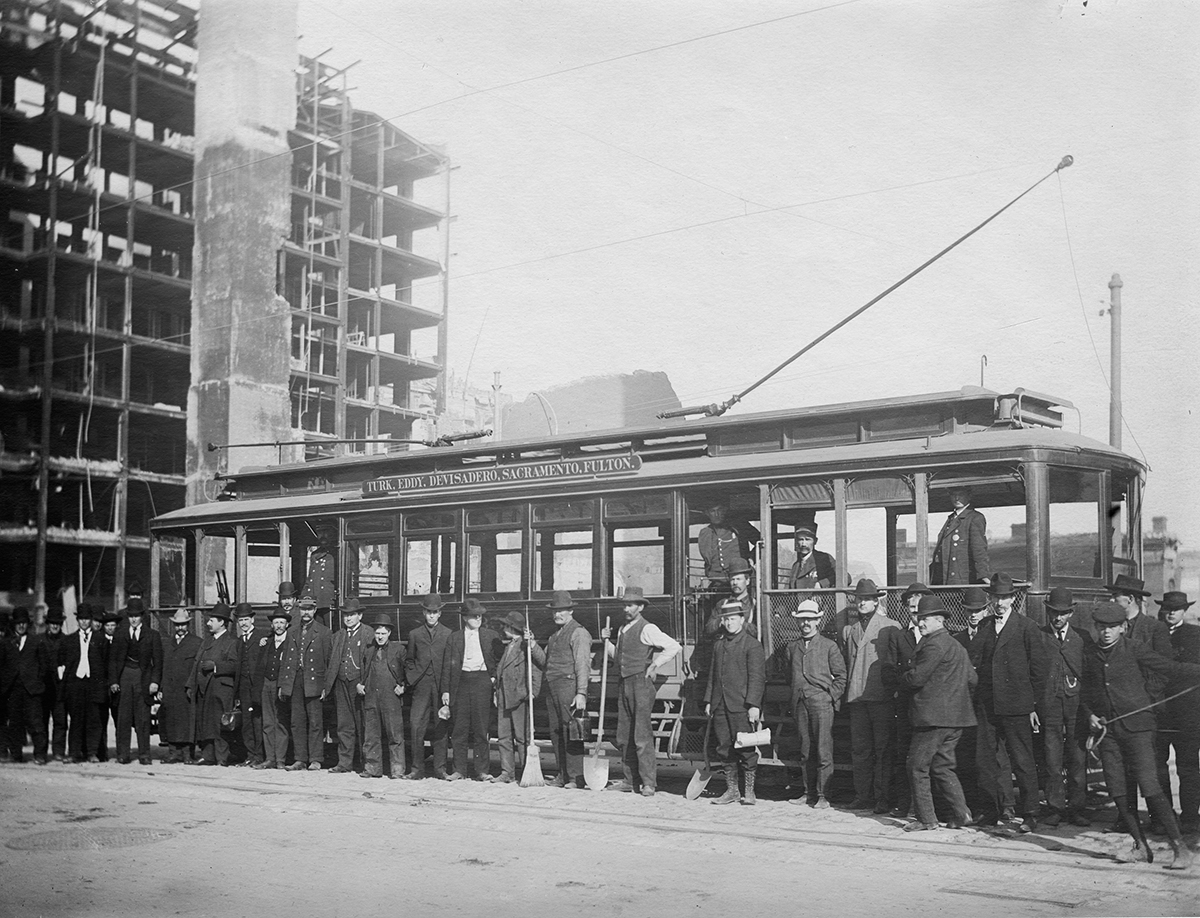
May 2, 1906 was the first day that an electric streetcar ran on Market Street. After the earthquake and fires on April 18, 1906, San Francisco was eager to rebuild, and public transit played a crucial role in getting the city back on its feet.

Prior to electric streetcars, transit on Market was dominated by cable cars, which ran from the Ferry Building to the Pacific Ocean, but were considered slow and inefficient compared to the newer electric streetcar technology. With the introduction of electric cars on Market Street, people had a faster way to get to downtown businesses and rebuild from the ashes of the disaster.

group of people standing along side of streetcar with burned ruins of a building in the background

This photo documents the first streetcar to run on Market Street, just two weeks after the devastating April 18, 1906, earthquake.

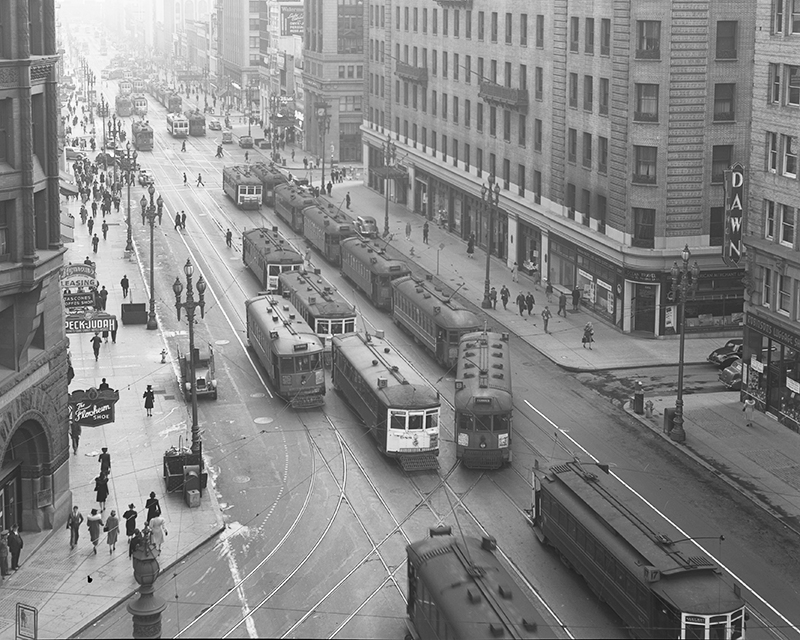
In the years following the 1906 disaster, nearly all cable lines were converted to electric cars and Market Street became an incredible hub of streetcar traffic. By the 1930s, four different streetcar tracks ran along Market, operated both by the Municipal Railway and by the privately-owned Market Street Railway Co. Dubbed the “Roar of the Four,” due to the noise of hundreds of cars rolling through the urban canyon of Market Street, streetcars were certainly king of the road.

overhead view of Market Street crowded with streetcar traffic and pedestrians

This 1940 photo shows morning streetcar traffic at Market and Geary at 8:14 a.m. Most public transit service in the city was provided by electric streetcars, and almost all lines merged onto Market Street at some point.

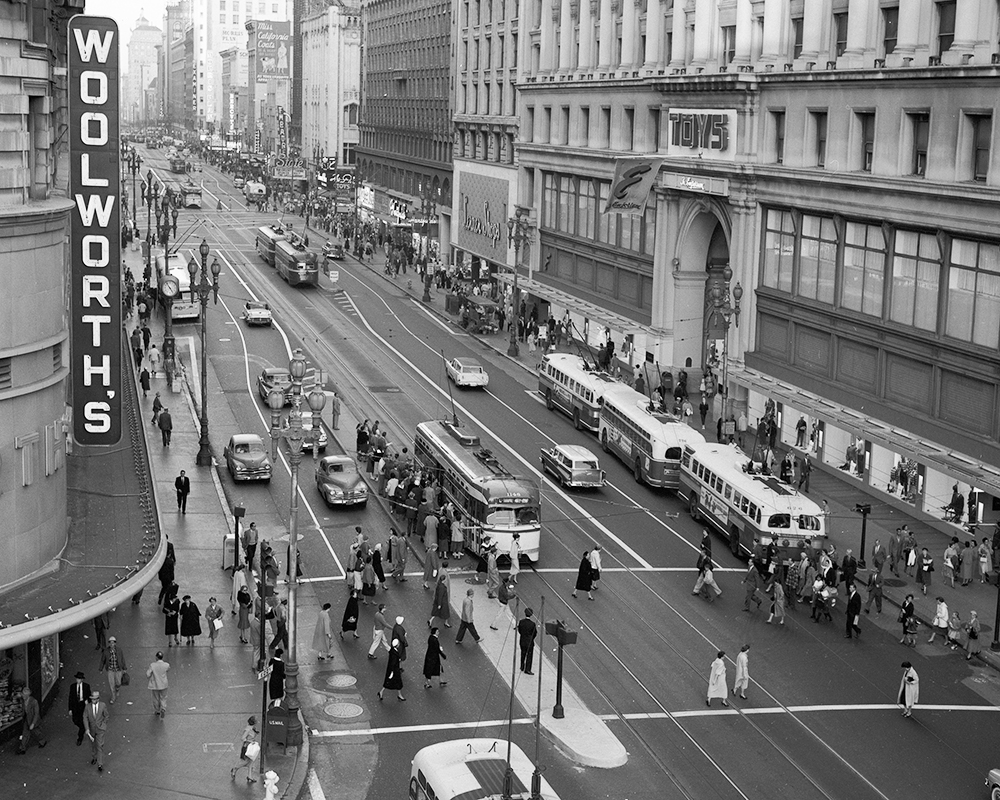
After the end of World War II, transit ridership was in steep decline across the nation as people embraced the “one car per family” dream of Postwar America. Streetcar ridership fell significantly during this time and the majority of Muni’s routes were converted to bus operation. Rail service was, however, retained for five lines (J, K, L, M, & N) because the exclusive rights of way in the Twin Peaks and Sunset Tunnels allowed for shorter travel times to the city’s outer neighborhoods.

overhead view of streetcars, buses, and pedestrians on Market Street

Trolley buses and Muni PCC streetcars ply the roadway at Market and Powell in this 1958 photo. Bus conversion and the scrapping of hundreds of old streetcars in the 1950s meant fewer rail lines running on Market.

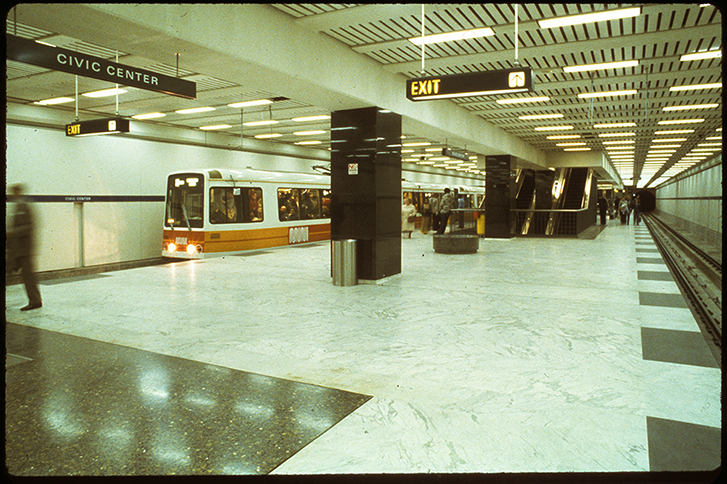
With the opening of the Muni Metro & Market Street Subway in the early 1980s, traditional streetcars disappeared from regular transit service on the surface of Market Street for over a decade. Replaced with Light Rail Vehicles running underground, San Francisco’s first subway system was born.

muni metro in the 80s

The opening of the Muni Metro system allowed new light rail vehicles to run underground between the Ferry Building and West Portal instead of jockeying with cars, buses, pedestrians and cyclists on the surface.

When the opening of Muni Metro removed surface rail on Market Street, residents and businesses began advocating for the creation of an historic streetcar service from Castro to Fisherman's Wharf. After years of planning and construction, the F line was launched on September 1, 1995.  Originally running from Castro to downtown, service was extended to Fisherman's Wharf in March 2000.

This month, we are happy to welcome the F Market & Wharves back to Market Street and Fisherman’s Wharf, along with more service increases that, just like 115 years ago, will help San Francisco recover.

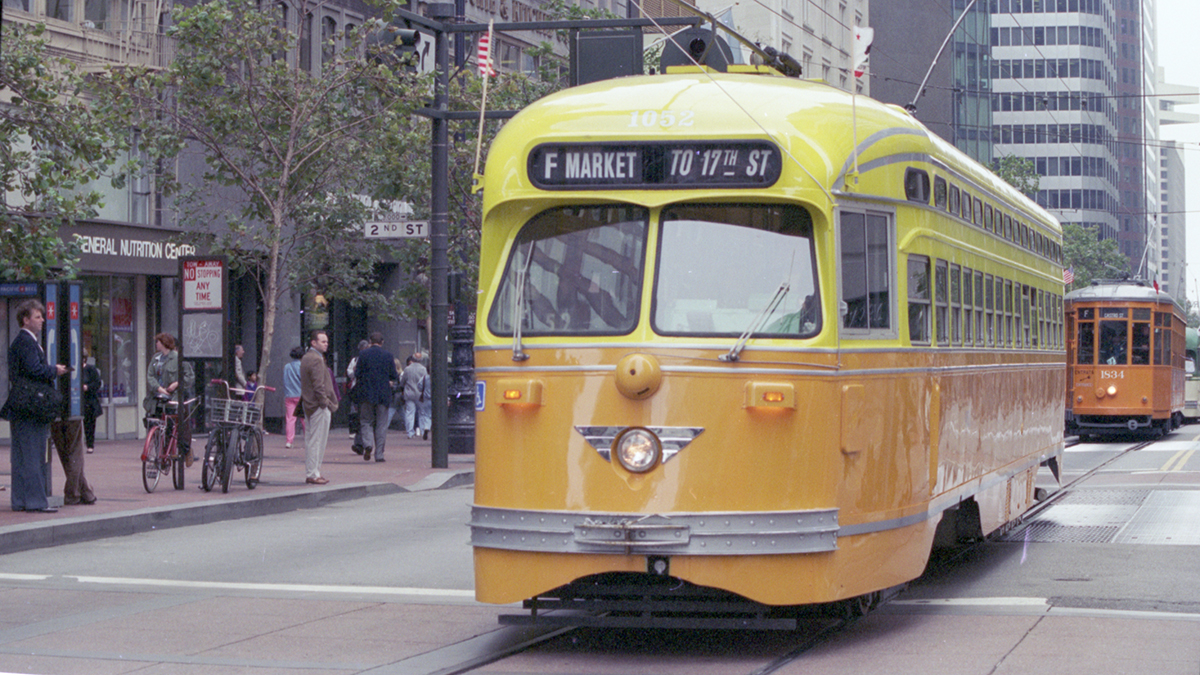
Yellow and orange streetcar on Market street

Presidents Conference Committee (PCC) streetcar 1052 parades along Market for the opening of the F Market & Wharves in 1995. 

Check out more details in our previous blog about the May 15 return of the F Line.


Published May 06, 2021 at 12:37AM
https://ift.tt/3vHXnpQ

الثلاثاء، 4 مايو 2021

Join Us in Transforming Evans Avenue

Join Us in Transforming Evans Avenue
By Adrienne Heim

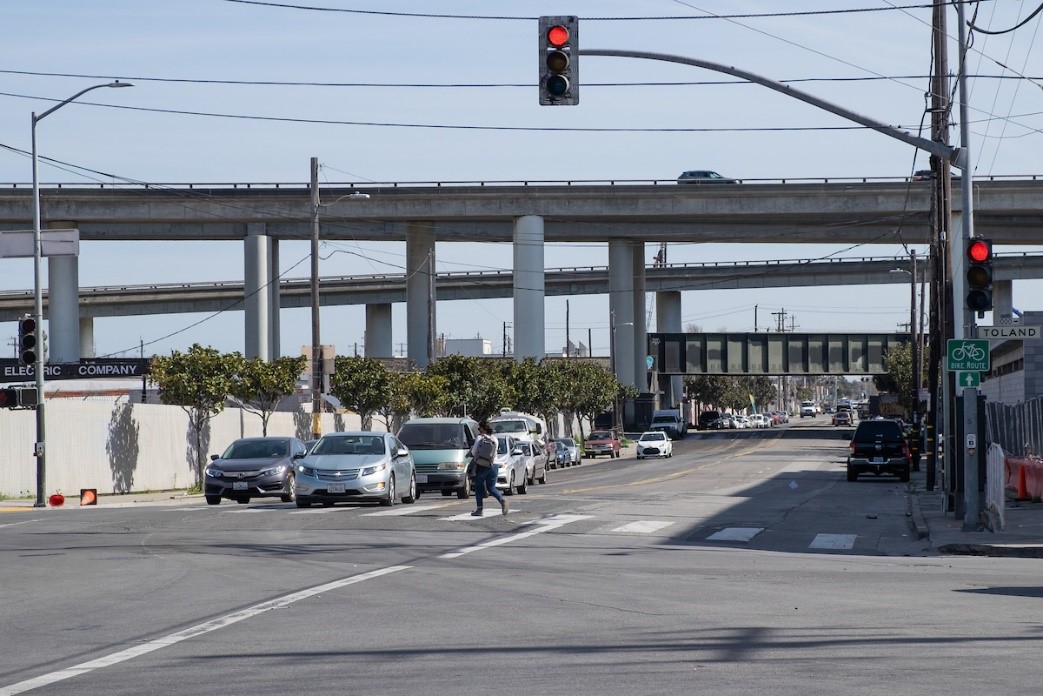
Photo of Person walking across Evans Avenue at Napoleon Street

Pedestrian crossing Evans Avenue at Napoleon Street

This month we are reaching out to community groups and businesses along Evans Avenue for feedback on making this corridor safer and more inviting for everyone, by means of a Quick-Build project.

 Entering Evans Avenue from Cesar Chavez Street eastbound toward the Bayview-Hunters Point neighborhood, the street offers an unusual prospect for a corridor in San Francisco. Passing under freeway lanes and railway tracks, past industrial parks, retail and government buildings, the street eventually connects to Heron’s Head Park at Jennings Street.

Named after Robley D. Evans, a Commander in the U.S. Navy from 1864-1908, Evans Avenue served as one of three vital routes into the Hunters Point Naval Shipyard when it was operating from 1940 to 1974. Between Cesar Chavez and 3rd streets, the roadway consists of two travel lanes in both directions. The average traffic volume along this 0.7-mile stretch ranges from 12,000 vehicles per day (near 3rd Street) to 23,000 (near Cesar Chavez Street).  

Muni’s 19 Polk  serves Evans Avenue and connects to Muni lines including the T Third, 15 Bayview Hunters Point Express, 44 O'Shaughnessy and 91 3rd/19th Avenue Owl.

Why a Quick-Build project for Evans Avenue?

A quick-build project allows us to increase safety for all users of Evans Avenue by implementing relatively fast improvements with inexpensive treatments within months, such as: paint, traffic delineators, street signs and parking and loading adjustments. (See gallery below for examples of such treatments).

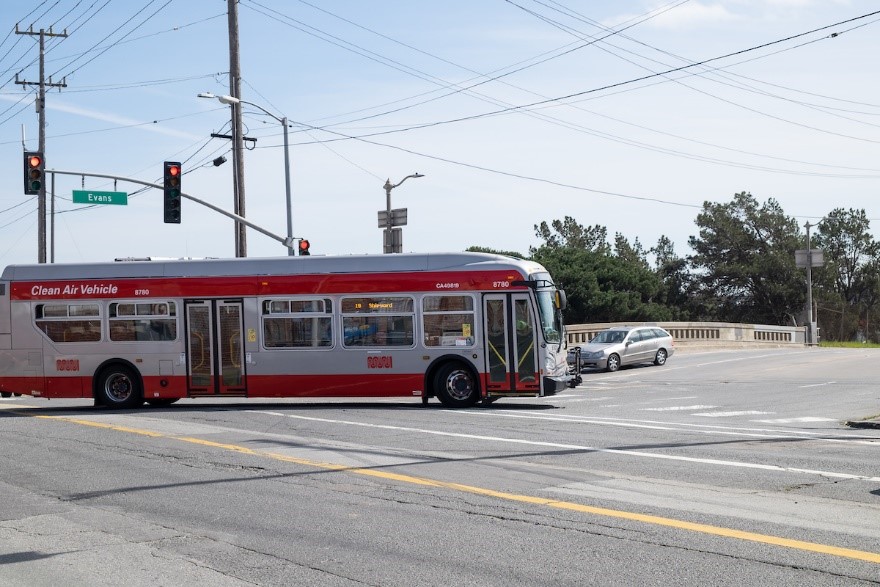
19 Polk turning off Cesar Chavez Street onto Evans Avenue

19 Polk turning off Cesar Chavez Street onto Evans Avenue

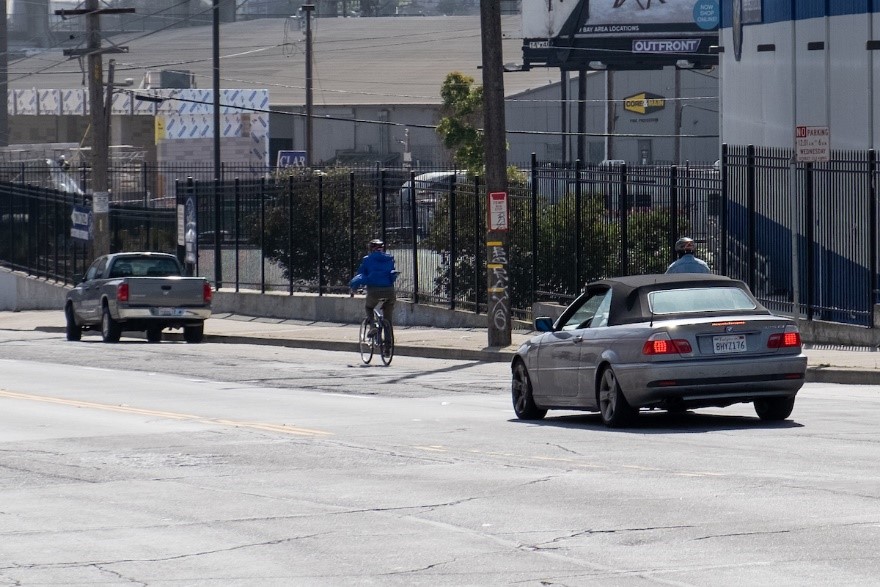
Evans Avenue is also a bike route, connecting bike lanes south of 3rd Street and on Cesar Chavez Street.

A person bicycling eastbound on Evans Avenue

A person riding a bicycle eastbound on Evans Avenue

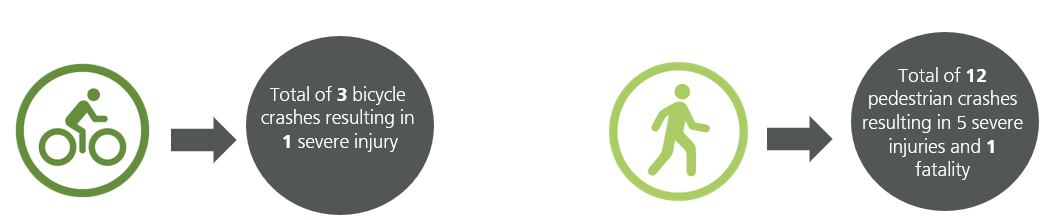
Evans Avenue is on San Francisco's Vision Zero High Injury Network, the 13% of San Francisco streets where 75% of the city’s traffic injuries and fatalities occur. From 2015 to 2020, 81 traffic collisions have been reported on Evans Avenue between Cesar Chavez and 3rd streets. This corridor is seeing rising traffic and the potential for conflicts due to ongoing and future development in the area.

image showing a total of 3 bicycle crashes resulting in 1 severe injury, total of 12 pedestrian crashes resulting in 5 severe injuries and 1 fatality


We have developed three design concepts to improve transportation safety along this stretch of Evans. Now, we want your feedback.

You can take our survey online or place your cell phone camera over the QR code.

QR code image

The survey will be open until May 21, 2021. 

We will analyze the feedback received from this survey and from direct outreach to local stakeholders before moving forward to the Engineering Public Hearing. After that, this project will be submitted to the SFMTA Board for review and approval. If given the green light, construction is expected to begin in fall 2021.

Learn more about the project and subscribe to project updates by visiting the Evans Avenue Quick-Build Project: Improving safety and access on Evans Avenue


Published May 05, 2021 at 01:11AM
https://ift.tt/3vEBzLO

الاثنين، 3 مايو 2021

Welcome Back to the F Market & Wharves Historic Streetcars

Welcome Back to the F Market & Wharves Historic Streetcars
By Mariana Maguire

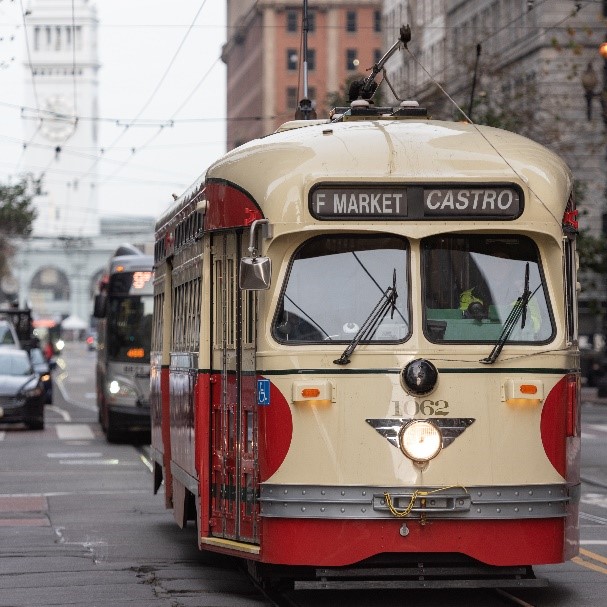
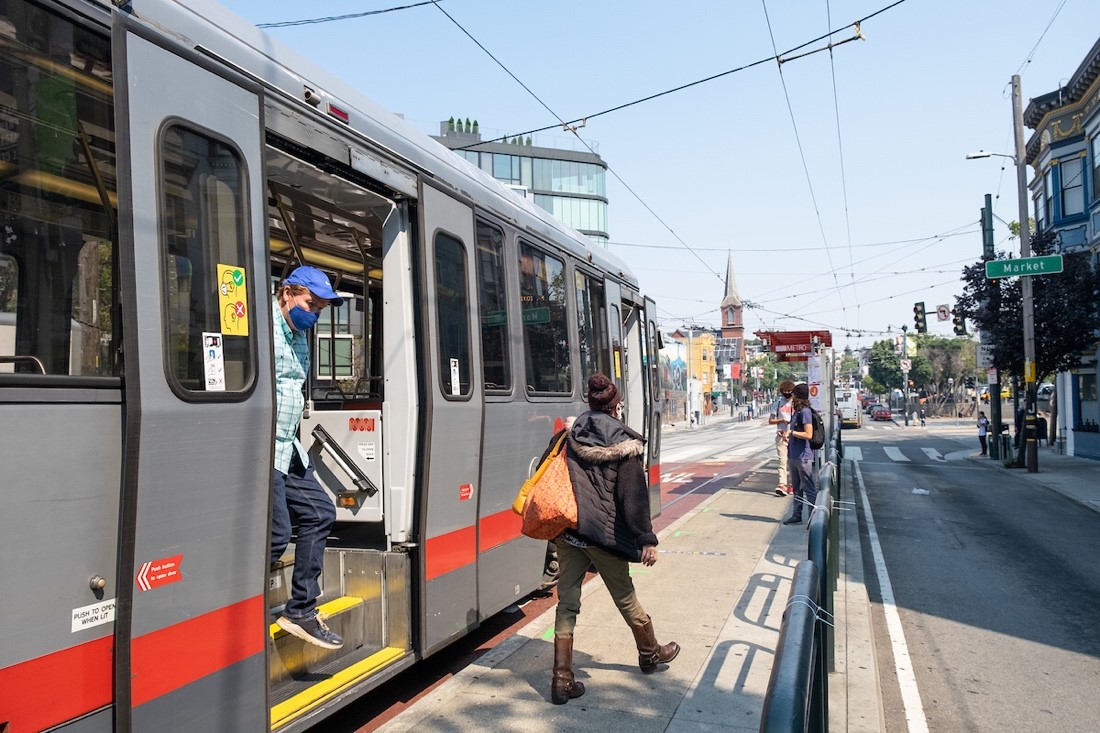
Photo: F Market & Wharves historic streetcar making its way up Market Street from the Ferry Building to Castro.

Photo: F Market & Wharves historic streetcar making its way up Market Street from the Ferry Building to Castro.

To support San Francisco’s economic recovery and reopening as tourism returns, the SFMTA will bring back the long-awaited F Market & Wharves historic streetcars on Saturday, May 15, between Fisherman’s Wharf and Castro and Market streets seven days a week.

SFMTA staff worked closely with Castro Merchants, SF Travel, Community Benefit Districts including Mid Market, Yerba Buena, Fisherman’s Wharf, Castro Upper Market, as well as district Supervisors and other key stakeholders in the effort to bring the F Market & Wharves back into service in time for the summer season. The F Market & Wharves is popular with tourists and visitors and is a priority for small businesses along Market Street and the Embarcadero.

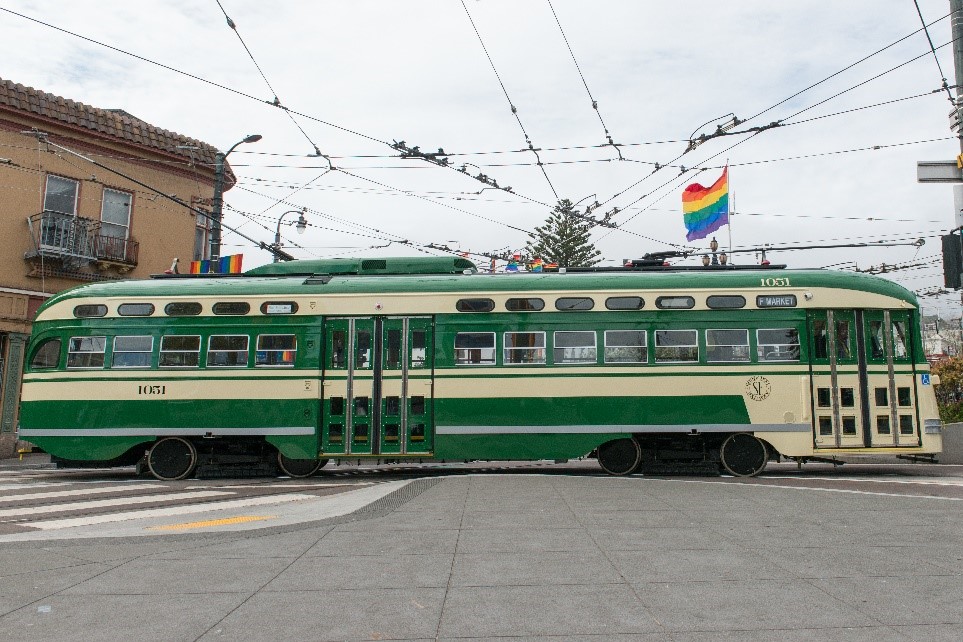
Photo: One of SFMTA’s historic F Market & Wharves streetcars on display in the Castro.

Photo: One of SFMTA’s historic F Market & Wharves streetcars on display in the Castro.

Service Hours

With resources enabling a single daily shift, stakeholders were invited to select the specific hours of operation for the restored line. Based on their choice, trains from Castro to Fisherman’s Wharf will run from approximately 11 a.m. to 7 p.m. Return trips from Fisherman’s Wharf to Castro, will run from  12 p.m. to 8 p.m.

Read more about the full route and stops.

When Better Market Street begins construction, we plan to continue to run the F Market & Wharves full route as a combination of historic streetcar service and bus shuttle. The project team is exploring ways to limit construction impacts and will continue to work closely with businesses to support F Market & Wharves service.

Additional Rail Service Returning

On May 15th we will also reopen all Muni Metro subway stations. Full rail service will be restored on the N Judah between Ocean Beach and Caltrain. The combined KT Ingleside-Third will operate between Sunnydale and Balboa Park, through West Portal.

With the restoration of the F Market & Wharves, N Judah and KT Ingleside-Third on May 15th, the full Market Street corridor and several of the city’s major commercial hubs will have more service and connectivity. Since January 23rd, 91% of San Franciscans are now within 2-3 blocks of a Muni stop. And this includes 100% of residents in San Francisco’s neighborhoods identified in the Muni Service Equity Strategy.

Along with the Muni service being restored in May, we expect to be able to expand service so that 98% of San Franciscans will have access to Muni within 2-3 blocks by the end of the summer. SFMTA staff is working hard to support San Francisco’s economic recovery and reopening and the return of tourists, office workers and other visitors.


Published May 03, 2021 at 06:38PM
https://ift.tt/3tddCcP

الخميس، 29 أبريل 2021

Have Feedback on the COVID-19 Muni Temporary Service Plan?

Have Feedback on the COVID-19 Muni Temporary Service Plan?
By Shalon Rogers

In March 2020, due to unprecedented constraints on resources brought on by the COVID-19 pandemic, the SFMTA had to make significant transit service reductions. As of January 2021, the agency has been able to restore service to a level where 91% of San Franciscans are within a quarter mile of a transit stop. This is reflected in the SFMTA’s current COVID-19 Temporary Service Plan.  

COVID-19 Muni Core Service Plan Map'

COVID-19 Temporary Service Plan Map

The SFMTA is committed to ensuring that our programs and services are compliant with Title VI of the Civil Rights Act of 1964 and therefore do not have a discriminatory impact based on race, color or national origin. As part of this work, we conducted a Title VI service equity analysis to evaluate the current COVID-19 Temporary Service Plan. The results of this analysis will be presented to the MTA Board of Directors on May 4.

The public is invited to attend and provide comments on the current service plan at the online MTA Board of Directors (MTAB) meeting where the results of the service equity analysis will be presented on May 4th at 1 p.m. There will be a second online MTAB meeting on May 18 at 1 p.m. To provide comments during the meeting, specific dial-in instructions are located on the SFMTA calendar item for each date.

For more information about Muni’s current service, visit the COVID-19 Temporary Service Plan website. You can also email feedback to TellMuni@SFMTA.com or call 415-646-2350.

Finally, we look forward to continuing to hear from our riders on our current service as we work towards a post-COVID-19 service plan.


Published April 29, 2021 at 05:43PM
https://ift.tt/3xwUb21

الأربعاء، 28 أبريل 2021

Permanent Relief for Muni Customers in SoMa?

Permanent Relief for Muni Customers in SoMa?
By Erin McMillan

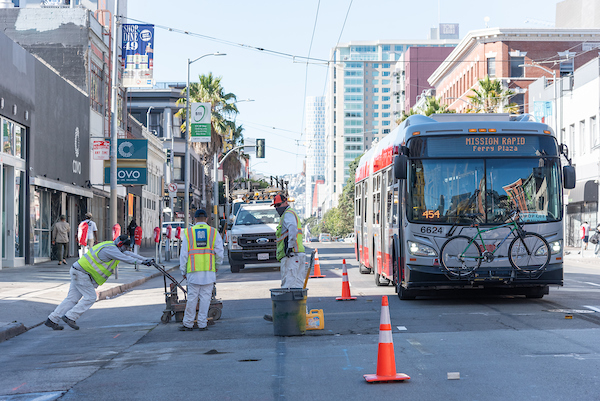
Shortly after the pandemic’s onset, the SFMTA implemented Temporary Emergency Transit Lanes to make sure essential trips on Muni wouldn’t get caught in traffic. On Mission Street from 11th to 3rd streets in SoMa, the transit lanes have proven effective at protecting Muni travel times while traffic has increased. Now, with the city’s reopening generating even more traffic, keeping these lanes on the road permanently is as important as ever.

Paint Shop Crew Grinding Old Pavement Markings for Installation of Transit Only Lanes on Mission Street on September 23, 2020

Paint Shop Crew Removing Old Pavement Markings for Installation of Temporary Emergency Transit Only Lanes on Mission Street on September 23, 2020

What’s Next?

Given that the data shows the lanes are effective, the SFMTA is now pursing making the full-time transit lanes, and their benefits, permanent. Following up on our initial evaluation of the project, we are now inviting the community to learn about next steps for making the lanes permanent. We are hosting a two-week virtual open house where you can check out this information via an on-demand recorded presentation or by reviewing a PDF of the presentation at your own pace. Still have questions? Join us for virtual office hours Thursday, April 29 from 4 to 6 p.m.

Travel on Mission Street South of Market

The SoMa segment of Mission Street from 11th to 3rd streets was the first corridor to get temporary emergency transit lanes. The project converted part-time, rush hour-only lanes into full-time lanes to help protect Muni customers from traffic congestion and a possible increased risk of exposure to COVID-19 on slower, more crowded buses. This better served the needs of the 14 Mission and 14R Mission Rapid that are busy all day, not just in the traditional peak commute hours. The corridor also serves regional transit from SamTrans and Golden Gate Transit, making these lanes important to regional as well as local travel.

Transit Lane Benefits

So far, the lanes on Mission Street have achieved their goal– keep transit moving even as traffic threatens to slow it down. Traffic has risen 20% since the summer of 2020, yet transit times are staying relatively consistent --meaning the transit lanes are effective in protecting buses from traffic. In addition to the transit data showing how effective the transit lanes are, 65% of community survey respondents said they wanted to keep the transit lanes permanently.

The project also helped simplify the street and traffic flow by widening the lanes that were previously too narrow to safely allow for buses. In addition, on some blocks parking shifted from one side of the street to the other, depending on the time of day. This new configuration is now easier and safer for all road users to navigate. Loading for businesses has also changed as part of the project, with the hours of when yellow zones are available increasing by over 40%.

For more information, visit the Mission Street SoMa Transit Improvements webpage, email us at TellMuni@SFMTA.com, or call (415) 646-2350.


Published April 28, 2021 at 11:50PM
https://ift.tt/3aPmhvP

الاثنين، 26 أبريل 2021

Safer and Easier Parking in Every City-Owned Facility

Safer and Easier Parking in Every City-Owned Facility
By Pamela Johnson

Parking at any of our 22 city-owned facilities is now easier and safer than ever. Late last month we completed the Parking Access Revenue and Control Systems (PARCS) project. This four-year effort replaced aging parking equipment with modern technology and significant operational upgrades.

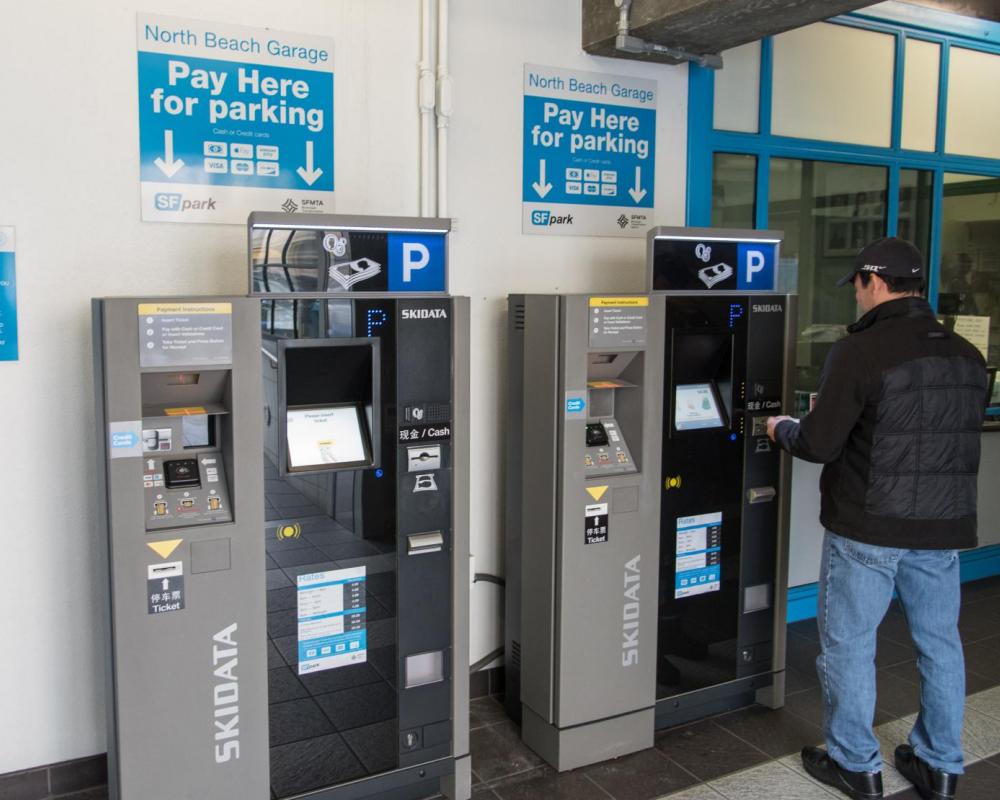
Photo of Customer using new PARCS kiosk at North Beach parking garage

Customer using new PARCS kiosk at North Beach parking garage

Patrons will notice enhanced lighting, new wayfinding signs, audible alarms, cameras, gate arms, and payment machines with two-way digital intercoms. Behind the scenes is an all-new parking management system and 24/7 command center, connected to every machine.

Can’t find your ticket to pay for parking?  No worries!

Thanks to license plate recognition technology, cameras located at every facility’s entrance capture patrons’ plate numbers as they arrive. If a customer loses her ticket, the manager is able to re-issue a ticket based on her license plate number. Previously, the customer would have been required to pay for a full day of parking.

Safety and Ease of Use

“The new system is a significant operational upgrade from our prior 16-year-old equipment” said Robert Aicardi, Operations Manager of SFMTA’s Off-Street Parking unit. Aicardi, who oversaw the day-to-day delivery of the PARCS upgrade project, noted that “The upgrades make for easier and safer access in and out of a parking facility and a better experience.”

Ted Graff, the Director of Parking & Curb Management added that “Thanks to modern technology, we can better manage the customer parking experience in our parking facilities and facility operations. We’ve also improved auditing and credit card security to protect customers, enabled real-time data collection, which helps with the implementation of dynamic or demand-responsive pricing and enabled universal validation to create a more efficient parking experience.”

Highlights

  • All payment machines have instructions in English, Chinese, and Spanish
  • Cameras have been installed at every point of sale and point of entry/exit to augment the intercoms
  • Both flashing lights and audible alarms are activated as vehicles exit the facility, improving safety in areas of high pedestrian traffic 
  • Payment kiosks use industry-standard, end-to-end encryption for credit card transactions
  • Every point of sale enables mobile app contactless payments (including. Android Pay and Apple)

 PARCS partners

 To complete the upgrades, SFMTA’s Streets Division Off-Street Parking unit provided day-to-day oversight of the project, in partnership with SKIDATA, the PARCS vendor. Walker Parking Consultants served as the architect of record, and San Francisco Public Works oversaw all demolition and utility upgrades, which preceded PARCS equipment installation.

Visit the SFMTA’s website to learn more about the PARCS project and see a map of Garages & Lots that received the PARCS upgrades.


Published April 26, 2021 at 10:25PM
https://ift.tt/3gENB3o

الخميس، 22 أبريل 2021

Celebrate Earth Day by Using Alternate Modes to Get Around San Francisco

Celebrate Earth Day by Using Alternate Modes to Get Around San Francisco
By Sophia Scherr

Happy Earth Day! Established in 1970, Earth Day gave voice to the growing public consciousness concerning the environmental state of our planet, and the collective search for ways to save it. This determined effort for a better environment based on proactive strategies for slowing down the effects of climate change is more urgent than ever.

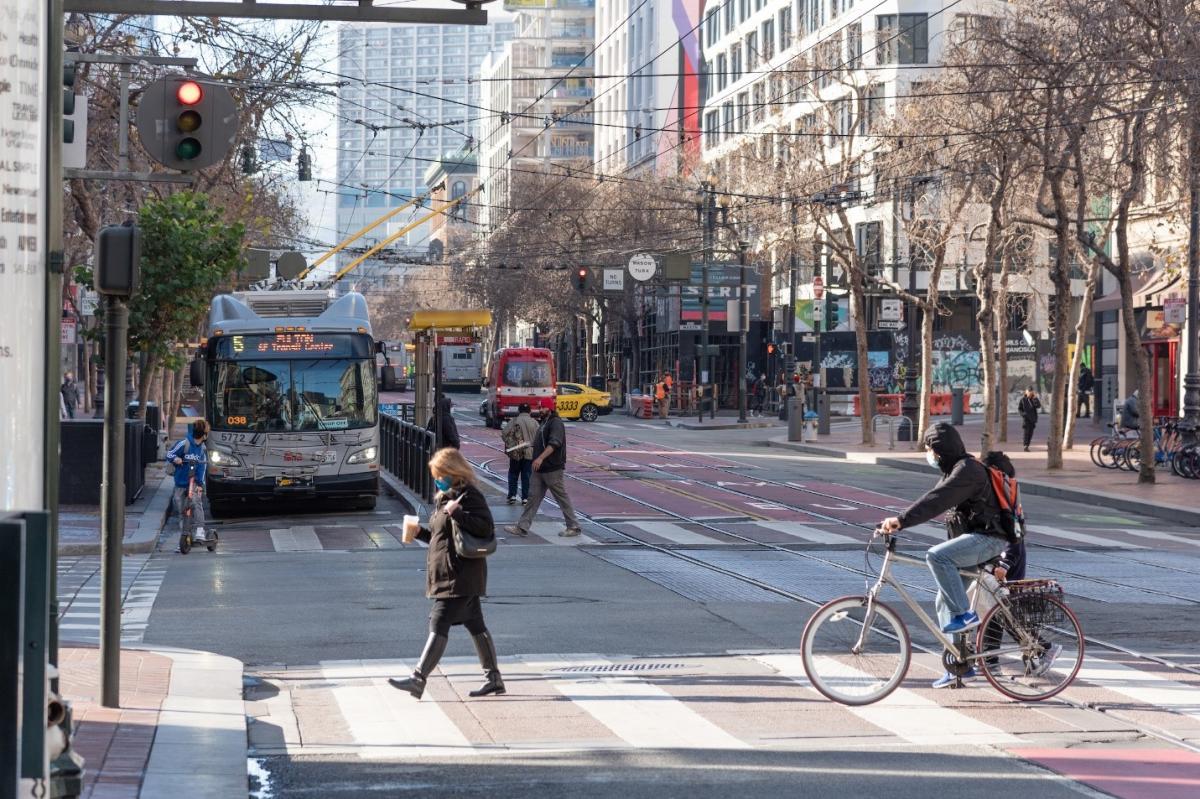
Photo of Market Street intersection with 5 Fulton bus, pedestrians, people on bicycles, a taxi, an ambulance, bikshare station, and powered scooter

People travel on Market Street in many ways: as pedestrians, on bicycles, scooters, by taxi and by bus.

Riding Muni is a great choice for reducing your carbon impact, as the majority of our fleet is powered by hydro-electric power and does not generate CO2 emissions. The SFMTA has also committed to having an all-electric bus fleet by 2035: we will exclusively purchase all-electric buses starting in 2025 to meet that goal. This Earth Day, we’re encouraging riders to get out to explore one of the many alternate modes available for getting around San Francisco.

An “alternate mode” is a fancy way of describing activities such as walking, biking or scooting to get to your destination. As San Francisco begins the re-opening process, we expect more traffic congestion due to people eager to explore after a year of being sheltered-in place.  

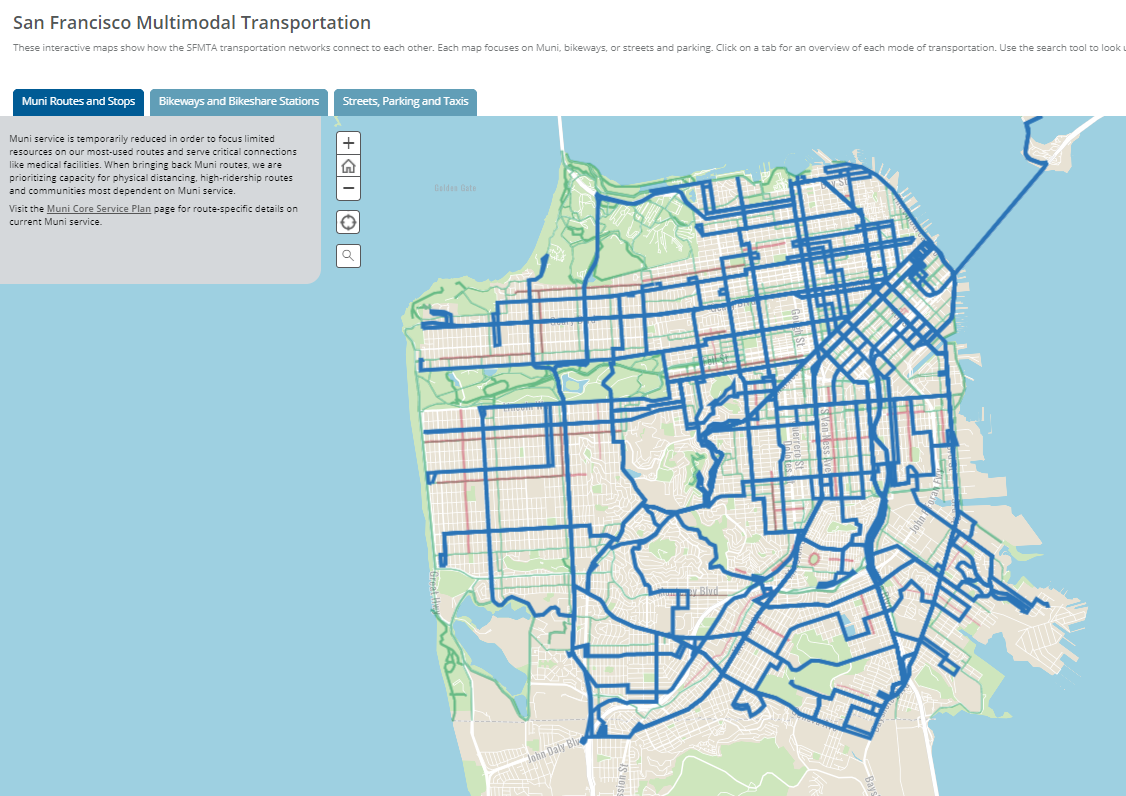
To better help you get around, we’ve put together resources that include an interactive map with Muni Core service information, San Francisco’s bike network of bike lanes, Slow Streets, bike share station locations, taxi stand and parking garage locations. There are also bicycling and walking resources, and even an online photo exhibition of the history of these modes in San Francisco. Visit SFMTA.com/GetGoing to plan your next alternate mode trip.

The multimodal map image shows bus, rail, and bike routes covering the entire city of San Francisco

San Francisco Multimodal Transportation map


Published April 22, 2021 at 04:22PM
https://ift.tt/3ayexOx

الأربعاء، 21 أبريل 2021

Van Ness Improvement Project Nears Completion

Van Ness Improvement Project Nears Completion
By Nehama Rogozen

After years of planning and construction, work on the Van Ness Improvement Project is progressing rapidly and the end is in sight! Construction is projected to be finished by the end of this year, with Bus Rapid Transit (BRT) service running on Van Ness Avenue from Mission to Lombard beginning in early 2022.

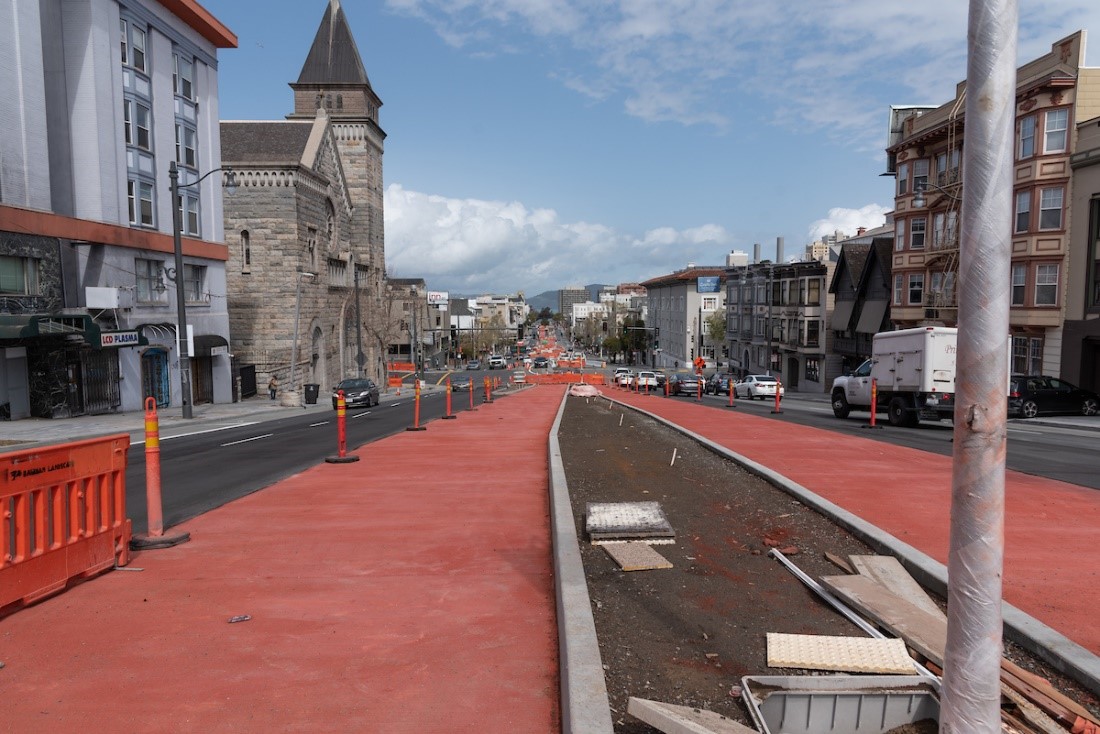
Photo of red colored concrete freshly poured on Van Ness Avenue, to create new bus rapid transit lanes

Work on the red transit lanes between Broadway and Pacific is almost complete.

Crews have been busy on Van Ness Avenue. You may have noticed them building new medians and sidewalks, paving the roadway and installing poles that provide lighting and power to the BRT system. Most recently they have installed the red lanes that will allow buses to move Muni and Golden Gate Transit riders quickly along the corridor, without getting stuck in traffic. To ensure durability and reduce fading, these red transit lanes are made from poured red concrete, as opposed to red paint or thermoplastic on top of concrete.

We are also planting hundreds of trees along Van Ness Boulevard as a part of the project, with more on the way. These trees replace those that were removed during construction at a ratio of more than 2-to-1. There are four species of trees being planted: Lemon-Scented Gum in the median and London Plane, Brisbane Box and Palm in sidewalk tree wells where similar species were planted previously. These species were selected for their suitability to the neighborhood and growing environment along a state highway.

As the end of construction approaches, staff on the project are planning for the transition that will happen as construction winds down and testing to launch BRT service on the corridor begins. We are planning significant outreach to the public , to ensure that customers know how to ride the system safely and efficiently.

We know it’s been a long wait and we appreciate your patience with this long-term construction project. San Francisco’s first BRT corridor is almost here and we’re excited to welcome you aboard soon.

Check out the photos below for more of the work on Van Ness:


Published April 21, 2021 at 07:25PM
https://ift.tt/3njxSbD

الثلاثاء، 20 أبريل 2021

Bringing Back Muni Better

Bringing Back Muni Better
By Julie Kirschbaum

Much of Muni service has already been restored since the pandemic-related service reductions at the beginning of the crisis, thanks to the dedication of SFMTA staff. As San Francisco emerges from the pandemic, we continue to increase service by focusing on maximizing citywide Muni access while providing high frequency on the city’s busiest routes.

Photo of J Church streetcar arriving northbound at the platform before Market Street

The J Church returned as a surface route from Balboa Park to Duboce Avenue in December 2020

Since January 23, 91% of San Franciscans are within 2-3 blocks of a Muni stop. And this includes 100% of residents in San Francisco’s neighborhoods identified in the Muni Service Equity Strategy.

On May 15, Muni Metro service will be restored in the subway, providing subway service at all stations from Embarcadero to West Portal. The K Ingleside and the T Third will once again be “interlined,” operating as one route from Balboa Park to Sunnydale. The N Judah is also returning to rail service, giving customers more room and fewer pass ups, as the two-car train increases the N Judah’s capacity. F Market & Wharves service will return 7 days a week, 11 a.m. to 7 p.m. And, a hilltop gap will be closed between Forest Hill and Glen Park with the temporary 36-52 Special Shuttle bus.

SFMTA staff are working hard and fast to overcome constraints to restoring service, and we expect to be able to expand service so that 98% of San Franciscans will be within 2-3 block of a Muni stop by the end of the summer. Here’s how.

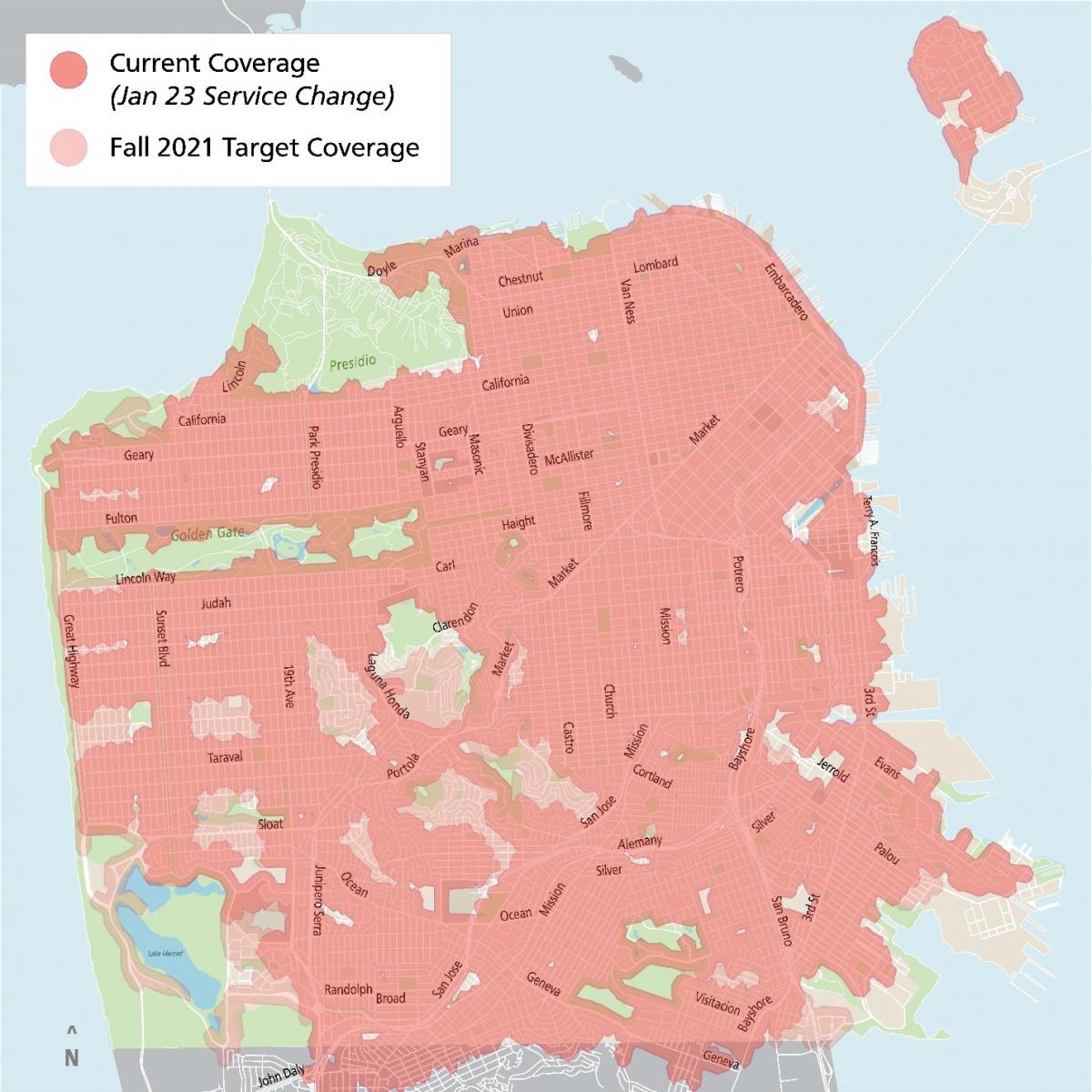
Map showing 98% of San Francisco shaded in where there is service within 2-3 blocks

As of January 23, 2021, 91% of San Franciscans are within 2-3 blocks of a Muni stop. We expect 98% of San Franciscans to have this access by the end of summer.

Vehicle Capacity and Availability Limits

As public health officials monitor San Francisco’s decreasing COVID-19 case numbers and increasing COVID-19 vaccination rates, we are working closely with the Department of Public Health to determine when distancing restrictions should be lessened, allowing more customers on each bus and train.

When distancing requirements are no longer needed, each Muni bus and train will be able to carry up to three times more customers comfortably. We will also return to industry standards of cleaning vehicles at the end of the day and stop our pandemic practice of returning a vehicle at the end of each operator’s shift for sanitization that currently limits vehicle availability.

Additionally, buses are currently substituting for Muni Metro lines while work on the first part of the Subway Renewal Program is completed, that is further reducing vehicle availability. The SFMTA maintenance, engineering and technology teams have worked hard over the last 10 months to ensure that the subway will open up with better reliability, as well as important customer facing amenities such as Wi-Fi and new station signage at Church and Castro. In May, the bus substitution will not be needed on the N Judah and K Ingleside lines and can then be used on other routes.

Muni Staffing and Funding

Also, essential to providing great Muni service is retaining staff talent. Due to a 15% vacancy rate pre-pandemic across the agency and very limited hiring over the past year, we have vacancies in many service critical positions from mechanics to supervisors. Before we can restore more service, we need to conduct exams, hire and train. Additionally, a high wave of June retirements is expected due to a reduced number of retirements during the pandemic. Since we are expecting a challenging summer due to high promotions and attrition, we are restoring Muni service with a schedule that can be filled 100% with available operators without gaps going forward. We want to make sure that as we start up service, we can sustain it long term.

In the short term, with ridership expected to take several years to reach pre-pandemic levels, we will be able to meet the city’s transit needs without over-extending our resources. However, I am confident that if we bring back Muni service that is reliable and convenient, demand will return stronger than ever.

Thanks to our diligent teams, we are making cost efficient improvements to Muni service. SFMTA staff looked closely where we had vulnerabilities and talked openly about how to learn from past mistakes. Union leadership has fought tirelessly for the needs of their team members and show up every day to solve tough problems. From headway management to installing temporary emergency transit lanes, we are creating an enhanced customer experience that will foster financial sustainability for the long term.

While we are on our way to increasing service, getting Muni back to 100% of pre-pandemic service — not to mention any increases—requires more sustained funding. Even before the pandemic, the agency had seen declining revenues from parking fees and transit fares. Now, with ridership slow to return to past levels and tax revenues down, our future is even less clear. One-time federal funding has saved the SFMTA from devastating cuts and layoffs, but this one-time funding runs out in 2023 and doesn’t solve the long-term funding challenge.

The SFMTA is exploring several options including revenue measures to secure our future. And while we plan to passionately pursue expanded funding, we will not expand service beyond what we can sustain with ongoing revenue to protect jobs and prevent future layoffs.

Muni is more than a transit system—it's a core part of our community and fabric of our city.  Our staff is committed to keeping San Francisco moving and is working hard to bring Muni service back better than ever.


Published April 20, 2021 at 07:34PM
https://ift.tt/3v3KLJk