الأربعاء، 26 فبراير 2020
Show HN: My Fork Of A YouTube Streaming/Download App For PPC Mac OS X https://ift.tt/397rEmY
Show HN: Base24 binary-to-text encoding for humans https://ift.tt/3a8iVRB
Show HN: Free PDF: Creative Coding for Kids https://ift.tt/3cbA1A2
Show HN: (crocs) Python2Regex and Yacc-like. Parsing with no steroids in Python https://ift.tt/3aaPM8i
Show HN: Crypto Crumple Zones: Enabling Limited Access Without Mass Surveillance [pdf] https://ift.tt/2VqtEmz
Results Are In – How Should We Explore Extending The Central Subway?
By Phillip Pierce
The Central Subway is set to open in summer 2021 and will connect some of the city’s densest neighborhoods and job centers. It is expected to carry tens of thousands of riders everyday from Chinatown, through Union Square and SoMa before linking up with the current above-ground T Third line near the 4th/King Caltrain Station and on to Mission Bay, the Bayview, and Visitacion Valley.
While this new line will be vital for San Francisco’s growing population and workforce, we know that now is the time to continue planning for the future.
In order to better understand the needs and goals of the community, we held open house meetings and developed an online survey to gauge interest and explore potential ways to extend the Central Subway. This online survey built on the prior 2015 feasibility study results and previous community meetings on the topic.
This interactive survey was given in English, Spanish and Chinese, and allowed users to drop markers in places where they thought subway stations should be analyzed. We were thrilled that the combination of interest in a new subway plus the ease of the survey technology on the web and mobile (thanks MetroQuest!) resulted in over 8,000 responses – a record for the SFMTA!
In general, the results showed that most people favored extending the subway to North Beach. It also showed clusters of interest in new connections near Fisherman’s Wharf, at the soon-to-be-complete Van Ness BRT and in the Marina neighborhood.
Results
After analyzing all 8,137 paper and online responses, which generated over 148,000 data points and 13,000 comments, we compiled the below graphics to summarize the results:
How do you currently get around San Francisco?
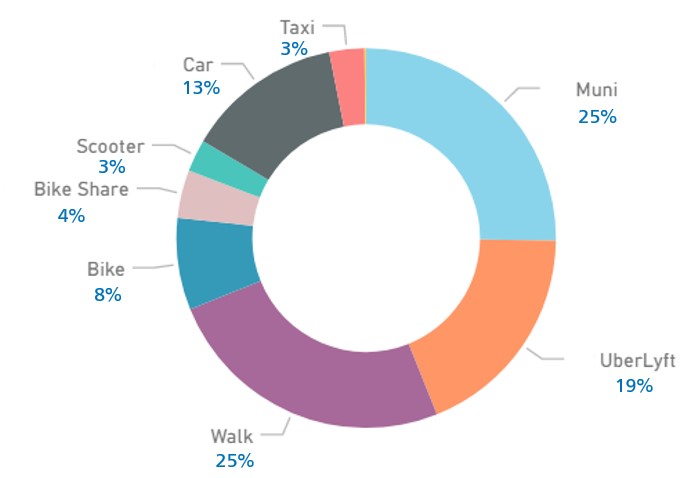
Typical travel choices of those that took the survey. Half of respondents regularly take Muni or walk. Most of those that take Muni do so 4 times per week or more.
Which transportation goals would you like to see prioritized?
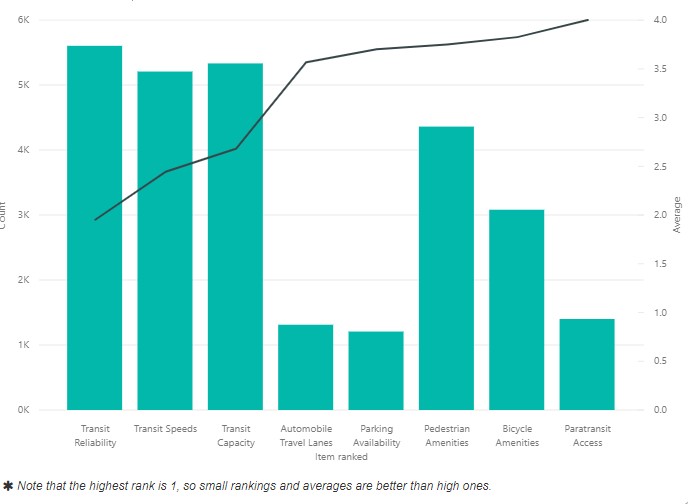
Transit related goals were ranked as the three highest.
Would an extension of the Central Subway help meet your transportation goals?
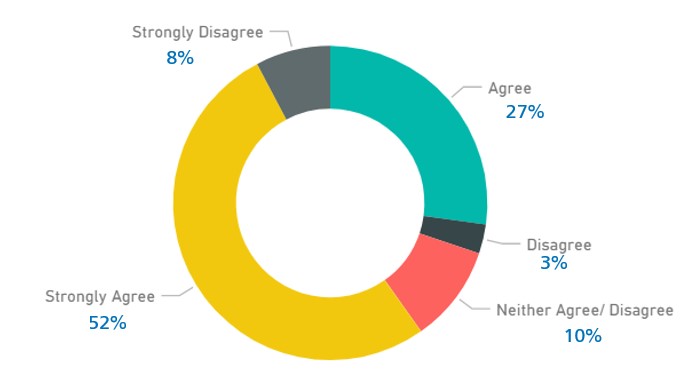
When asked if an extension of would help people meet their transportation needs, 79% either agreed or strongly agreed.
Should Central Subway be extended to North Beach using existing tunnels, with a new station near Washington Square?
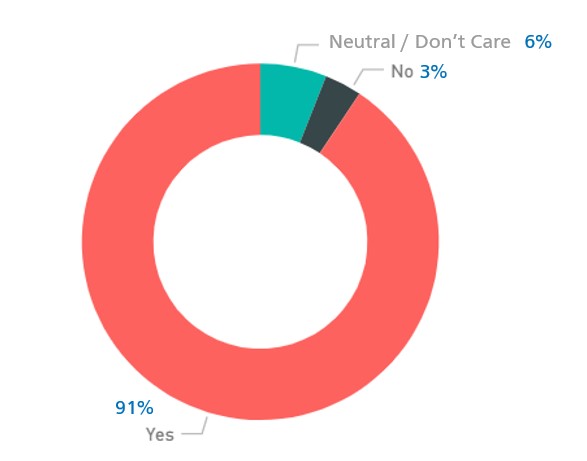
A large majority of people expressed a desire for a station in North Beach.
If the train extended from North Beach to Fisherman’s Wharf, would you prefer surface or underground?
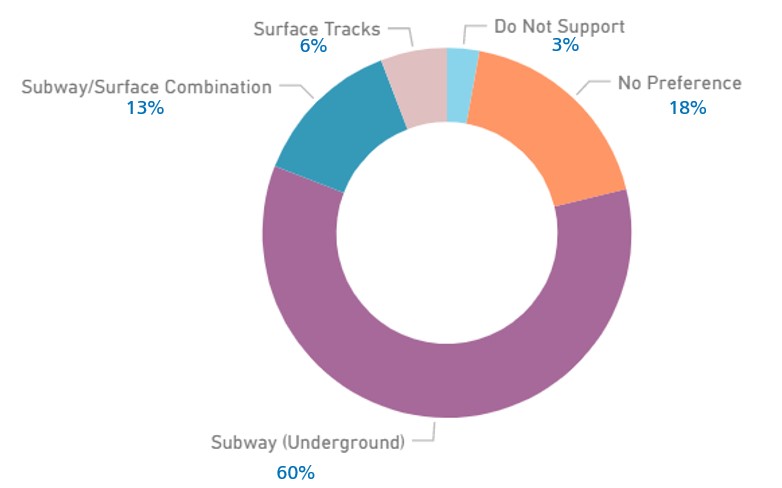
Most survey-takers indicated a preference for underground transit.
If the train extended from Fisherman’s Wharf towards Marina/Cow Hollow, would you prefer surface or underground?
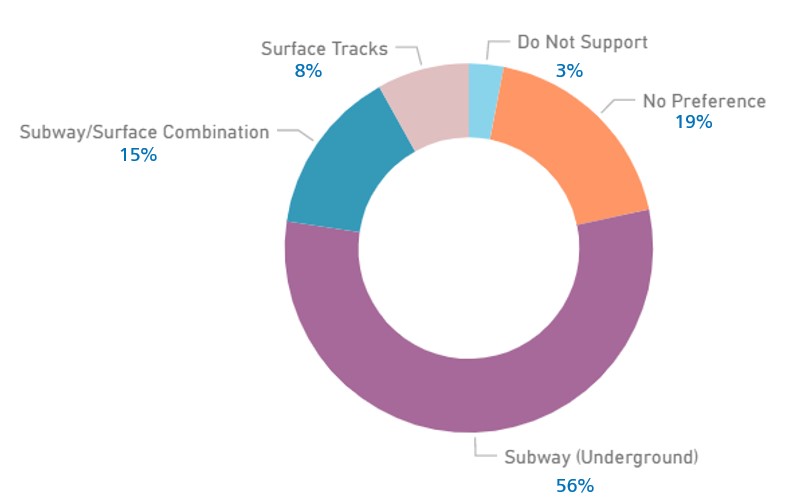
As with the previous question, most respondents preferred any extension to Marina/Cow Hollow be underground.
Where would you like to see new subway stations?
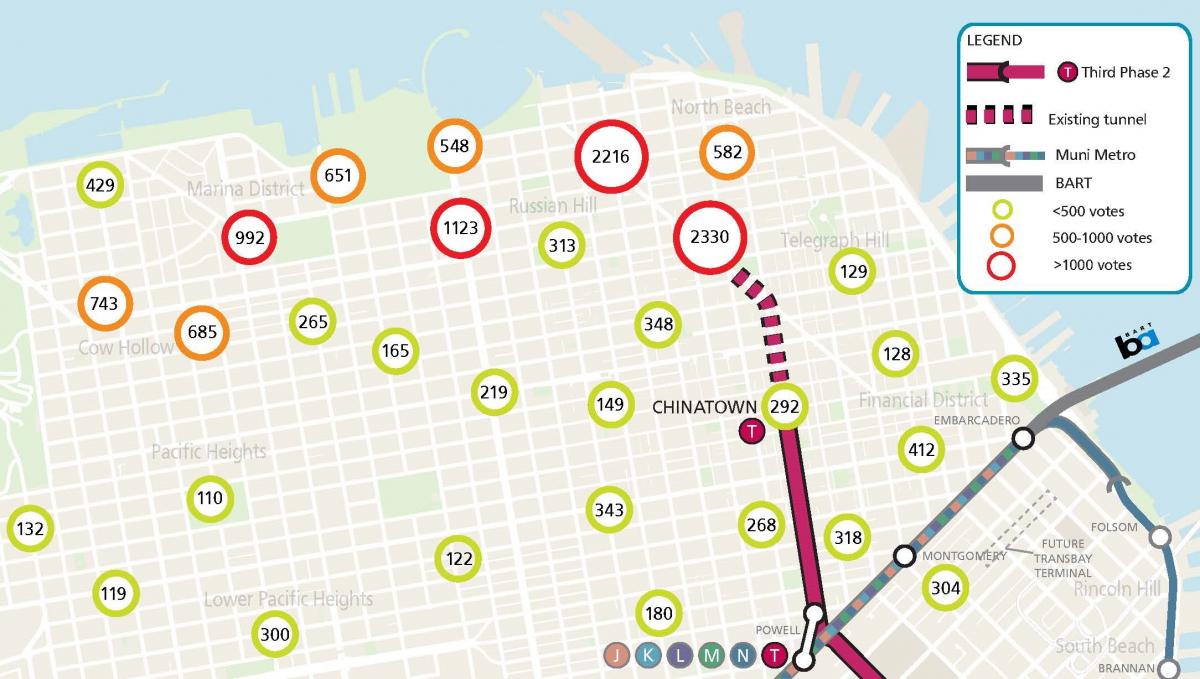
When compiling all the suggested station locations, clusters started to emerge, as shown in the above map.
Where do you live?
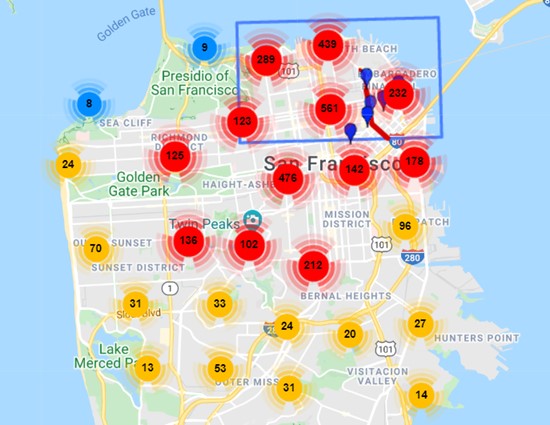
We received responses from all over the city with a high percentage people weighing in from inside the study area (blue box).
Where do you live?
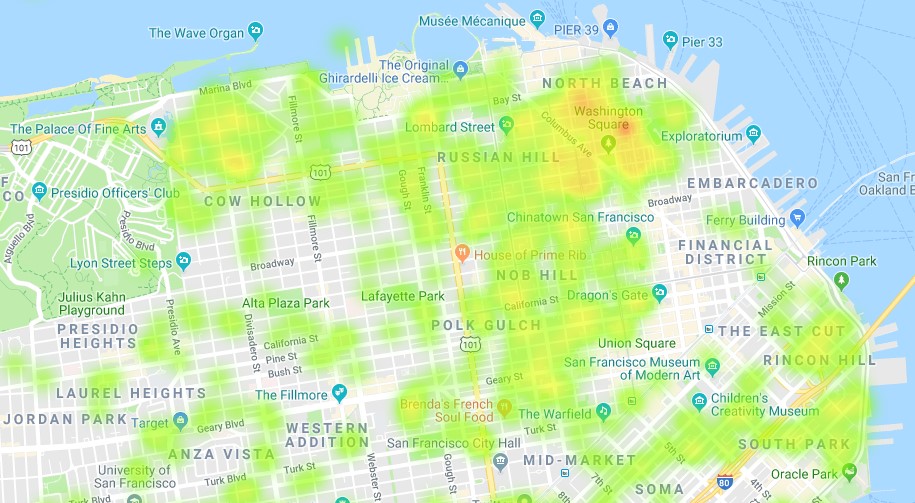
Zoomed in “home” view near the study area: Orange and red areas denote higher concentrations of responses.
Where do you work?
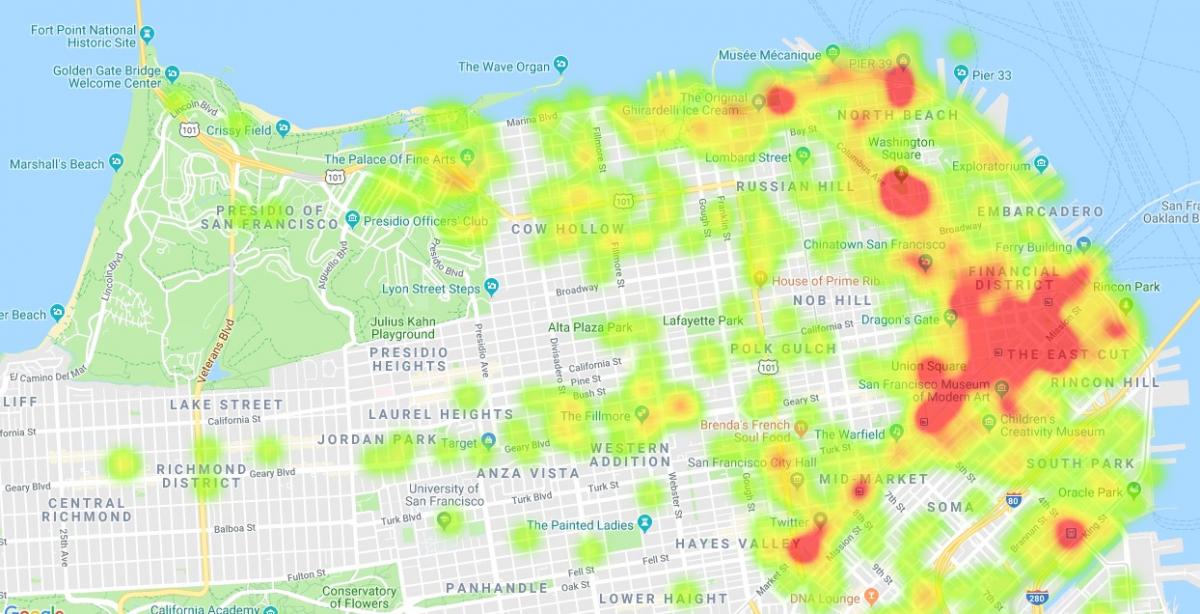
Orange and red areas denote higher concentrations of responses.
Next Steps
After compiling and further analyzing this feedback, we will begin looking at some potential extension routes from an engineering standpoint to better understand the potential trade-offs and benefits. We will reach out again to share them with the community for additional input. Our goal will be to narrow the options to two or three for further planning, environmental review, and design, contingent on identification of funding.
More Information
For more information, visit the Central Subway Extension project page where you can sign up for email updates.
Published February 26, 2020 at 11:08PM
https://ift.tt/2Ps4Qqd