الأربعاء، 30 سبتمبر 2020
Show HN: Growing Wine Grapes in My Parents' Basement https://ift.tt/3in1ssh
Show HN: A wiki style education platform licenced under CC0 https://ift.tt/2GdeQCt
Show HN: Okdb – OT Simplified https://ift.tt/34j8KbU
Show HN: Telegram bot to get new HN stories by keywords https://ift.tt/3cOoIyj
Launch HN: Narrator (YC S19) – a data modeling platform built on a single table https://ift.tt/34bcMD0
Show HN: A simple SSH CA service with only 150 lines of Python code https://ift.tt/3cIloEW
Show HN: Parenthing – a parenting companion for parents with children aged 3 – 9 https://ift.tt/2S9yr8W
Show HN: A simple log-based, transactional, embedded relational database in Java https://ift.tt/2EKJ1A7
Show HN: Buku – browser-independent private portable bookmark manager https://ift.tt/3n0BVch
Show HN: Ruby One-Liners Cookbook https://ift.tt/30ihptW
الثلاثاء، 29 سبتمبر 2020
Show HN: Live dashboard of every email Trump and Biden are sending https://ift.tt/2Ga1G9i
Show HN: Supertribe – Meaningful professional connections over online games https://ift.tt/3jguRG7
Show HN: Hammer – Golang's Fluent Rest API Client https://ift.tt/2GpwOkL
Show HN: I made a site that lets people subscribe to get stock music via email https://ift.tt/30gv1G4
Show HN: Lightweight runtime types for vanilla JavaScript https://ift.tt/3kXT8Rz
Show HN: Trasa – zero trust service access platform https://ift.tt/2Hxroor
The First Step to Battery Electric Muni Buses
By Bradley Dunn
Starting in early October, the SFMTA will take a big leap forward in implementing its Sustainability and Climate Action Program by installing nine new charging stations at Muni Woods Division to power the agency’s first battery electric buses after significant progress in battery technology in recent years. The project will kick off the pilot program to determine the SFMTA’s future charging methods for new zero-emission e-buses.
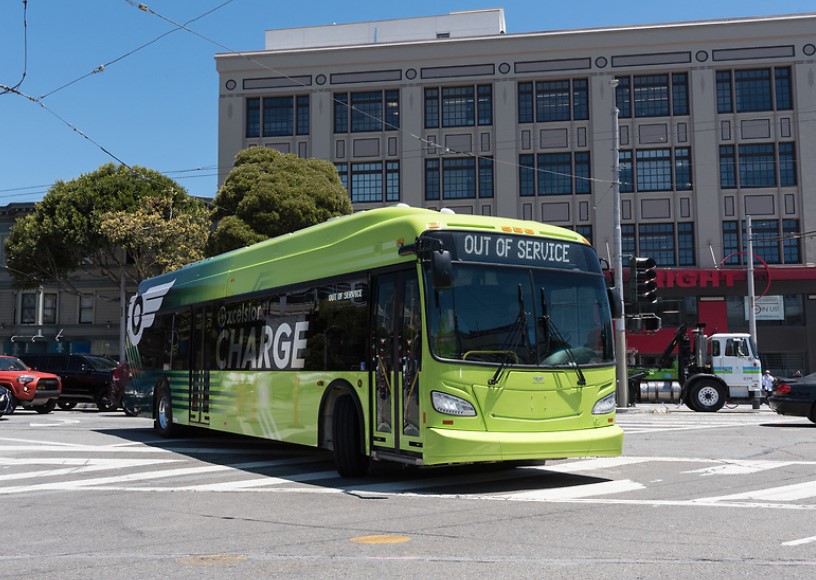
A battery-electric bus turns from Mission on to South Van Ness
To find out if battery electric bus technology is ready for San Francisco, the SFMTA is implementing an 18-month battery-electric bus pilot program. The SFMTA will procure three 40-foot buses each from three different manufacturers to test their performance in revenue service for 18 months. The first three battery electric buses are expected to arrive in spring 2021 as part of the pilot program.
Questions remain about whether battery electric buses can handle San Francisco’s heavy transit ridership and hilly routes. Before deploying battery-electric buses, they must deliver the same reliability and service as our current hybrid-electric and electric trolley bus fleets.
As of 2018, 45 percent of San Francisco’s greenhouse gas emissions are generated by the transportation sector which is heavily reliant on carbon-intensive fossil fuels. This reliance on harmful fossil fuels is changing the earth’s climate and contributes to extreme weather events, increased fire risk and sea level rise. The SFMTA is a leader in providing safe and sustainable transportation options as it continues to implement its Sustainability and Climate Action Program.
The SFMTA’s energy-efficient Muni fleet contributes less than two percent of the transportation sector’s emissions and moves approximately 700,000 people every day. Today, the SFMTA operates the greenest transit system of any major city in North America.
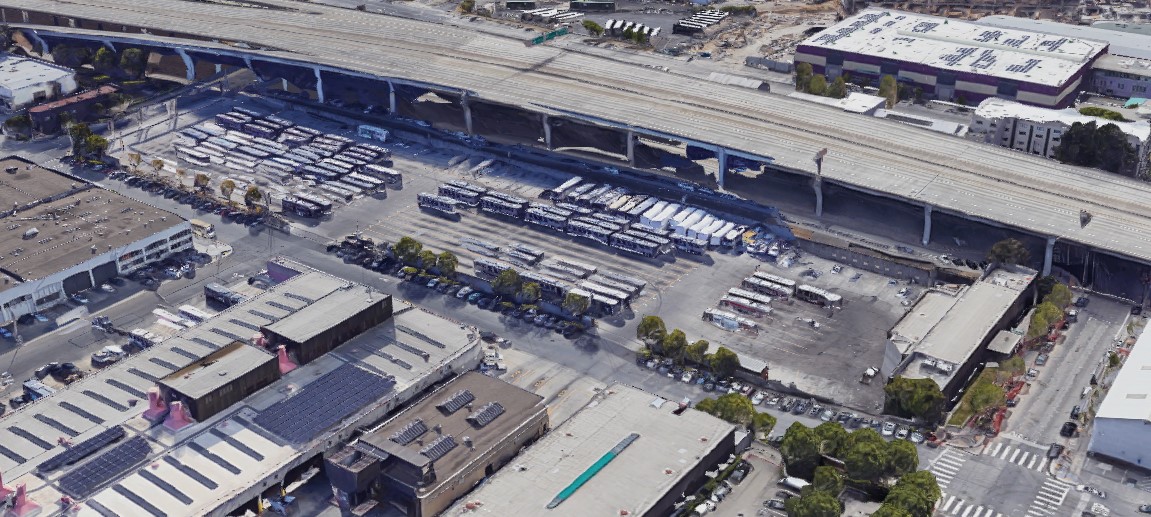
The Woods Bus Yard where the new charging infrastructure will be installed.
Electric Bus Pilot Program
The installation of the new chargers will take approximately nine months to complete. In addition to the battery-electric bus chargers, the updated infrastructure includes electrical support equipment, such as switchgear, switchboard, transformers, power cabinets and conduit.
- Construction hours are Monday through Friday, 9 a.m. to 5 p.m.
- Bus operation at Woods will operate as usual without interruption.
- Work will be contained in the bus yard and will not impact traffic or transit service to the public.
- Measures will be taken to control noise and dust during work hours.
Installing these chargers is the first step in making the greenest transit fleet in North America even more environmentally sustainable. Battery electric buses will further reduce harmful emissions and air pollution.
For more information on electric mobility, please visit SFMTA Electric Mobility Page
Published September 29, 2020 at 07:44PM
https://ift.tt/3kX90DV
The First Step to Battery Electric Muni Buses
By Jay Lu
Starting in early October, the SFMTA will take a big leap forward in implementing its Sustainability and Climate Action Program by installing nine new charging stations at Muni Woods Division to power the agency’s first battery electric buses after significant progress in battery technology in recent years. The project will kick off the pilot program to determine the SFMTA’s future charging methods for new zero-emission e-buses.
A battery-electric bus turns from Mission on to South Van Ness
To find out if battery electric bus technology is ready for San Francisco, the SFMTA is implementing an 18-month battery-electric bus pilot program. The SFMTA will procure three 40-foot buses each from three different manufacturers to test their performance in revenue service for 18 months. The first three battery electric buses are expected to arrive in spring 2021 as part of the pilot program.
Questions remain about whether battery electric buses can handle San Francisco’s heavy transit ridership and hilly routes. Before deploying battery-electric buses, they must deliver the same reliability and service as our current hybrid-electric and electric trolley bus fleets.
As of 2018, 45 percent of San Francisco’s greenhouse gas emissions are generated by the transportation sector which is heavily reliant on carbon-intensive fossil fuels. This reliance on harmful fossil fuels is changing the earth’s climate and contributes to extreme weather events, increased fire risk and sea level rise. The SFMTA is a leader in providing safe and sustainable transportation options as it continues to implement its Sustainability and Climate Action Program.
The SFMTA’s energy-efficient Muni fleet contributes less than two percent of the transportation sector’s emissions and moves approximately 700,000 people every day. Today, the SFMTA operates the greenest transit system of any major city in North America.
The Woods Bus Yard where the new charging infrastructure will be installed.
Electric Bus Pilot Program
The installation of the new chargers will take approximately nine months to complete. In addition to the battery-electric bus chargers, the updated infrastructure includes electrical support equipment, such as switchgear, switchboard, transformers, power cabinets and conduit.
- Construction hours are Monday through Friday, 9 a.m. to 5 p.m.
- Bus operation at Woods will operate as usual without interruption.
- Work will be contained in the bus yard and will not impact traffic or transit service to the public.
- Measures will be taken to control noise and dust during work hours.
Installing these chargers is the first step in making the greenest transit fleet in North America even more environmentally sustainable. Battery electric buses will further reduce harmful emissions and air pollution.
For more information on electric mobility, please visit SFMTA Electric Mobility Page
Published September 29, 2020 at 07:44PM
https://ift.tt/3kX90DV
Show HN: MindPad – complete life organizer – notes, habits, to-do's, reminders https://ift.tt/2EHQnnZ
Show HN: Elsa is a minimal, fast and secure runtime for JavaScript written in Go https://ift.tt/2SbcXss
Show HN: Go library for loading Python's data serialized with pickle https://ift.tt/339RINY
Show HN: ML News – Like HN, but for Machine Learning https://ift.tt/3je2yIl
الاثنين، 28 سبتمبر 2020
Show HN: A progress bar that plays lofi music while waiting https://ift.tt/3j7WC3v
Show HN: Keywords2lyrics – Automatic Songwriting from Keywords https://ift.tt/36easOf
Show HN: lit-request - 852 bytes fetch API based Javascript microlibrary https://ift.tt/30fWE1W
Show HN: Founders Community to the Next Level https://ift.tt/2FYnSTV
Show HN: The Most Simple Way to Set Goals You Actually Follow https://ift.tt/2S7hw6V
Show HN: How to solve “Zoom Fatigue” with a more immersive AR meet mobile app https://ift.tt/2GfkT9d
Show HN: A SQL database implemented purely in TypeScript type annotations https://ift.tt/30gPme6
Show HN: Erlang code generator for Idris 2 https://ift.tt/2S4IN9Z
Show HN: Bring your desktop-based engineering simulation results, Models in VR https://ift.tt/2S63qmf
Show HN: A tool that finds formulas from values without supervision https://ift.tt/3n02z4U
Show HN: All duckduckgo bang operators on one page (metasearch tool) https://ift.tt/2HEODx2
Show HN: Make web longform content print optimised(beta),physical book(release) https://ift.tt/3jc0RLl
Show HN: GRT – track code review turnaround for your GitHub repositories https://ift.tt/348pu5k
Show HN: Go Budget, a full-featured manual budget tracker built with Flutter https://ift.tt/3cE7L9K
Show HN: Vocabulary 90 – vocabulary learning automation https://ift.tt/3kV6w90
Show HN: Grayscale/reading mode for i3 and other WMs https://ift.tt/2GggDGE
الأحد، 27 سبتمبر 2020
Show HN: Remote Oil Tank Monitoring Solution https://ift.tt/3j8G3EJ
Show HN: Fast Variant data type for Go https://ift.tt/2S12Gii
Show HN: File2DB, Upload CSV/JSON/Excel to a (PostgreSQL/MySQL/) Database https://ift.tt/3jfe5Y0
Show HN: Keyboard Simulator – virtual keyboard designer https://ift.tt/2EDJeoJ
Show HN: Prosthesis limbs customization platform in 3D https://ift.tt/30fLj1L
Show HN: Life Calendar – Your Life in Weeks https://ift.tt/30ucA0L
Show HN: Instant SVG icon search with over 50K+ icons indexed https://ift.tt/340ZEQR
Show HN: bbox-visualizer – Make drawing and labeling bounding boxes easy as cake https://ift.tt/3kLAP1U
Show HN: Simple, customizable, no-code website Hit Counter https://ift.tt/2EBeLaO
Show HN: iOS 14 'Phoenix 2' Space Shooter via App Clips https://ift.tt/3i99tkK
Show HN: iPhone app that may prevent you from frequent social media checking https://ift.tt/334eRRL
Show HN: Timebox – Timer Script for Windows/Linux/macOS to Practice Timeboxing https://ift.tt/3j9aqdU
Show HN: Submit your startup to 38 communities https://ift.tt/2FVODZb
Show HN: Submit your startup to 38 communities https://ift.tt/2FVODZb
السبت، 26 سبتمبر 2020
Show HN: Build AWS ECS external deployments graphically https://ift.tt/2Hv3wBP
Show HN: Wisefin API – Turn messy bank transactions into beautiful data https://ift.tt/2G6DTqC
Show HN: DevUtils.app – Developer Utilities for macOS https://ift.tt/3cCko52
Show HN: Port2 – Expose local port to the internet, macOS App https://ift.tt/3mWWPIX
Show HN: Transactional Outbox Pattern in Go https://ift.tt/2S48WpG
Show HN: Startingcondition.com – Who goes first at standup? (or group events) https://ift.tt/2HDvBY1
Show HN: Gitjacker: Leak Git repositories from misconfigured websites https://ift.tt/337zLzE
Show HN: A freelance-only job board https://ift.tt/2G88MuC
Show HN: Launch the Damn MVP https://ift.tt/2GheTN5
Show HN: Fun with cell phone webcam and WebGL shaders https://ift.tt/30d8b1R
Show HN: Trueq.io – A New Q&A Platform for Developers https://ift.tt/344nDhN
Show HN: Send Audio Messages in Gmail https://ift.tt/33ZJiI1
Show HN: Partially Discord-compatible server written in Go https://ift.tt/34hlsIb
Show HN: Fully Open-Sourced Online MIDI Editor https://ift.tt/36aEOks
Show HN: Teach yourself to code with real-world projects https://ift.tt/332qVTF
Show HN: “Embeddable Fields” in GraphQL https://ift.tt/3cye7Y6
Show HN: Wyre, a hardware definition language that compiles to Verilog https://ift.tt/2FVKg0a
Show HN: Airlane Beta – a better LinkedIn for your Twitter https://ift.tt/333WxYR
Show HN: BulletWeek GTD app packed with features https://ift.tt/3kMITzu
Show HN: Rentify – Create an online rental store https://ift.tt/3i5TcNh
Show HN: I'm building an open-source catalog of cloud infrastructures https://ift.tt/3cJGq6l
الجمعة، 25 سبتمبر 2020
Unclog Fog City
By Bradley Dunn
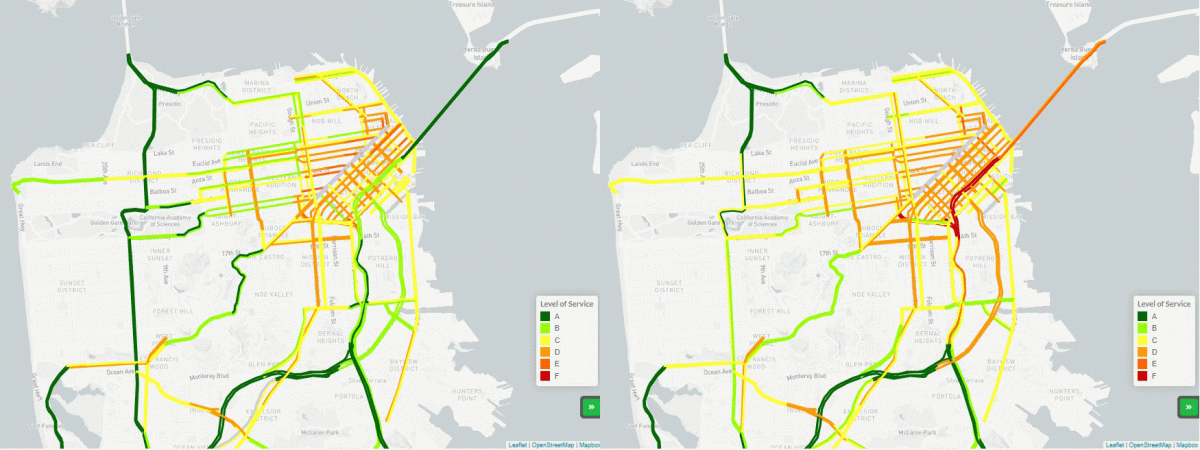
Congestion has increased between March 2020 and September 2020. Find out more about congestion with the San Francisco Congestion Tracker
Before the pandemic, congestion in San Francisco was the worst it has ever been. As the economy has been reopening, traffic congestion has begun to climb. Our partner agency, the San Francisco County Transportation Authority (SFCTA), has released a digital game where you can help manage this traffic congestion by pricing it.
Curbing congestion
As congestion returns, commutes get longer and severe and fatal collisions and climate emissions increase. Low-income communities and communities of color- with high use of public transit, and living in areas with high rates of traffic collisions and air pollution-bear the brunt of the burden of congestion’s impact.
In 2019, the city started to investigate how reduce congestion and congestion’s unwanted and inequitable outcomes by using pricing . Congestion pricing is a tool that has been used successfully by cities around the world to reduce congestion. Like those cities, San Francisco could use congestion pricing to keep traffic moving, increase roadway safety, clean the air and advance equity.
How should congestion pricing work in San Francisco?
The city wants your help to determine the best way to design congestion pricing by providing feedback about potential fees discounts, exemptions or incentives. They are also asking about how you would invest revenue generated by congestion pricing.
To share your thoughts you can:
Play Unclog Fog City
Play a digital game that lets you design your own congestion pricing program.
Complete a survey via text message
For English: Text TRAFFIC to 415-449-4214
For Spanish: Text TRAFICO to 415-449-4214
For Chinese: Text 交通 to 415-449-4214
For Filipino: Text TRAPIK to 415-449-4214
Share with your Friends
Share these opportunities to get involved on Twitter, Facebook, and LinkedIn.
To learn more about the effort visit the Downtown Congestion Pricing Study webpage and sign up to receive email updates.
Published September 26, 2020 at 01:46AM
https://ift.tt/3kT0xBP
Show HN: Meet a co-founder every Saturday https://ift.tt/3406F4f
Show HN: Layers News https://ift.tt/3hX2HhS
Show HN: Strongweek, an iOS app focused on weeks months and years not due dates https://ift.tt/2HmV8Er
Show HN: A Serverless Chess Engine running in 4 different clouds https://ift.tt/3i9R9Ik
Show HN: Video Transcoder on the browser using WASM https://ift.tt/305nR7a
الخميس، 24 سبتمبر 2020
Show HN: Parametric Equalizer for PulseAudio https://ift.tt/2RZ6jFE
Show HN: Cloudboost.io – open-source BaaS platform just like Firebase https://ift.tt/3i9KSfL
Rolling Out a Car Free Path to the Beach
By Benjamin Barnett
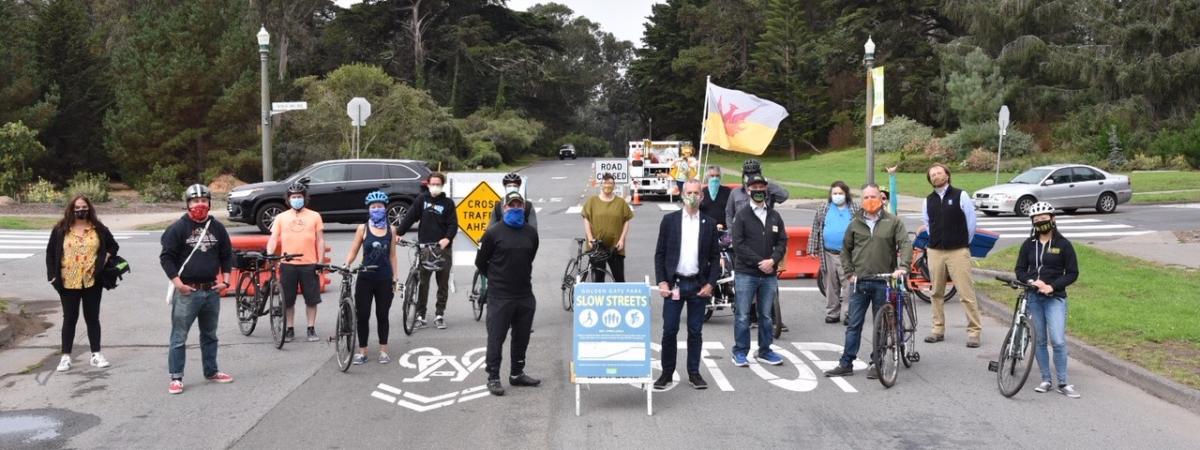
Last week, the Golden Gate Park Slow Streets Expansion opened to the public. People walking, biking, running and skating can now enjoy a nearly car-free route from the Panhandle all to the way to Ocean Beach.
Connecting the City
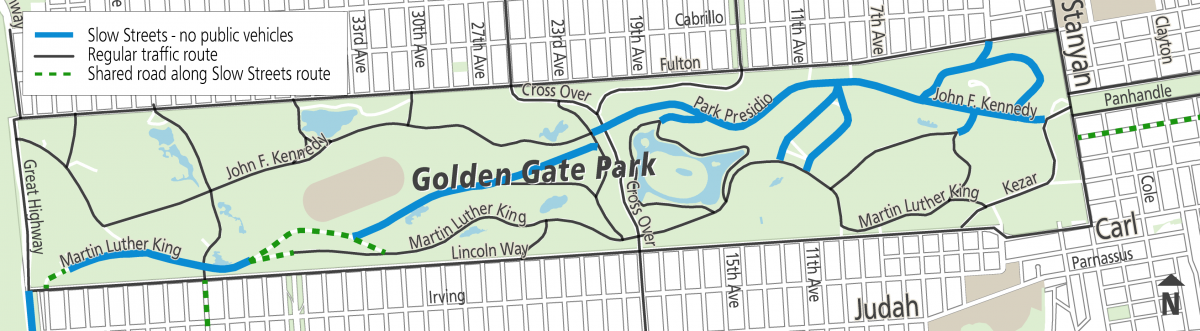
Golden Gate Park Slow Streets are a collaboration between the SFMTA and the Recreation and Park Department. These new Slow Streets provide the last link in a route prioritized for people on bikes stretching from the Ferry Building to the ocean by connecting to the network of bikeways, Slow Streets, and streets previously closed during the health emergency. Starting from the Ferry Building you may now head down a Car-Free Market Street, then up the hill on the Page Slow Street connecting you to Golden Gate Park's newly expanded network.
Golden Gate Park Slow Streets will begin at Stanyan Street and John F. Kennedy Drive East on the park’s eastern edge and connect with the stretch of JFK from Kezar Drive to Transverse Drive. The route then continues onto Overlook Drive, then Middle Drive and Martin Luther King Jr. Drive to Ocean Beach, where it connects with The Great Highway. The Great Highway has also been closed due to the pandemic, and this connection creates a continuous, family-friendly path from the Panhandle to the San Francisco Zoo.
Not Entirely Car-Free
To keep nearby traffic moving and maintain access for those that need to access the park in a car, a few areas are not entirely car-free:
- A 200-foot portion of the route on Transverse Drive, between JFK Drive and Overlook Drive
- An approximately half-mile portion of the Metson/Middle Drive/MLK Drive loop near the south end of the Polo Field
- The intersection at MLK Drive and Chain of Lakes Drive/41st Avenue
- A 500-foot stretch of MLK Drive near Lincoln Way
In addition, authorized vehicles intended for park maintenance and ranger patrols will use the roads along the route when necessary. Motorists can still drive through the park from north to south using Transverse Drive, Chain of Lakes Drive, and 25th Ave/Crossover Drive/19th Ave/Park Presidio, as usual.
New Traffic Flows
Drivers will be rerouted from some east and westbound roads during Golden Gate Park Slow Streets, including:
- The west portion of MLK Drive west of Sunset Boulevard, specifically from the Middle Drive/MLK loop to Lincoln Way, is closed to regular traffic. This includes Bernice Rodgers Way, between MLK Drive and JFK Drive.
- Overlook Drive and Middle Drive, between Transverse Drive and the Metson/Middle Drive/MLK loop, will be closed to traffic. However, Middle Drive between Transverse and Overlook will remain open and available for street parking.
- JFK Drive, between Kezar Drive and Transverse Drive, will remain closed to traffic. This portion of the road had previously been closed during the City’s initial COVID-19 response.
Golden Gate Park Slow Streets and the SFMTA Slow Streets initiative have the common goal of making San Francisco more welcoming and accessible for people who want to travel on foot, bicycle, wheelchair, scooter, skateboard or other forms of micromobility. Slow Streets are critical infrastructure that attracts users of the full array of neighborhood demographics—including children, older adults, people with disabilities and people of color.
Published September 25, 2020 at 01:05AM
https://ift.tt/3408X3c
Launch HN: Scrimba (YC S20) – Interactive video for learning to code https://ift.tt/32WBPdB
Show HN: Hotpot – A tool to make graphic design easier https://ift.tt/2HjEZ2z
Show HN: Ready-Made CRM, Project and Content Management on Notion https://ift.tt/32Zv7DO
Show HN: MP3 to Text https://ift.tt/361ieec
Show HN: Headless Recorder https://ift.tt/3kWAzNV
Show HN: Alpodo – Free simple, Easy to use and privacy friendly analytics https://ift.tt/303ROEO
الأربعاء، 23 سبتمبر 2020
Show HN: AR VR App for Virtual Events, Birthdays, Concerts, Hangouts, and More https://ift.tt/2RSy3LR
Show HN: Scribble – Realtime Whiteboarding for Developers https://ift.tt/2RTgHyy
Show HN: Open-Source Memex – Alternative Approach to Roam/Obsidian https://ift.tt/3hYQFVg
Show HN: Argsearch – A composable tool for sweeping over command-line arguments https://ift.tt/3mOosUA
September 24th: Bike to Work Day is now Bike to Wherever Day
By Sophia Scherr
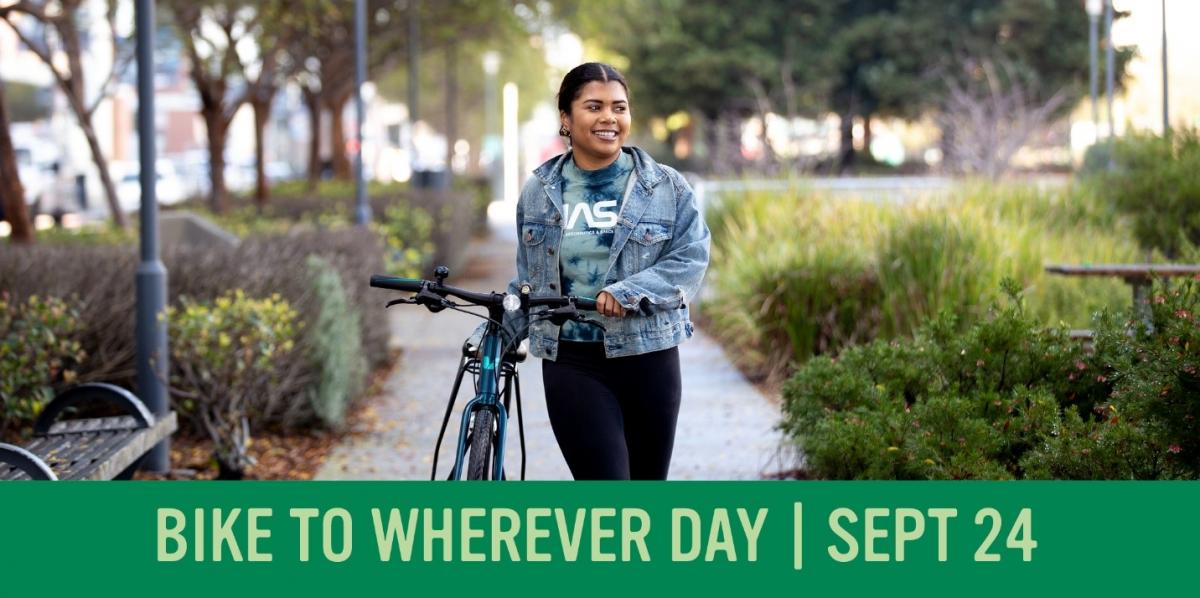
Many things are different in 2020, including Bike to Work Day. With fewer people going into work, September 24 is now Bike to Wherever Day reminding people that bicycle trips aren’t just for commuting. Thanks to our new Shared Spaces program you can go to even more places.
Riding your bike helps the environment, reduces traffic congestion and is a green way to see San Francisco. As Muni is still only for essential trips, adopting alternate modes of transportation as biking helps.
To get involved with this event, on September 24th, share why bike to wherever is special to you and reward yourself with a free Bike to Wherever tote bag at one of many curbside pickup locations.
Here are the details:
- Grab a FREE canvas tote bag via curbside pickup: pedal by the Bike to Wherever Day curbside pickup or stop by a participating bike shop to grab the classic #BTWD tote bag.
- Volunteer to flyer your neighborhood: help distribute bicycle safety tips to residents across San Francisco.
- Compete in the Bike to Wherever Days virtual challenge: throughout the month of September, as you bike to run errands, recreation, or for whatever, log the miles you ride. Compete individually or create a team among friends or coworkers for some friendly competition. Every time you pedal, you earn points and the chance to win cool prizes.
Are you new to bicycling or could you use a refresher on the rules of the road? The San Francisco Bicycle Coalition is a great resource for new and seasoned bike riders of all ages, as they offer a variety of free educational workshops, including how to ride and navigate safely on San Francisco streets. We’re excited to continue our partnership with the San Francisco Bicycle Coalition and celebrate biking as a healthy, environmentally friendly way to get around.
Published September 23, 2020 at 11:23PM
https://ift.tt/361JhGf
Show HN: Create an AWS infrastructure defined as code, in seconds https://ift.tt/362ydsk
Show HN: SirTunnel – Selfhosted, 0-config alternative to ngrok. Caddy+SSH+50 LOC https://ift.tt/32TFzMO
Show HN: I made an open-source marketplace to fasten OAuth API integrations https://ift.tt/2EroaBM
Show HN: Blindsend, Open-Source End-to-End Encrypted File Transfer https://ift.tt/2EqxW7a
Show HN: Cambrinary – a terminal online dict, powered by cambridge dictionary https://ift.tt/2RQmtRk
Show HN: Lala – Learning Japanese App https://ift.tt/33SvS0v
Show HN: CSNotes – A website for my Computer Science Notes https://ift.tt/303xq6O
Show HN: Submit your startup to 160 directories https://ift.tt/33TkHof
Show HN: ClipURLCleaner: Cleaning URLs in your clipboard https://ift.tt/2G5u3ox
Show HN: Chrome Addon to list BitChute (and more) subs on your YouTube subs page https://ift.tt/3mIYpOF
Show HN: Mono Icons – A simple, consistent open-source icon set https://ift.tt/3iXXlnF
Show HN: Linxy – Search News https://ift.tt/3iVShjD
Show HN: Slick Docs Editor – A Hybrid of Google Docs and Wix https://ift.tt/2EvF02A
الثلاثاء، 22 سبتمبر 2020
Show HN: DailyMap – build your own planner using mind maps https://ift.tt/2ZYXvUD
Show HN: I made a free-to-use GPT-2 API https://ift.tt/2G06dL0
Fare Inspection Reimagined
By Kimberly Burrus
As Muni’s Transit Fare Inspectors return to service, the SFMTA is excited to share a new approach that we have for how we will check for fare payment and interact with our customers. Rather than focusing solely on enforcement, the priority will shift to helping customers comply with fare policies. To support this new approach, our Transit Fare Inspectors will be returning over multiple phases this fall and they will have a new look.
At the beginning of the public health emergency, Muni fare inspectors took on disaster service worker duties, but Muni never stopped collecting fares. Muni customer fares provide approximately 20% of our revenue and we depend on fares to provide transit service.
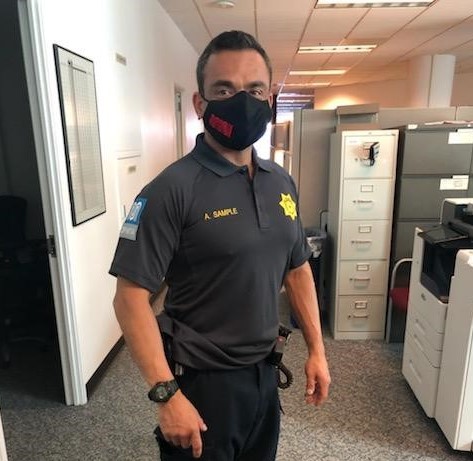
A Transit Fare Inspector models their new uniform.
Phased-in Return
This week Muni fare inspectors have joined SFMTA’s larger ambassador program to provide customer assistance throughout the system. This is the start of the phased-in process for Muni to resume fare inspection.
- The first phase includes providing Muni customers with service information, fare programs, kiosk location, physical distancing assistance and mask distribution when needed at stops and stations throughout the system.
- For the second phase, fare inspectors will return to being on Muni vehicles to continue providing customer assistance of phase one and conducting fare inspections without issuing citations. This is expected to begin in the latter part of October.
- The third and ultimate phase will see the inspectors continuing to provide the customer service assistance of phase one and with a return to full fare inspections, including issuing citations as needed later this year.
Inspectors have always been part of our incident response when direct customer service was needed, either during an emergency or a large public event, like a parade. Now, that customer service approach will be integrated into our inspectors’ daily work.
Fare inspectors will work to ensure quality customer service, a safe experience and support for our customers. In light of the COVID-19 public health emergency, inspectors will remind customers that masks are required while customers are waiting to board and to maintain physical distance.
We will be:
- Leveraging our innovative community-based Muni Transit Assistance Program as a model for our system-wide inspectors
- Reorganizing the Proof of Payment unit. The new approach will allow inspectors to:
- Support and coordinate better with each other and Muni operators
- Spend more time on vehicles
- Cover more of the city
Muni’s Proof of Payment system means that if you are onboard a vehicle or on a station platform, you are expected to have a tagged Clipper Card®, a transfer, a subway ticket or an active MuniMobile ticket – proof that you have paid your fare.
The changes we’re making to the Proof of Payment program will allow for larger reach and presence on the system. It will help us ensure that when there are inspections, they apply to all customers and that we prioritize visibility and compliance over enforcement.
Compliance Instead of Enforcement
As the Transit Fare Inspectors return, our inspectors’ priority will be helping customers comply with fare policies. They will eventually issue citations again, but the focus will be on service and compliance. The compliance model will help support our operators while helping to ensure that all our customers have financial access to Muni.
Here’s a summary of our new fare compliance approach:
- Data will inform fare inspector deployment. Inspectors will be deployed on routes with high ridership across the city—both those with few incidents of fare evasion and those with higher incidents. So, if you see Muni inspectors in the Mission, you will also see them in the Presidio. If they are on the 14 Mission, they will also be on a line like the 1 California.
- Inspectors will enter the vehicle in groups of three at the beginning of the line, or at a rest stop, and ride a segment of the line. One inspector will check on the operator while the other two will be in the passenger area for customer support and fare compliance reminders.
- Inspectors will remind customers to tag or show fare media as they enter the vehicle. This replaces the past practice of fare inspectors making an announcement, inspecting everyone onboard and removing customers that don’t have proof of payment. Inspectors will also have handouts to provide to customers about our discounted fare programs.
- We will be conducting periodic full inspections of all customers onboard a vehicle, including inspection announcements. This style of inspection will occur on a random schedule at most transfer points.
Please Tag!
Once fare inspectors are on vehicles and assisting customers to ensure compliance, you will see the same dedicated professionals in less formal uniforms. They will still ask to see proof of fare such as paper transfers, MuniMobile tickets and other types of Muni fares. They will also be looking for customers to tag their Clipper(R) cards as they board. Although you won’t get a citation for simply forgetting to tag your Clipper Card with your Muni Pass on it, tagging gives fare inspectors a less disruptive way to determine if you have paid your fare.
Perhaps even more important is the fact that tagging helps us make Muni better. We use the data from Clipper tagging to better understand the changing travel patterns in the city and the changing needs of Muni customers.
Published September 23, 2020 at 12:45AM
https://ift.tt/3kGmt2R
Show HN: Export Health – Easily export your Apple health data to JSON or CSV https://ift.tt/32SDbWI
Show HN: The Age of the Spiritual Machine https://ift.tt/3kIEVYP
Show HN: Nitter_scraper – Scrape Twitter using nitter https://ift.tt/32SYHun
Show HN: I'm building a catalog of cloud infrastructures https://ift.tt/3hRfz9i
Show HN: Free site to learn and try different databases https://ift.tt/3clTvlM
Show HN: Use iPhone as a password manager for your desktop PC https://ift.tt/3hQDlC3
Show HN: ExGAN-Adversarial Generation of Extreme Samples https://ift.tt/2RMCtUr
Show HN: I made a site that provides data-driven book recommendations for makers https://ift.tt/3kABt2j
Show HN: FAQ-div: turn a div into a FAQ with /w search and more https://ift.tt/3co77wQ
Show HN: Compose Key on macOS https://ift.tt/2FPBIYy
Show HN: Open end-to-end Computer Vision Platform https://ift.tt/3hRKSRa
Show HN: Fossnode – Free Matrix server for free and open source projects https://ift.tt/2Hg7caw
Show HN: Play Battleships on PostgreSQL https://ift.tt/2HcUNEf
Show HN: Makely – 3D Printing for Everyone https://ift.tt/3iTCAd0
الاثنين، 21 سبتمبر 2020
Show HN: DJ Checkup – Check your Django site for security errors https://ift.tt/3ciW5sO
Show HN: New Podcast: open-source For Business. Learn from worlds #1 OSS experts https://ift.tt/3ckTT45
Show HN: Open-source tools to troubleshoot Kubernetes applications https://ift.tt/2ZThEeA
Show HN: Realtime Collaborative Drawing with WebRTC and Canvas https://ift.tt/3mHUb9R
Show HN: An interactive tutorial teaching spring physics for animation https://ift.tt/3hPMXNI
Show HN: Take timestamped notes while watching YouTube videos https://ift.tt/2RYO0QZ
Show HN: I visualised the co-occurrence of origin and variety in coffee beans https://ift.tt/3hNcZ3X
Show HN: An Open Source Memex POC https://ift.tt/32MisDT
Show HN: The definitive guide on brand names https://ift.tt/3cfu19U
Show HN: Monitor your internet speed with a Raspberry Pi https://ift.tt/2RQV8hT
الأحد، 20 سبتمبر 2020
Show HN: Compile Ruby to C https://ift.tt/3kAcSKZ
Show HN: Commons – Simple mini-forums for communities https://ift.tt/3hVsIhG
Show HN: CSS Grid Browserslist https://ift.tt/3hK2ZIF
Show HN: CUDA Pathtracer with Lots of Features https://ift.tt/3mAZIix
Show HN: Like Momentum in Chrome but for VS Code https://ift.tt/3hPbFgQ
Show HN: Interactive: Visualizing Caffeine Halflives and Bedtime https://ift.tt/3iRNjob
Show HN: Video feedback widget with cam and audio https://ift.tt/32JUbOW
Show HN: Interactive tutorial for learning Git's internals https://ift.tt/35OyrDr
Show HN: FileConverter using FFMPEG as WASM to convert files https://ift.tt/3ceaBSG
السبت، 19 سبتمبر 2020
Show HN: A tool to make graphic design easier https://ift.tt/3mFmTrU
Show HN: Air Quality Alerts via SMS https://ift.tt/3iNX9Y7
Show HN: Evaluate mortgage cost with discounted cash flow https://ift.tt/2RVsDQx
Show HN: The Financial Status Template https://ift.tt/32NPmEl
Show HN: My Python Notebook Driven Book on Evolutionary Algorithms https://ift.tt/3iSAL00
Show HN: Find missing/stale translations for Android apps using GitHub actions https://ift.tt/2RULyLj
Show HN: Control Chromecasts from Linux https://ift.tt/3hG1YBu
Show HN: Plenary – A privacy focused RSS feed and offline reader app for Android https://ift.tt/2ZSr9dV
Show HN: GhostLap – A simple list of all Sim Racing Hardware/Equipment https://ift.tt/33M7Eow
Show HN: Philosophers in an influence graph with PageRank scores https://ift.tt/32PutbX
Show HN: I made a scraper that finds the Best Remote Jobs Every Week on the web https://ift.tt/2ZP5UKg
Show HN: Debut – a retro terminal PowerPoint clone https://ift.tt/3cca8Aq
Show HN: How beautiful is your website – check using Visual Mind AI https://ift.tt/2FAHSfb
Show HN: Implementing FORTH, hacker-news style https://ift.tt/3muuJVv
الجمعة، 18 سبتمبر 2020
Show HN: Vim-Gitstatus Plugin https://ift.tt/2ZQ387c
Show HN: Mass delete Spotify playlists using RegEx https://ift.tt/3iPaPCg
Show HN: Bulk Fusion 360 Export and Sync https://ift.tt/2ZR1lyX
Show HN: Can I create a better image format than PNG? probably not https://ift.tt/2EeR2x7
Show HN: Laguna – See what your friends are trading and make bets https://ift.tt/3hHgbhG
Show HN: sus – static site based URL shortener https://ift.tt/35Pule4
Show HN: A web service which renders SVG plots from Prometheus data https://ift.tt/3hD03xC
Show HN: Dendron – open-source, local first, anti-roam note-taking tool https://ift.tt/3mJjmZY
Show HN: Beadifier – reproducing photos with toy beads https://ift.tt/35NsS89
Show HN: Easy way to explain code architecture to new hires https://ift.tt/3cduf1d
Show HN: FiftyOne – Explore, Analyze and Curate Visual Datasets https://ift.tt/2RGDeP3
Show HN: ugit – Learn Git Internals by Building Git in Python https://ift.tt/2FQ9hZY
Show HN: PostgreSQL and Machine Learning - step-by-step python tutorial https://ift.tt/32GYla1
Show HN: Visualizing how a NeuralNetwork learns to recognize the MNIST digits https://ift.tt/35LXaIm
Show HN: Remoty – Work like you're in the same office https://ift.tt/2ZOwSSh
الخميس، 17 سبتمبر 2020
Need help riding Muni? We’ve got TIPs!
By Mariana Maguire
In April 2020, as part of our emergency response to the COVID-19 pandemic, we launched the COVID-19 SFMTA Ambassador program along Market Street – one of the city’s busiest Muni corridors where multiple core transit routes overlap and connect. As we have restored more Muni service and increased frequency on routes, demand has grown for ambassadors to serve additional high ridership locations and support ongoing Muni public health and customer information needs. To meet this public need, we are expanding the program beyond Market Street and are renaming it the Transit Information Program (TIP).
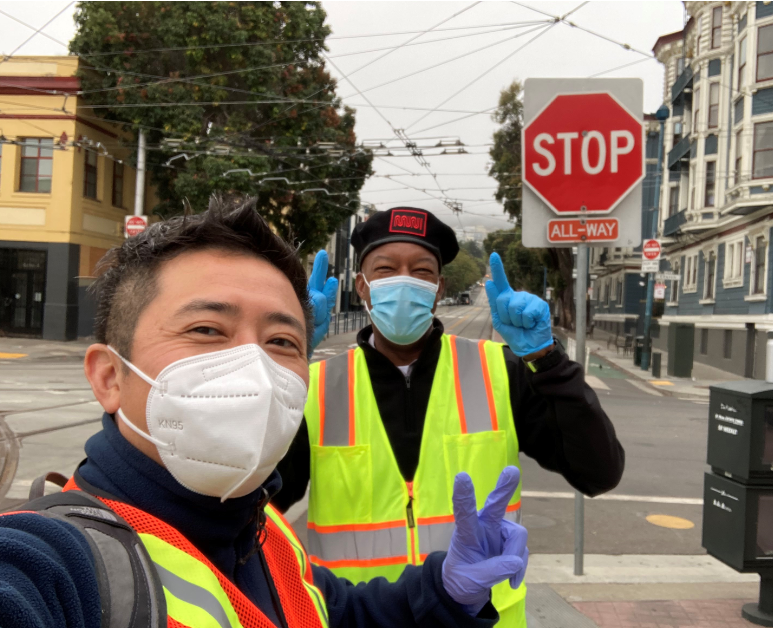
Photo: Former COVID-19 Ambassadors, now known as Transit Information Program staff (TIPs)
TIP staff (TIPs) come from many of our existing customer facing programs and staff divisions whose jobs changed because of the shifts to our system due to COVID-19. For example, you might meet a cable car or historic streetcar operator handing out masks to customers without face coverings. One of our Crossing Guards might encourage you to keep physical distance while waiting at a stop or as you board a vehicle. A Muni Transit Assistance Program staff member might hop on a vehicle to thank you for keeping your face covering on throughout your trip. Or a Transit Fare Inspector may help you find the correct bus stop.
These staff share a combined wealth of skills and understanding of the customer experience. Through their efforts as TIPs we aim to deepen the culture of customer service at the SFMTA.
The goal of this expanded effort is to provide a higher level and broader reach of direct customer engagement and support at key Muni stops to promote public health guidelines, support Muni operators, answer customer questions, and help monitor customer loads on trains when Muni Metro eventually reopens. We recognize that our fast-paced and ongoing Muni service changes have been challenging for all of us as a community, and we need to be even more available for our customers to offer support.
Our TIPs are here to help. Over the next few weeks, you will start to see them more often around town as we test different locations. They will provide rider reminders, hand out masks to customers who want to ride Muni but do not have a face covering and provide basic transit service information.
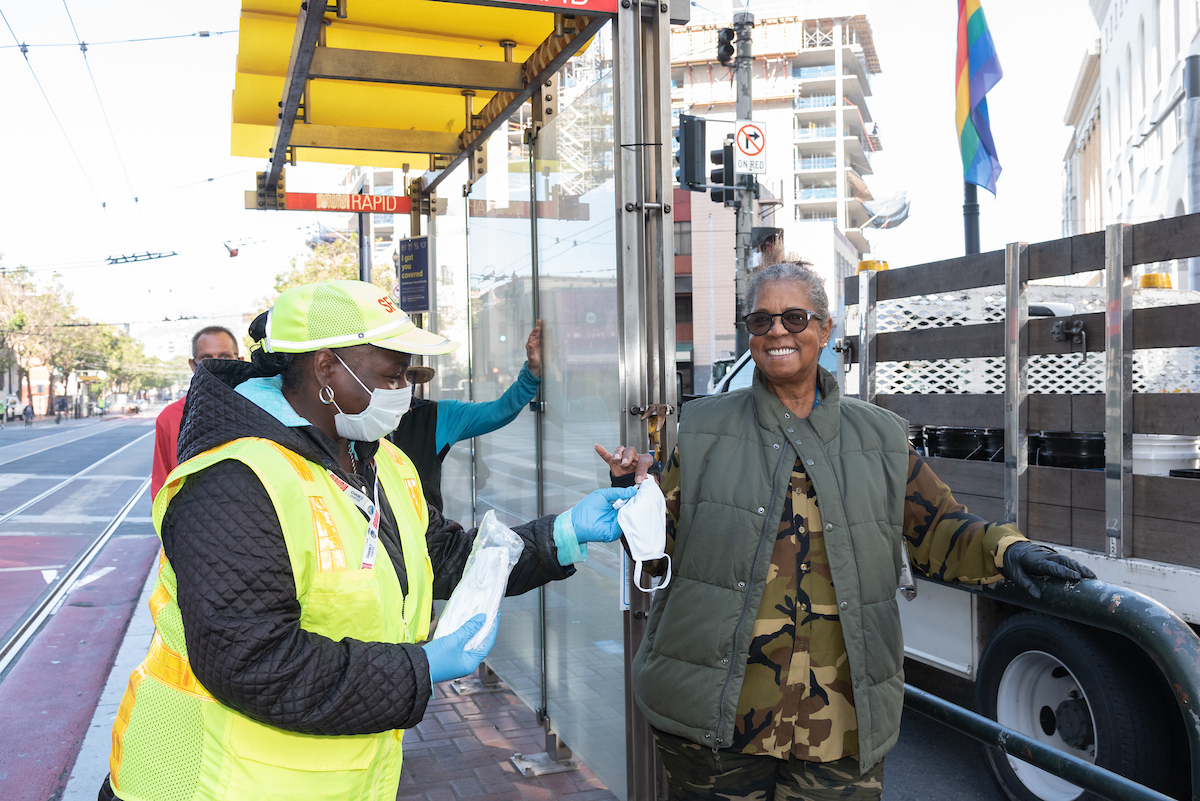
Photo: Transit Information Program staff (TIPs) helping customers during August service changes.
TIPs will be posted initially at about 45 locations, mainly along high-ridership routes like the 8 Bayshore, 9 San Bruno, 14 Mission, 38 Geary, 49 Van Ness, and Metro bus stops. These locations include key intersections where multiple routes cross, like Mission and 4th, Mission and 24th, Mission and Ocean, San Bruno and Silver, and Stockton and Pacific. The program is designed to be flexible to changing needs, so these locations may change day to day or over time, depending on where TIPs can be of most service to our customers. Air quality issues and civic events may also impact TIPs deployment.
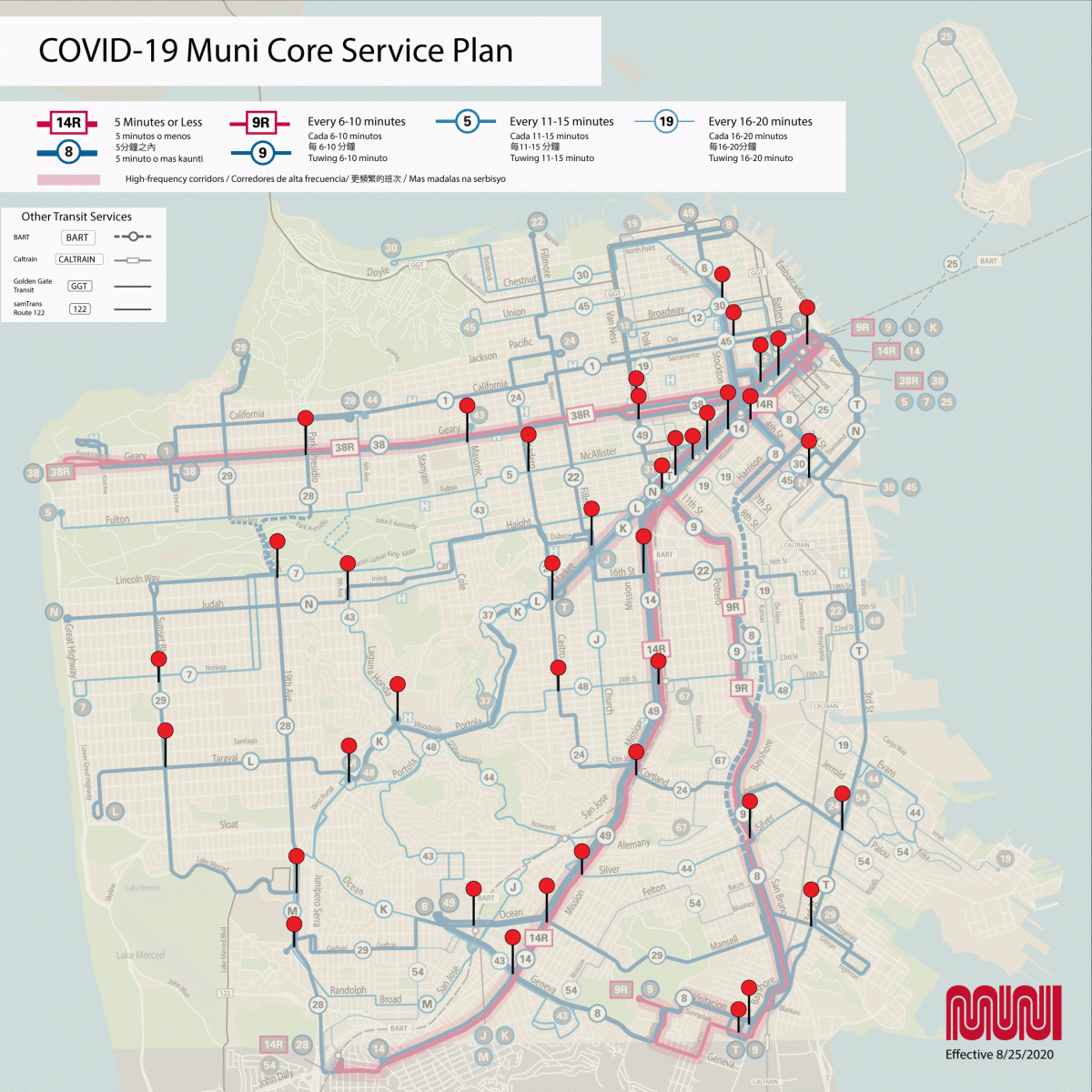
Map: Initial test locations for the expanded Transit Information Program
While we continue to take steps to improve capacity, we still sometimes still see crowding at bus stops and on buses, especially along our high ridership corridors like Geary, Market, Van Ness, and Mission streets. If a bus is about half full or more, our operators will stop picking up additional customers until there is enough room for more. Operators will indicate this to customers by placing a “Drop-Off Only” sign in their windshield and TIPs may recommend that customers wait for the next bus. We know that this continues to be tough on everyone, and we need your help to make physical distancing work.
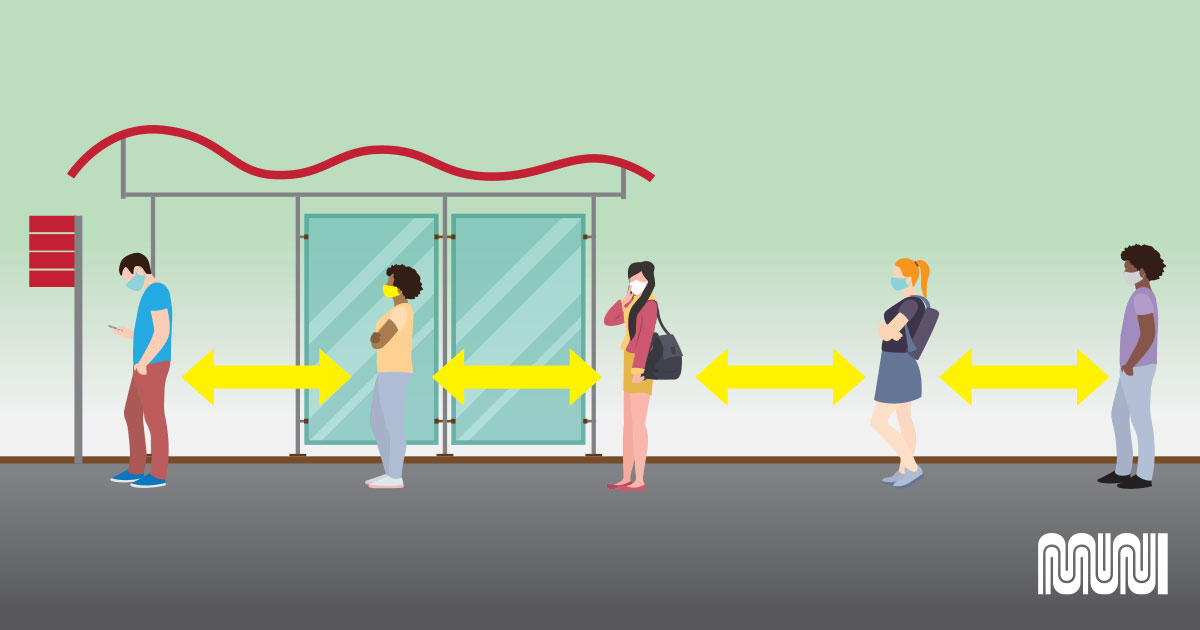
Graphic showing physical distancing at Muni stops
We also continue to see some customers who are not wearing face coverings. For our customers’ and operators’ well-being, operators may skip stops if customers are not wearing face coverings. It is vital that every customer do their part by wearing a face covering on Muni.
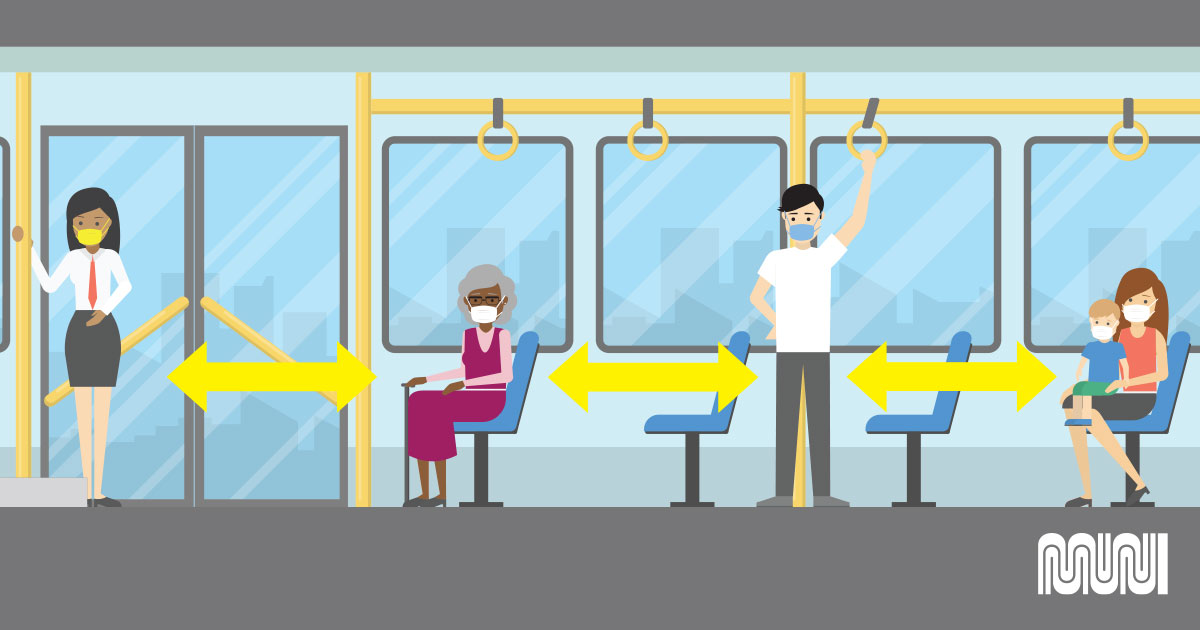
Example of physical distancing on Muni buses: Wear face coverings and give space for fellow riders.
Muni has been hit especially hard by COVID-19. The immediate health and financial impacts have cost SFMTA 30-40% of its service hours and about 80% of our capacity. It’s also put a $200M hole in our operating budget. Though ridership is far lower that pre-COVID levels, Muni continues to serve approximately 150,000 customers daily. Despite many challenges, our staff are working hard to provide essential trips and hopefully our TIPs will improve your experience on Muni.
Customer Reminders
Remember, we still need your help. Help reduce the risk of COVID-19 transmission by:
- Staying home, except for essential trips.
- Shopping locally and supporting your neighborhood businesses.
- Wearing a face mask or covering over your mouth and nose and maintaining physical distance such as leaving a seat open between you and anyone who is not in your household.
Use alternate transportation whenever possible – walk, bike or take a taxi – to save a seat on Muni for those who don’t have other options.
- Our Essential Trips Card program is a cost-effective way for seniors and people with disabilities to use taxis instead of Muni.
- Our Lifeline Program provides monthly unlimited access at a 50% discount for customers with limited income.
- Carshares and micromobility options are also available. Visit our COVID-19 Developments and Response page for more information.
If you do need to travel on Muni:
- Please respect your Muni operator. They are working hard for you.
- Face coverings are required on Muni. To avoid getting passed up, cover your nose and mouth with face cover or mask while you are waiting for Muni and on Muni.
- Board by the back door unless you require assistance.
- Give yourself extra time just in case. Your fare is good for two hours across multiple routes.
Visit our COVID-19 Developments and Response page for the latest information about Muni routes in service or to explore alternate ways to get around the city. To provide feedback on any Muni service changes please use our Muni Feedback Form.
Published September 18, 2020 at 12:41AM
https://ift.tt/3kEULnl
Show HN: Built this using no-code (Webflow, Airtable, Zapier) https://ift.tt/33Err9p
Show HN: xm – a tiny compiler to build HTML sites https://ift.tt/3mvNbNg
Show HN: New 6kb design system called M- is like HTML6 https://ift.tt/35MlREA
Show HN: Market your product to 1m+ journalists https://ift.tt/3hHxK14
Show HN: Play music while and after shell jobs complete https://ift.tt/3myYuEr
Show HN: Marker – open source hand-drawn illustrations https://ift.tt/35K8pBh
Show HN: Invest systematically in deeply undervalued companies https://ift.tt/3hHr9n4
Show HN: Oscillator Bank / Spectral Synthesizer https://ift.tt/35HrcNz
Show HN: Makely – 3D Printing for Everyone https://ift.tt/3hIWjKS
Show HN: Emoji Info API https://ift.tt/2ZM69ps
Show HN: faasd. Look Ma’ No Kubernetes Use-Case and Case-Studies https://ift.tt/2EdqLiI
Show HN: Three.kt – A Kotlin/JVM port of Three.js JavaScript 3D library https://ift.tt/3iIXUls
Show HN: Tobab, a poor mans identity aware proxy. “BeyondCorp” for selfhosters https://ift.tt/3iGiCCr
Show HN: Building the next-generation learning experience https://ift.tt/35Jq245
Show HN: Embed Draw.io in Notion https://ift.tt/2HaGy2U
Show HN: I made a website to help manage tasks with service providers https://ift.tt/2ZGYc4E
Show HN: Web Push Notification for Shopify Store Owners https://ift.tt/3kmYGEY
Show HN: 5 Kb Spreadsheet for the Web with copy paste https://ift.tt/2FtBVk8
الأربعاء، 16 سبتمبر 2020
Show HN: SubStats – Substack Newsletter Leaderboard https://ift.tt/301SdI3
Show HN: Search your codebase with code blocks instead of text https://ift.tt/3hDKlT1
Show HN: Player.html – the one file video library and player for any HTTP server https://ift.tt/33znqTQ
Show HN: Reply to journalists automatically when they write/tweet about you https://ift.tt/32BJSwh
Show HN: Used it, liked it, joined them. Low-code process automation platform https://ift.tt/3muX7Xh
Show HN: A furniture e-commerce site built entirely in Notion https://ift.tt/2RA9VgR
Show HN: Single Sign-On (SSO) for OpenFaaS with Okta and OpenID Connect https://ift.tt/3ch4gpP
Show HN: Secret Splitter – split passwords into pieces, then combine them again https://ift.tt/32BLfLu
Show HN: DMS with Folders, Tags, OCR for PDFs, TIFF and JEPG formats https://ift.tt/3hA0bhh
Show HN: Remotive, curated remote tech jobs https://ift.tt/2ZL6fxv
Show HN: Build a DIY license plate reader with machine learning https://ift.tt/3c69hBl
Show HN: Generate HTTP load and plot the results in real-time https://ift.tt/3hD6m4j
Show HN: Sschlib SSH Library for Java https://ift.tt/2ZZOr1R
Show HN: Mailbrew, all-in-one RSS reader, newsletters inbox, and Read Later https://ift.tt/2Rt58ho
Show HN: Automate translation of apps, videos, and web pages with Bing Translate https://ift.tt/3kmfKuJ
الثلاثاء، 15 سبتمبر 2020
Show HN: A tool to make graphic design easier https://ift.tt/33MJydB
Show HN: VizTracer, trace and visualize your Python code execution https://ift.tt/32DvfIZ
Muni Transit Recovery and Measuring the Transportation Recovery Plan’s Progress
By Bradley Dunn
As the economy takes further steps to reopen this month, the SFMTA remains committed to transparency. Today, we are releasing our Muni: Transit Recovery (Recuperación de Muni Transit, 恢復公交服務, and Pagbawi ng Muni Transit) report along with new data dashboards that help us evaluate the SFMTA’s overall response during COVID-19. Taken together, these reports give a window into what we are doing and how we plan to move forward.
Muni: Transit Recovery Report (Recuperación de Muni Transit, 恢復公交服務, and Pagbawi ng Muni Transit)
This report explains how we are adapting to meet San Francisco’s changing transportation needs and what our customers and the public can expect from Muni. It also reminds our customers of both what they need to do to ride Muni and what we’re doing to minimize the risk of transmission while getting essential workers where they need to go.
Examples include:
- What we are doing to minimize transmission risk for our staff, especially operators and other frontline workers
- How we’ve stepped up sanitizing our vehicles
- How we’re providing service with the agency’s COVID-driven budget crisis
- How we are delivering service to people who need it the most
- What we are doing to be transparent, share data and conduct outreach to the public
Our Muni Transit Recovery (Recuperación de Muni Transit, 恢復公交服務, and Pagbawi ng Muni Transit) report represents key customer-facing initiatives associated with our Transportation Recovery Plan (TRP). The TRP is guided by the following goals:
- Protect the health and safety of SFMTA employees and the public.
- Support a strong economic recovery
- Promote sustainable alternatives such as walking and bicycling.
- Advance the SFMTA’s equity, environmental sustainability and customer service goals;
- Adapt transportation infrastructure and services to best serve San Francisco in the long term.
Transportation Recovery Plan Dashboards: See the Data Driving Recovery
We have designed an evaluation framework for the TRP that is nimble and representative of the recovery goals above. Today we’ve published our TRP Evaluation Dashboards so that you can track our progress.
These dashboards provide a holistic view across the programs within the TRP so anyone can track our progress toward our goals. Our evaluation framework identifies high-level objectives aligned with the goals of the TRP and trackable metrics. These allow us to monitor progress on the TRP’s most prominent strategies including COVID-19 Muni Core Service, Temporary Emergency Transit Lanes, Slow Streets, and the multiagency Shared Spaces program.
SFMTA relies upon pre-pandemic data and along with data made available by the implementation of our recovery solutions and programs to make strategic decisions and address trade-offs. Individual dashboards will be updated either weekly or monthly, based on data availability. Additionally, as our recovery efforts are ongoing, additional data will be made available as we refine and expand our evaluation efforts.
We are working hard to meet San Franciscans' changing transportation needs during this pandemic. New programs and initiatives require that the public trust us as we act quickly to try new approaches and work to refine and improve our efforts. Publishing this data helps members of the public see much of the same data that we use to make our decisions.
Published September 15, 2020 at 10:47PM
https://ift.tt/33tZbq5
Muni Transit Recovery and Measuring the Transportation Recovery Plan’s Progress
By Emily Stefiuk
As the economy takes further steps to reopen this month, the SFMTA remains committed to transparency. Today, we are releasing our Muni: Transit Recovery (Recuperación de Muni Transit, 恢復公交服務, and Pagbawi ng Muni Transit) report along with new data dashboards that help us evaluate the SFMTA’s overall response during COVID-19. Taken together, these reports give a window into what we are doing and how we plan to move forward.
Muni: Transit Recovery Report (Recuperación de Muni Transit, 恢復公交服務, and Pagbawi ng Muni Transit)
This report explains how we are adapting to meet San Francisco’s changing transportation needs and what our customers and the public can expect from Muni. It also reminds our customers of both what they need to do to ride Muni and what we’re doing to minimize the risk of transmission while getting essential workers where they need to go.
Examples include:
- What we are doing to minimize transmission risk for our staff, especially operators and other frontline workers
- How we’ve stepped up sanitizing our vehicles
- How we’re providing service with the agency’s COVID-driven budget crisis
- How we are delivering service to people who need it the most
- What we are doing to be transparent, share data and conduct outreach to the public
Our Muni Transit Recovery (Recuperación de Muni Transit, 恢復公交服務, and Pagbawi ng Muni Transit) report represents key customer-facing initiatives associated with our Transportation Recovery Plan (TRP). The TRP is guided by the following goals:
- Protect the health and safety of SFMTA employees and the public.
- Support a strong economic recovery
- Promote sustainable alternatives such as walking and bicycling.
- Advance the SFMTA’s equity, environmental sustainability and customer service goals;
- Adapt transportation infrastructure and services to best serve San Francisco in the long term.
Transportation Recovery Plan Dashboards: See the Data Driving Recovery
We have designed an evaluation framework for the TRP that is nimble and representative of the recovery goals above. Today we’ve published our TRP Evaluation Dashboards so that you can track our progress.
These dashboards provide a holistic view across the programs within the TRP so anyone can track our progress toward our goals. Our evaluation framework identifies high-level objectives aligned with the goals of the TRP and trackable metrics. These allow us to monitor progress on the TRP’s most prominent strategies including COVID-19 Muni Core Service, Temporary Emergency Transit Lanes, Slow Streets, and the multiagency Shared Spaces program.
SFMTA relies upon pre-pandemic data and along with data made available by the implementation of our recovery solutions and programs to make strategic decisions and address trade-offs. Individual dashboards will be updated either weekly or monthly, based on data availability. Additionally, as our recovery efforts are ongoing, additional data will be made available as we refine and expand our evaluation efforts.
We are working hard to meet San Franciscans' changing transportation needs during this pandemic. New programs and initiatives require that the public trust us as we act quickly to try new approaches and work to refine and improve our efforts. Publishing this data helps members of the public see much of the same data that we use to make our decisions.
Published September 15, 2020 at 10:47PM
https://ift.tt/33tZbq5
Show HN: Deepserve.ai – Heroku for Deep Learning https://ift.tt/3kp5LFd
Show HN: Jazz up your Python scripts with sound effects https://ift.tt/3iCnqbK
Show HN: Memory Pill https://ift.tt/3iAiXXm
Show HN: Open-source quadruped robot with robotic arm https://ift.tt/2ZDe73O
Show HN: Misakey – end-to-end encryption for your documents and discussions https://ift.tt/3kir6Qw
Show HN: Stargate – An open source API framework for data https://ift.tt/3msqiKW
Show HN: Turn articles to read into podcasts to listen https://ift.tt/2FnGpc0
Show HN: AdObservatory – Website for Overviews of Facebook Political Ad Spending https://ift.tt/3c0hiYi
Show HN: a18n – Automated I18n JavaScript Solution https://ift.tt/3iA0QAv
Show HN: The Almanack of Naval Ravikant Book https://ift.tt/3bYOdwo
Show HN: Scraping song metadata from Jango Radio API https://ift.tt/3hx7cQ1
Show HN: My journey to create a Text Editor that allows you to build apps https://ift.tt/3iz5gI7
Show HN: pongo2 v4: Django-like templating engine for Go released https://ift.tt/3c2qGKY
Show HN: Pastebin based on Nginx (and LUA) only https://ift.tt/35BhxIn
Show HN: Crowdsec, the behavior and reputation-based collaborative firewall https://ift.tt/3kj2yXI
الاثنين، 14 سبتمبر 2020
Show HN: Lag – Know Before You Go https://ift.tt/32AG8v7
Show HN: See Hacker News submissions while you browse https://ift.tt/2ZC8p2l
Show HN: Lofimusic.app, an open source Background Music Progressive Web App https://ift.tt/2RsoqDq
Scooters to Fill Transportation Gaps in More Neighborhoods
By Bradley Dunn
Recent SFMTA authorization enables scooter companies to deploy more scooters and expand into new neighborhoods across San Francisco. Scooters can help by offering an efficient travel choice that is environmentally friendly and fills transportation gaps, especially for shorter trips. With reduced Muni service and returning traffic congestion, the city is focused on promoting sustainable efficient modes of transportation, such as scooters, that do not contribute to congestion or pollution.
More Scooters and Areas Served
To make the scooters more available, the SFMTA recently updated the process and criteria for scooter permittees to request a fleet increase. To be eligible for expansion, they must meet key service, compliance and equity goals like a low-income access program. The companies must also serve new neighborhoods and show an increase in users and/or trips using the Adaptive Scooter Pilot, an effort to make shared micromobility more accessible to people with disabilities.
Prior to the COVID-19 pandemic, the SFMTA implemented a Powered Scooter Share Program to address the significant issues demonstrated during the pre-regulation period of shared scooters in San Francisco. SFMTA’s program permitted four companies to provide shared scooters. The fleets were phased to increase over time.
Once San Francisco's transportation needs changed during the COVID-19 pandemic, the SFMTA's Transportation Recovery Plan sought to meet those needs with expanded options like scooters as the economy reopens.
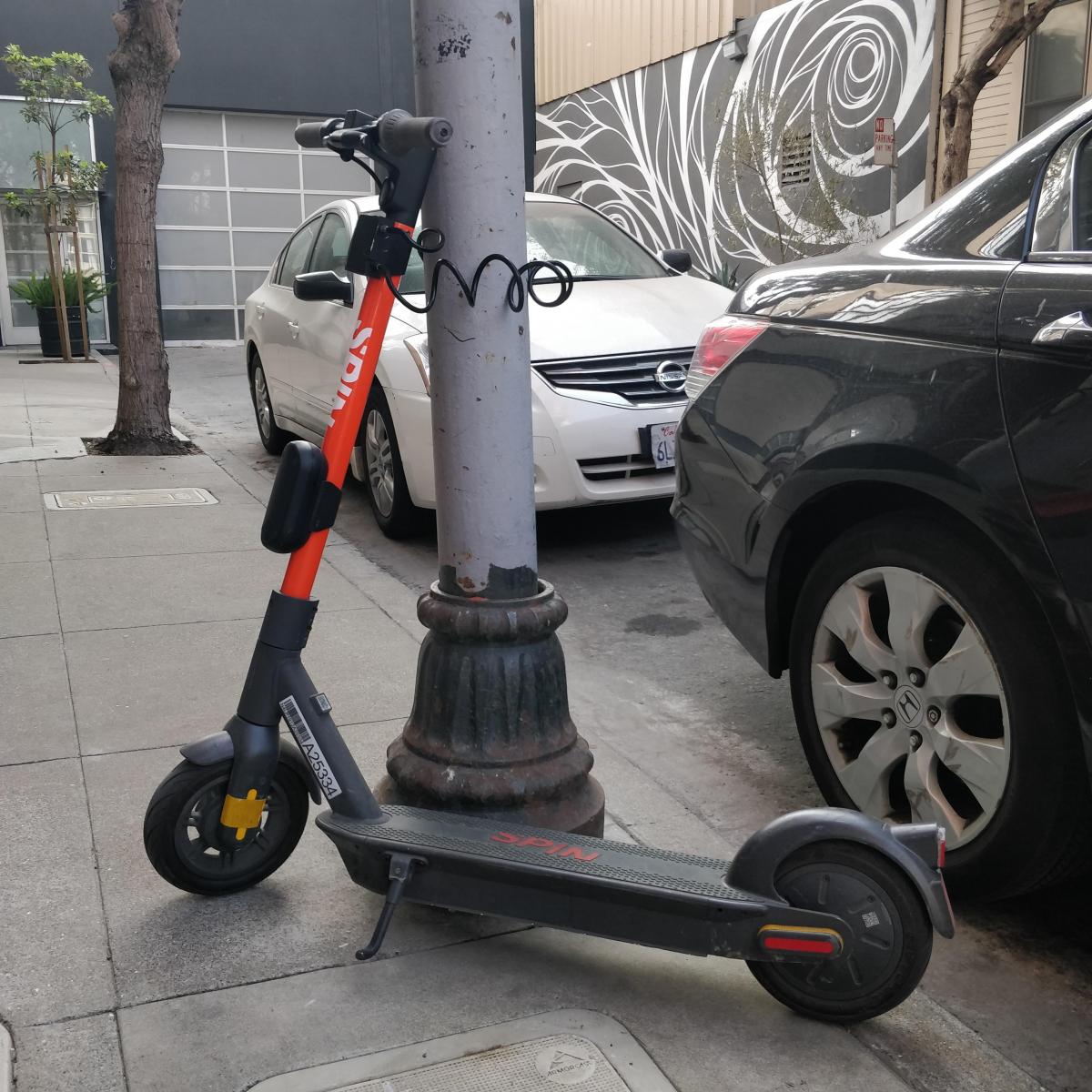
A Spin scooter parked with a lock-to device.
Companies Expanding
Spin will be the first company to expand its fleet and is authorized to add 500 devices scooters to its fleet as of September 3. With this increase, Spin’s fleet will grow to a total of 1,500 scooters and operate in three more neighborhoods as required by the program: Inner/Central Richmond, Inner/Central Sunset and Haight.
Lime recently acquired JUMP, and because both companies hold a permit, we are undertaking a process to review the acquisition and approve the permit transfer. Once the permit transfer is final, Lime would be allowed to operate 2,000 scooters. As part of the requirements for that expanded fleet, the SFMTA will require that the Richmond District and Sunset District also be served.
Increased Enforcement and Transparency
With fleet expansion, the SFMTA has increased our enforcement and monitoring of scooter share to address compliance issues. The SFMTA will increase enforcement sweeps and respond to areas where there have been complaints. Robust enforcement of SFMTA’s oversight functions are critical for public safety. For transparency in this effort, we’ve published a Scooter Share enforcement dashboard.
Published September 15, 2020 at 02:38AM
https://ift.tt/2RtsQKs