السبت، 29 فبراير 2020
Show HN: Mrkff – An Information Overload Management Tool https://ift.tt/3cnACP1
Show HN: Twelve Simple Algorithms to Compute Fibonacci Numbers https://ift.tt/2TctQE8
Show HN: All-in-one peer tutoring management for schools https://ift.tt/39eaEvt
Show HN: Visualizing the transmission between you and base stations! https://ift.tt/39cPHkH
Launch HN: Edtr.io – Intuitive web editor, open source and fully adaptable https://ift.tt/32Hq8ph
Show HN: Coronavirus Spread Animation/Map https://ift.tt/3a9ZLLc
الجمعة، 28 فبراير 2020
Show HN: Zé Faker – a CLI for generating Excel data https://ift.tt/3agwAq0
Show HN: A Hitchhikers Guide to Asynchronous Programming https://ift.tt/2I5OOP2
This Weekend: Charity Marathons
By Schad Dalton
Events: The winter rains have subsided, the holidays are a distant speck in the rearview mirror and it's now the time of year when events around the city become more prevalent. This weekend is a prime example as multiple events are scheduled, including the return of bonfire season at Ocean Beach from March 1 to October 31. Head to Union Square on Saturday for a free pick-your-own tulips event during American Tulip Day. On Sunday, the Hot Air Music Festival celebrates its 11th year with a celebration of contemporary music at the San Francisco For those looking to support a good cause as well as dive into the frigid waters of the Bay, head up to Aquatic Park for the 2020 Dash and Splash. On Sunday, the 42nd annual Chinese New Year YMCA Run will take place, benefiting the Chinatown YMCA Community Center. Be sure to check out all of the city's free monthly museum days, too, as each weekend presents new opportunities to visit one (or more!) of San Francisco's many museums for free. Read more about our featured events below.
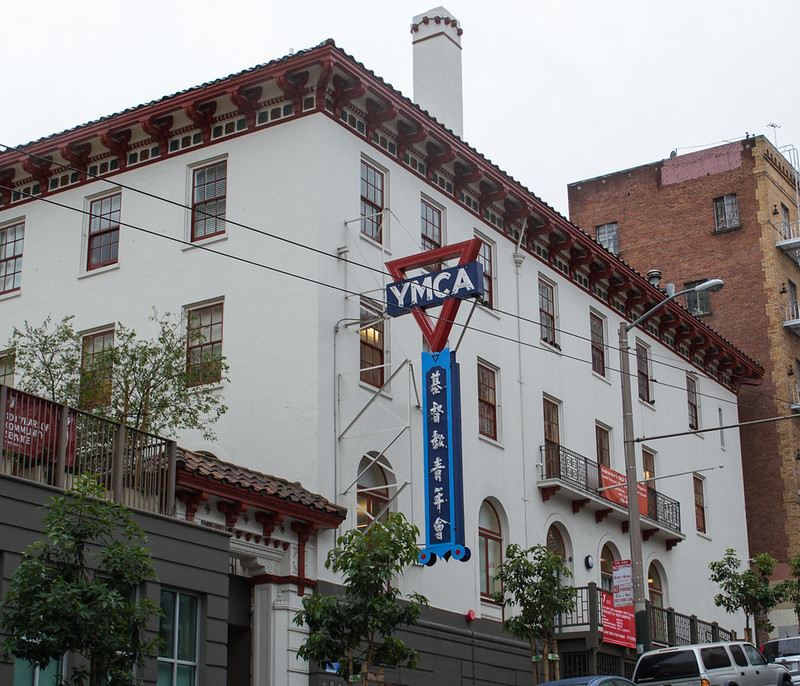
The Chinatown YMCA on Sacramento Street on December 21, 2012. Photo credit: Don Barrett/Flickr.
2020 Dash and Splash
Saturday, 10:30 a.m. to 1:30 p.m.
Aquatic Park
Spring may be soon upon us, but that doesn't mean the water around the city has gotten much warmer. This fact comes in handy for this Saturday's Dash and Splash, a 5K/10K race and polar plunge for charity. If that weren't already enough to set this event apart, participants are encouraged to don the wackiest costumes they can find or create while taking part in the plunge and the race. Proceeds and donations will support upwards of 24,000 Special Olympics athletes in year-round training, education and leadership programs.
How to Get There on Muni: Participants, costumes and all, may take the F Market and Wharves Line, as well as the 19 Polk, 28 19th Avenue, 30 Stockton, 47 Van Ness, or the 49 Van Ness/Mission routes to the area of the event in Aquatic Park.
Muni Service Notes: There are no planned service changes for this event.
Chinese New Year YMCA Run
Sunday, 8 to 9:30 a.m.
Chinatown
Now in its 42nd year, the Chinese New Year 5K/10K Run benefits the Chinatown YMCA Community Center, which serves more than a thousand youth and families of the surrounding neighborhoods.
Beginning at Sacramento and Grant streets, the race will take runners, joggers, and walkers along a scenic route through Chinatown, into North Beach, out along The Embarcadero, and then back into Chinatown to the finish line on Kearny Street between California and Sacramento streets.
How to Get There on Muni: Take the 1 California, 8 Bayshore, 10 Townsend, 12 Folsom/Pacific, 30 Stockton, 39 Coit, and 45 Union/Stockton routes as well as the California Cable Car Line to near the starting line at Grant and Sacramento avenues.
Muni Service Notes: The 10 Townsend and 12 Folsom/Pacific routes will have re-routes. The 1 California, 8 Bayshore, 30 Stockton, 39 Coit, 45 Union/Stockton routes and the California Cable Car Line may see minor delays near the race course.
Remember that you can take Muni for the entire day for a single $5 fare. The new $5 Day Pass, available on MuniMobile®, is part of Muni’s recent fare changes. The pass is intended to encourage a safe, convenient way to pay your fare and quickly board Muni vehicles, which reduces overall travel time for everyone. The $5 Day Pass is Muni bus, rail and historic streetcars only.
“On Tap” gives you a heads up about the big events in town and what Muni routes and lines will get you to the party. Look for this feature to be posted usually on Thursdays for a look ahead to the weekend. Check out our Weekend Traffic & Transit Advisory for more details.
Published February 28, 2020 at 08:23PM
https://ift.tt/2VCtokx
Show HN: Pomodoro Calendar: custom printable planners for pomodoro technique https://ift.tt/2TnSuAJ
Show HN: MakePip – Automatically Publish Python to PyPi https://ift.tt/2wW0X6J
Show HN: ENVy, a Development Environment Manager https://ift.tt/2PBj74e
Show HN: Derek – reduce fatigue by automating GitHub https://ift.tt/2T7909d
Show HN: Vuepack – fast and simple Snowpack/Vue project toolchain https://ift.tt/32Att9z
Show HN: Profit Hunt - Get inspired by profitable online projects https://ift.tt/39dPTQM
الخميس، 27 فبراير 2020
Show HN: A template to help you write your web project specs in less than 10mins https://ift.tt/2I6yFbK
Liked on YouTube: شاهد ماذا يفعل الثعبان عندما يحاصر في دائرة من الملح؟ سبحان الله !!
شاهد ماذا يفعل الثعبان عندما يحاصر في دائرة من الملح؟ سبحان الله .. دعونا نواجه الحقيقة، الثعابين ليست حيوانات لطيفه نحبها. الثعابين هي الزواحف التى يمكن مصادفتها بشكل عام في التربة والمياه. هناك الكثير لا سيما أولئك الذين يقومون بأعمال البستنة في مزارع الكروم يجربون طرقًا مختلفة للتخلص من الثعابين. حسنا ما هي تلك الطرق؟! تابعوا معنا فيديو اليوم لتتعرفوا عليها. ---------------------------------------------------------------------------------------------- ● وسع معرفتك وإكتشف أسرار عالمك مع قناة (حقائق وأسرار) هي قناة تقدم فيديوهات ثقافية وترفيهية في مختلف المواضيع والمجالات الآتية معلومات, حقائق, غموض, ترفيه, أسرار, أغرب, أفضل, هل تعلم, أشياء لا تعرفها, أكثر, أحداث غريبة, علوم, توب 10, الظواهر الغامضة, كل هذا وأكثر سوف ترونه في مقاطع يومية على قناة حقائق وأسرار. يتم إعداد فيديوهاتنا بناءًا على عمليات بحث وتجميع للمعلومات من مصادر موثوقة. نتمنى أن تستمتعوا بوجودكم معنا :) ~ أشترك في مجموعة قنواتنا المختلفة: ● القناة الرئيسية "حقائق وأسرار": https://www.youtube.com/channel/UCBzrJ1zGf9-0cd5-n7sBraQ ● قناتنا الثانية "حقائق وأسرار 2": https://www.youtube.com/channel/UCj2xJxAiCnBV8-pglxCq-Gg ● حقائق وأسرار - ألغاز: https://www.youtube.com/channel/UCJ3HOKyjMsenZgEwG9kqmYA ● حقائق وأسرار - رياضة: https://www.youtube.com/channel/UCFfVulOGna1qPfVYjiK0rTg ~ تابعونا على وسائل التواصل الإجتماعي: ● فيس بوك: https://ift.tt/2cb8did ● تويتر: https://twitter.com/facts806 ---------------------------------------------------------------------------------------------- For Business or copyright matters please contact us at: (للتواصل والإعلان) jasonjack806@gmail.com ---------------------------------------------------------------------------------------------- ★ إذا أعجبك الفيديو لا تنسى الإعجاب به وللمزيد أشترك في قناة حقائق وأسرار ★
via YouTube https://youtu.be/KON17YxXWsM
Liked on YouTube: المساء | الرئيس الجزائري في أول زيارة له للسعودية
في أول زيارة له، منذ انتخابه في ديسمبر الماضي، وصل الرئيس الجزائري عبد المجيد تبون إلى السعودية، حيث يجري مباحثات مع القيادة في المملكة حول العديد من الملفات وعلى رأسها الأزمة الليبية. أزمة تسعى الجزائر للمشاركة في إيجاد حل لها وحشد التأييد اللازم لعقد قمة تستضيفها لهذا الغرض. https://ift.tt/29uwJ9S https://ift.tt/12AN86k https://twitter.com/skynewsarabia https://ift.tt/2Nhv0LX
via YouTube https://youtu.be/Hmu2Eb4-vx8
Liked on YouTube: بالخيول مراسم الاستقبال التاريخي التي أجري الرئيس تبون في الديوان الملكي السعودي لن تصدق
via YouTube https://youtu.be/lF0eAWUS-bs
Show HN: Run your GitHub Actions locally https://ift.tt/2I18e7v
Muni's Unsung Heroes of Black History
By Jeremy Menzies
Black History Month is a great opportunity to tell big important stories, but also to highlight the smaller, less noted stories of everyday people. This week, we're looking back through Muni history at a few people whose day-to-day achievements may not have made headlines but whose contributions nonetheless made a difference to breaking down racial barriers in San Francisco's transit industry.
In September 1950, Muni started the "Courtesy Citation" program to honor the hard work of Muni operators. Operators who received commendations from the public would be recognized in the railway's newsletter and entered into the running for "Muni Man of the Month", an award that brought greater recognition in the form of a $50 check and a special card featuring the winner's photo inside Muni vehicles.
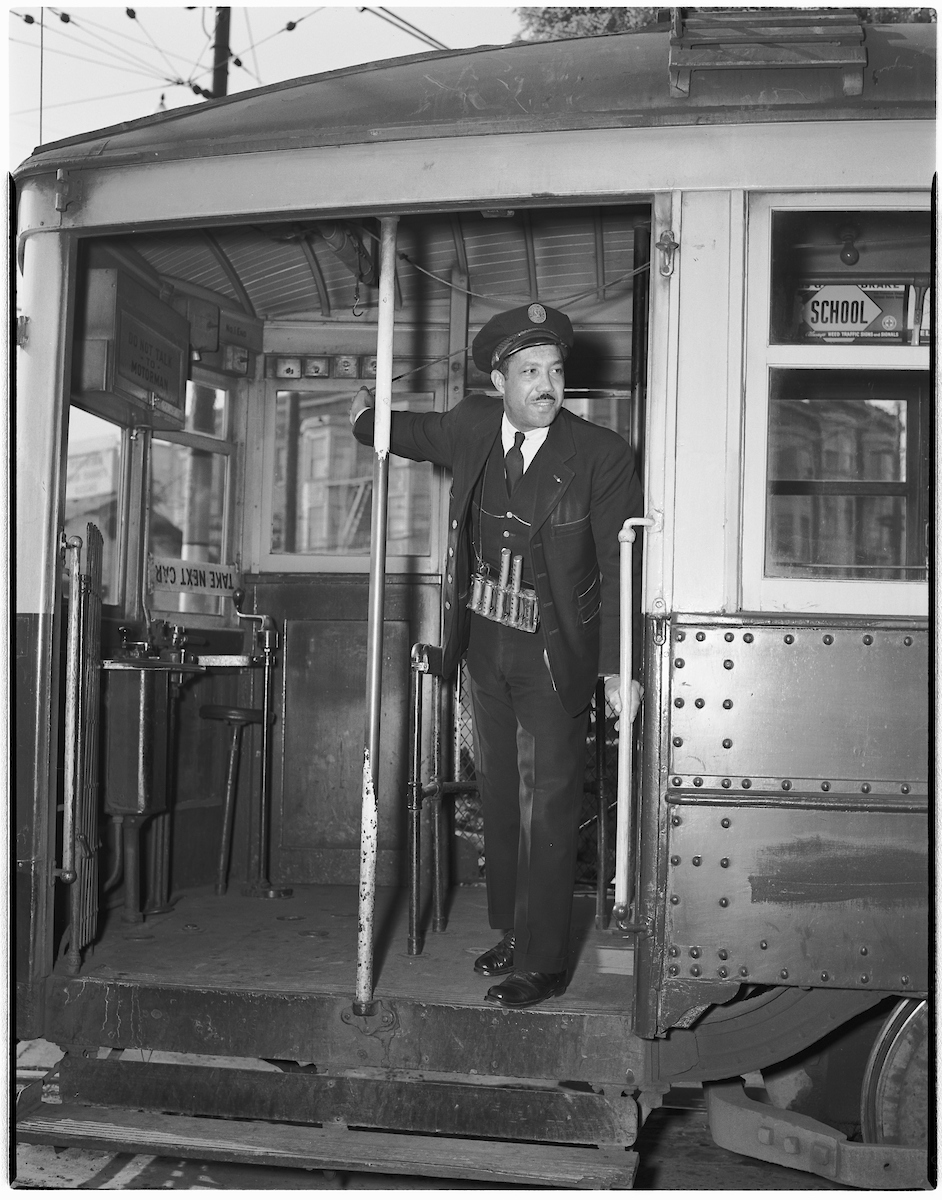
Lilburn Delaney, conductor on the H Potrero streetcar, leans out the back platform of a car in this 1948 photo.
Right away, nominations came in for many black Municipal Railway transit operators who were recognized by riders for their excellent public service. Lilburn Delaney became the first African-American man to be given the honor of "Muni Man" in February 1951. Delaney started at Muni in September 1945 as a conductor on the H Potrero streetcar line and at the time of his award, was a trolley coach operator on the 5 McAllister.
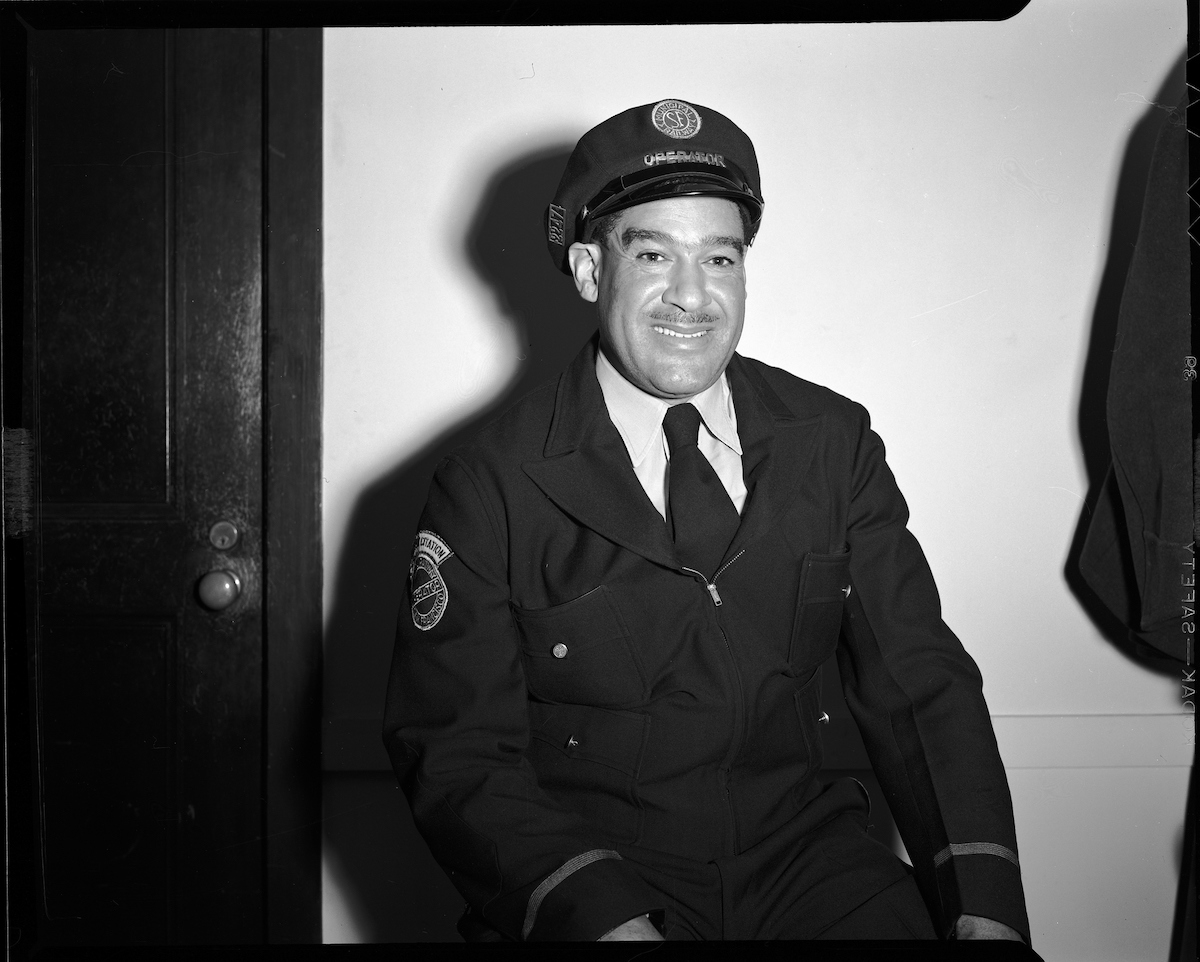
Reginald Simpkins poses for a portrait at the Muni Photo Lab in this 1951 shot. Winners of the Muni Man award like Simpkins were honored with a $50 check and advertisements featuring their photo inside Muni vehicles.
Several months after Delaney, Reginald H. Simpkins was honored as top operator in September of that year. Simpkins, a driver on the 43 Roosevelt bus route, had no shortage of praise from riders on his bus. One letter noted how Simpkins "never loses his dignity or efficiency..." even during busy and stressful rush hour runs and "his sense of humor is so outstanding that it is a real pleasure to ride on his bus."
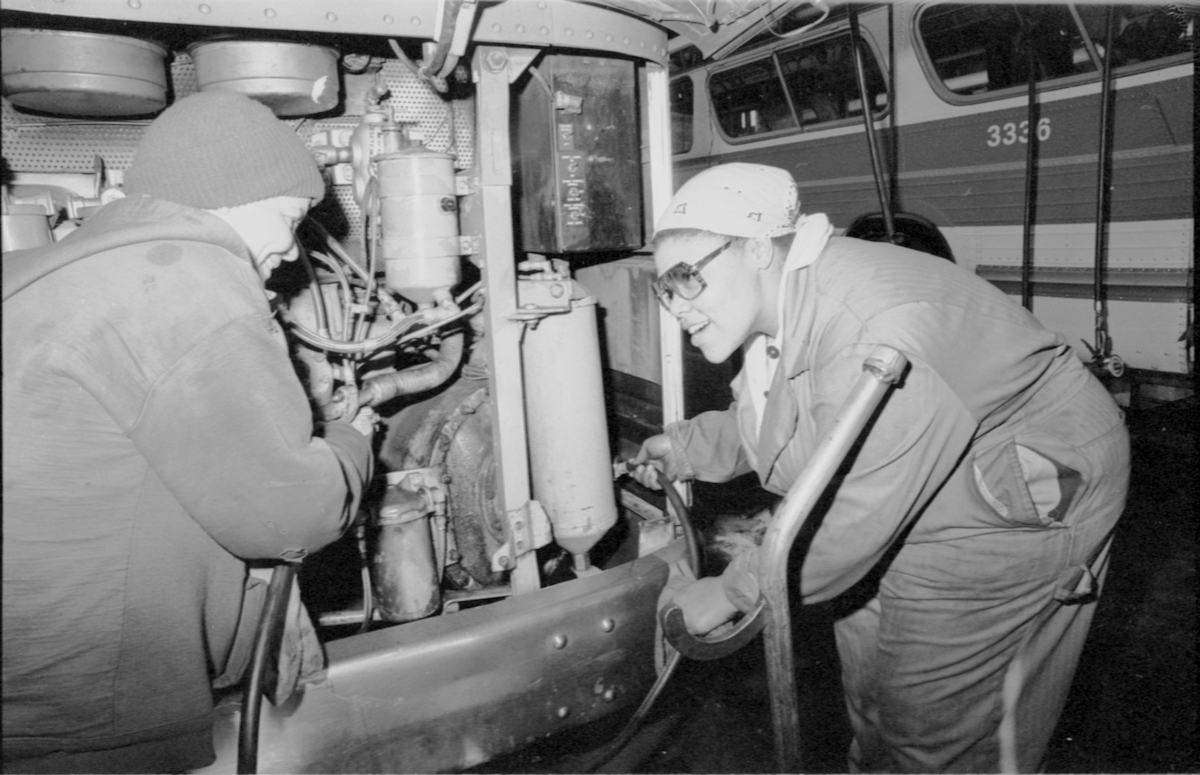
Beverly Hopkins (Right) and Helen Carson make repairs to a bus at Woods Division.
In June 1978, Beverly Hopkins became one of the first black women to join the maintenance crew at Woods Division. By the time of Beverly’s hiring in the late 1970s, the Muni staff newsletter says the eight newly hired women comprised the “largest number of female automotive service persons ever to work for Muni shops. The need was there and they were qualified.”
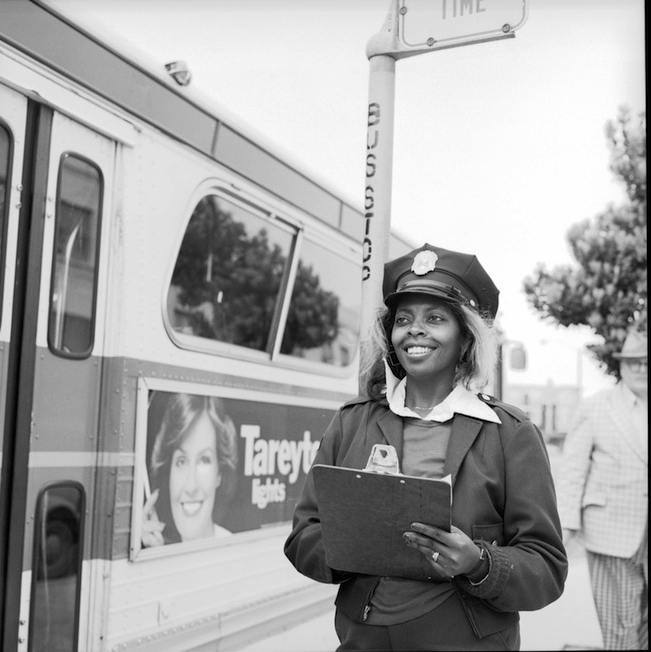
Evelyn Wells, Muni's first female Inspector poses while at work in the field in this 1979 shot.
Evelyn J. Wells holds the honor of being the first African American woman to be appointed as a Muni inspector (badge #54). As an inspector, she was responsible for supervising service, helping investigate accidents, and clearing up delays on bus and rail lines. Working previously as an N Judah operator, Wells began as an inspector in May 1979 at age 28.
These brief highlights barely begin to tell the full story of the contributions or struggles of people of color in San Francisco's public transit history. While much focus goes to major figures and big breakthroughs in history, the day in day out work of these "unsung heroes" went a long way to break down racial barriers within the industry.
Published February 27, 2020 at 10:02PM
https://ift.tt/2TpFkmI
Show HN: Crumpled Papr https://ift.tt/389NftD
Show HN: Browser extension that hides advertised results from Google search https://ift.tt/3aeLDAz
Show HN: Ecosim – A cellular ecosystem simulator toy for Linux written in C https://ift.tt/2PuRbyO
Show HN: Breezy – A Marketplace for Easily Finding the Best Pet Insurance https://ift.tt/2vkDfjW
Launch HN: Probably Genetic (YC W19): At-home DNA testing for every gene https://ift.tt/2To37Ds
Show HN: Pep – Turn Your Website into a Progressive Web App https://ift.tt/2I3pWXT
Show HN: Airlist – A nested outliner with Omnifocus like dates/perspectives https://ift.tt/32xwck5
Show HN: Goodreads Data Pipeline https://ift.tt/32uqdN6
Show HN: SocialPlanner – Find, plan and post content, all in one place https://ift.tt/2wewnog
Show HN: Selling side project that displays remote jobs daily and tweets daily https://ift.tt/2T7Pn13
Show HN: A truly open source modern headless CMS https://ift.tt/2T2v1Gg
Show HN: Anomaly Detection in Ruby https://ift.tt/385NyG7
Show HN: New Profile Designs https://ift.tt/398zbC0
Show HN: An ElasticSearch Powered React DataGrid Template https://ift.tt/3a84VqZ
Show HN: Axomark – Shareable Anonymous Bookmarks https://ift.tt/397p4NV
Show HN: Twitter lists for YC 2017, YC 2018, YC 2019 companies https://ift.tt/3c6muto
Show HN: Metomic Contextual Consent – a privacy layer under embedded content https://ift.tt/2I2HNyq
الأربعاء، 26 فبراير 2020
Show HN: My Fork Of A YouTube Streaming/Download App For PPC Mac OS X https://ift.tt/397rEmY
Show HN: Base24 binary-to-text encoding for humans https://ift.tt/3a8iVRB
Show HN: Free PDF: Creative Coding for Kids https://ift.tt/3cbA1A2
Show HN: (crocs) Python2Regex and Yacc-like. Parsing with no steroids in Python https://ift.tt/3aaPM8i
Show HN: Crypto Crumple Zones: Enabling Limited Access Without Mass Surveillance [pdf] https://ift.tt/2VqtEmz
Results Are In – How Should We Explore Extending The Central Subway?
By Phillip Pierce
The Central Subway is set to open in summer 2021 and will connect some of the city’s densest neighborhoods and job centers. It is expected to carry tens of thousands of riders everyday from Chinatown, through Union Square and SoMa before linking up with the current above-ground T Third line near the 4th/King Caltrain Station and on to Mission Bay, the Bayview, and Visitacion Valley.
While this new line will be vital for San Francisco’s growing population and workforce, we know that now is the time to continue planning for the future.
In order to better understand the needs and goals of the community, we held open house meetings and developed an online survey to gauge interest and explore potential ways to extend the Central Subway. This online survey built on the prior 2015 feasibility study results and previous community meetings on the topic.
This interactive survey was given in English, Spanish and Chinese, and allowed users to drop markers in places where they thought subway stations should be analyzed. We were thrilled that the combination of interest in a new subway plus the ease of the survey technology on the web and mobile (thanks MetroQuest!) resulted in over 8,000 responses – a record for the SFMTA!
In general, the results showed that most people favored extending the subway to North Beach. It also showed clusters of interest in new connections near Fisherman’s Wharf, at the soon-to-be-complete Van Ness BRT and in the Marina neighborhood.
Results
After analyzing all 8,137 paper and online responses, which generated over 148,000 data points and 13,000 comments, we compiled the below graphics to summarize the results:
How do you currently get around San Francisco?
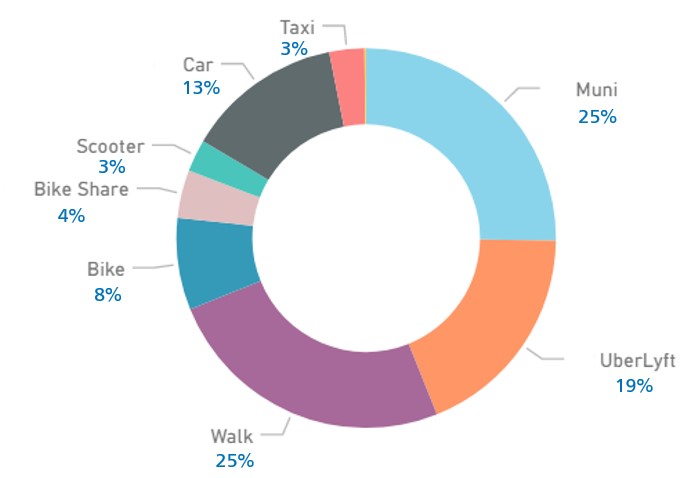
Typical travel choices of those that took the survey. Half of respondents regularly take Muni or walk. Most of those that take Muni do so 4 times per week or more.
Which transportation goals would you like to see prioritized?
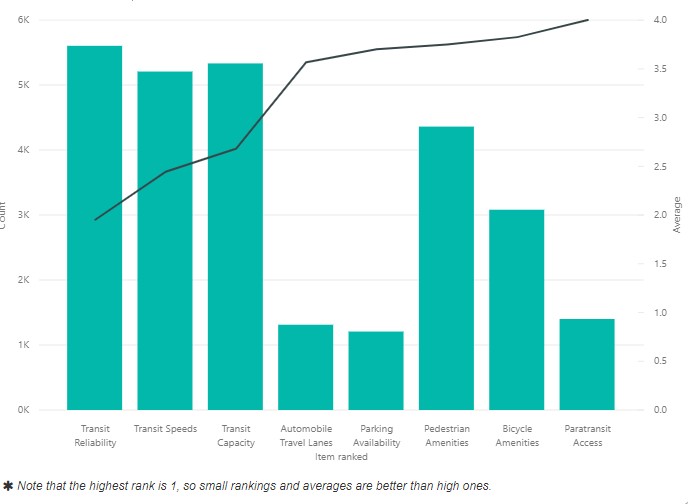
Transit related goals were ranked as the three highest.
Would an extension of the Central Subway help meet your transportation goals?
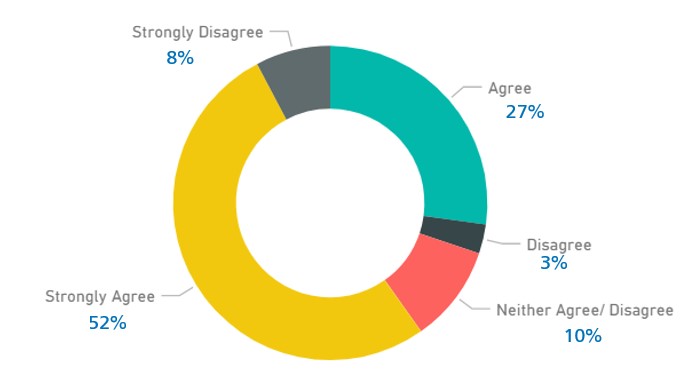
When asked if an extension of would help people meet their transportation needs, 79% either agreed or strongly agreed.
Should Central Subway be extended to North Beach using existing tunnels, with a new station near Washington Square?
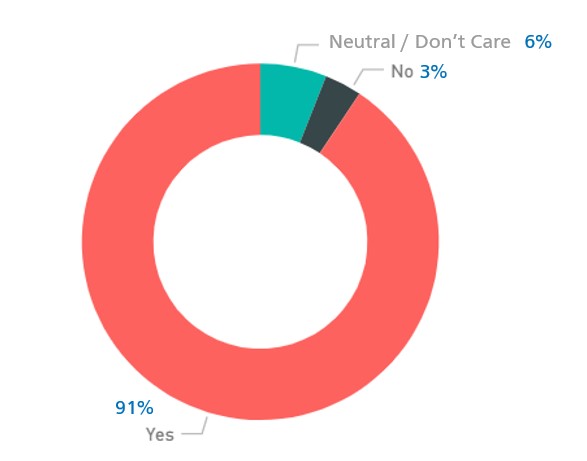
A large majority of people expressed a desire for a station in North Beach.
If the train extended from North Beach to Fisherman’s Wharf, would you prefer surface or underground?
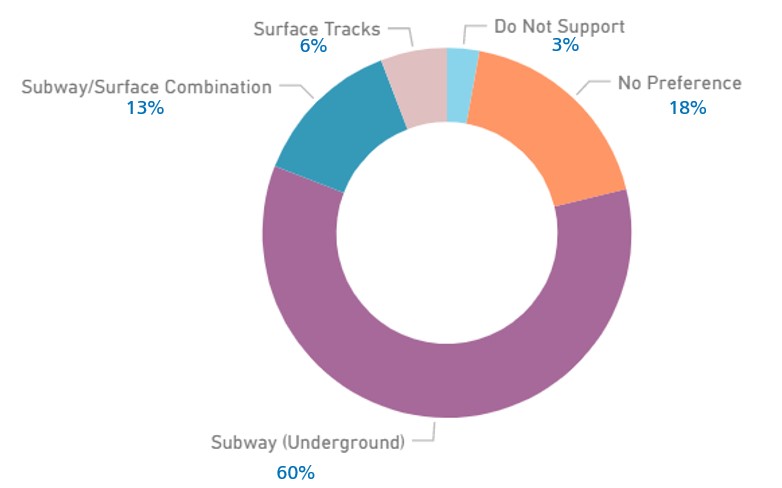
Most survey-takers indicated a preference for underground transit.
If the train extended from Fisherman’s Wharf towards Marina/Cow Hollow, would you prefer surface or underground?
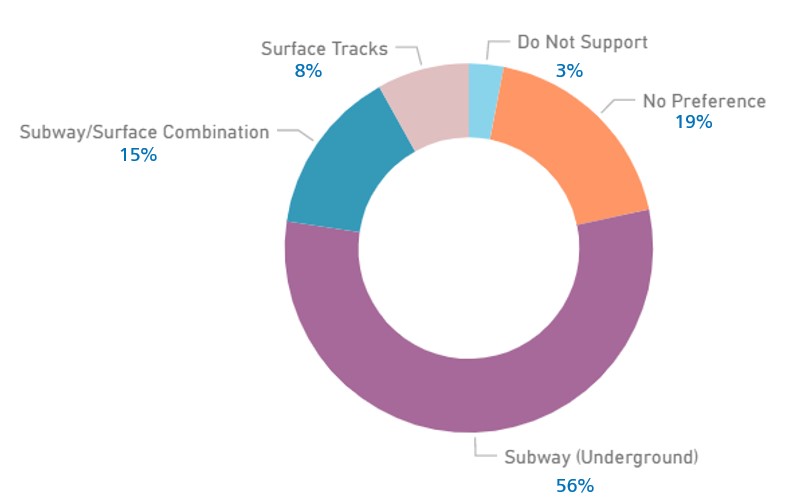
As with the previous question, most respondents preferred any extension to Marina/Cow Hollow be underground.
Where would you like to see new subway stations?
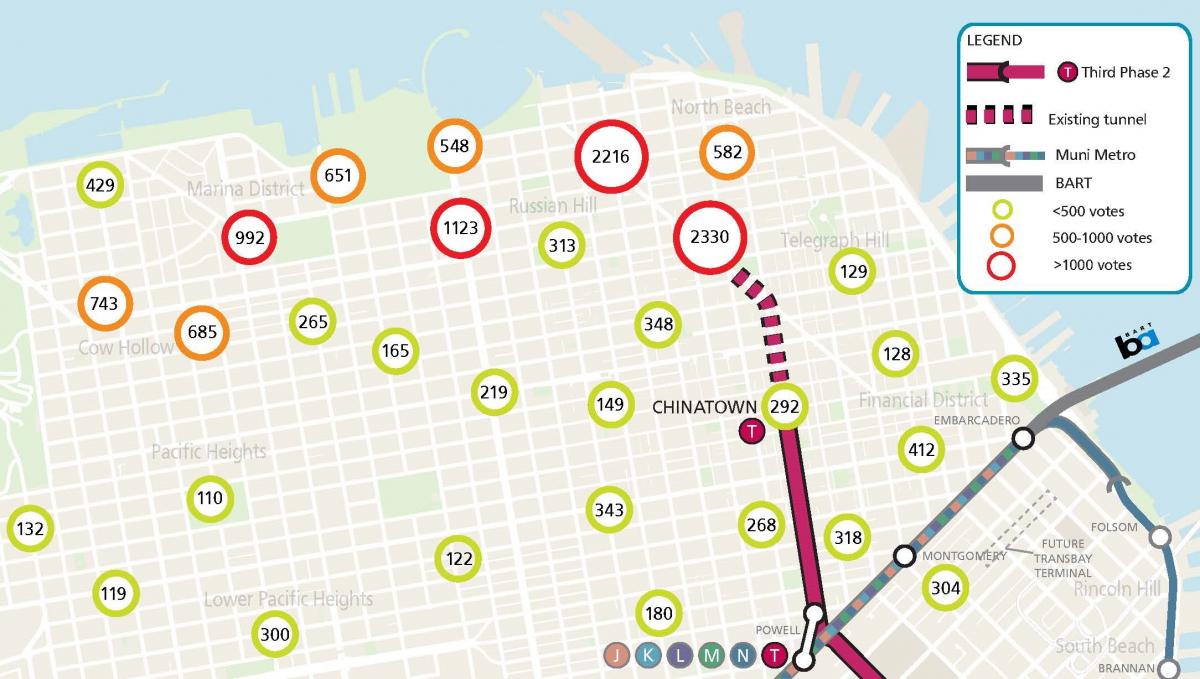
When compiling all the suggested station locations, clusters started to emerge, as shown in the above map.
Where do you live?
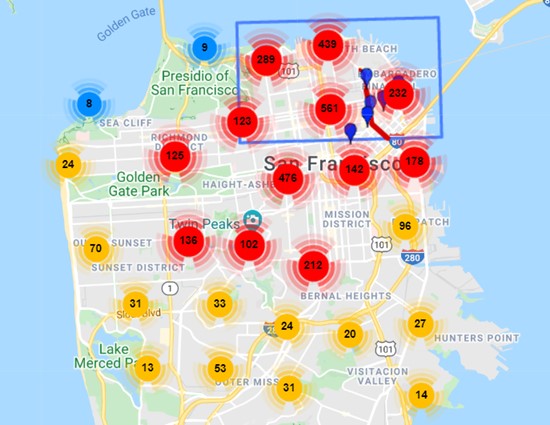
We received responses from all over the city with a high percentage people weighing in from inside the study area (blue box).
Where do you live?
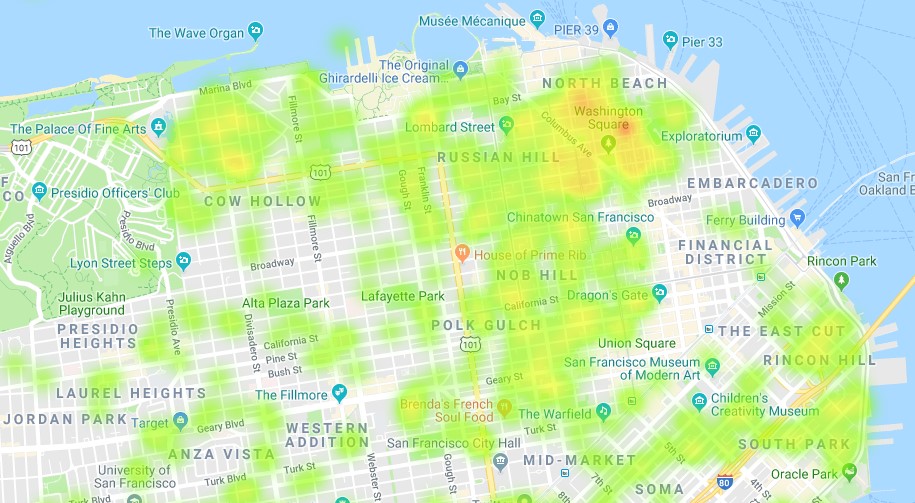
Zoomed in “home” view near the study area: Orange and red areas denote higher concentrations of responses.
Where do you work?
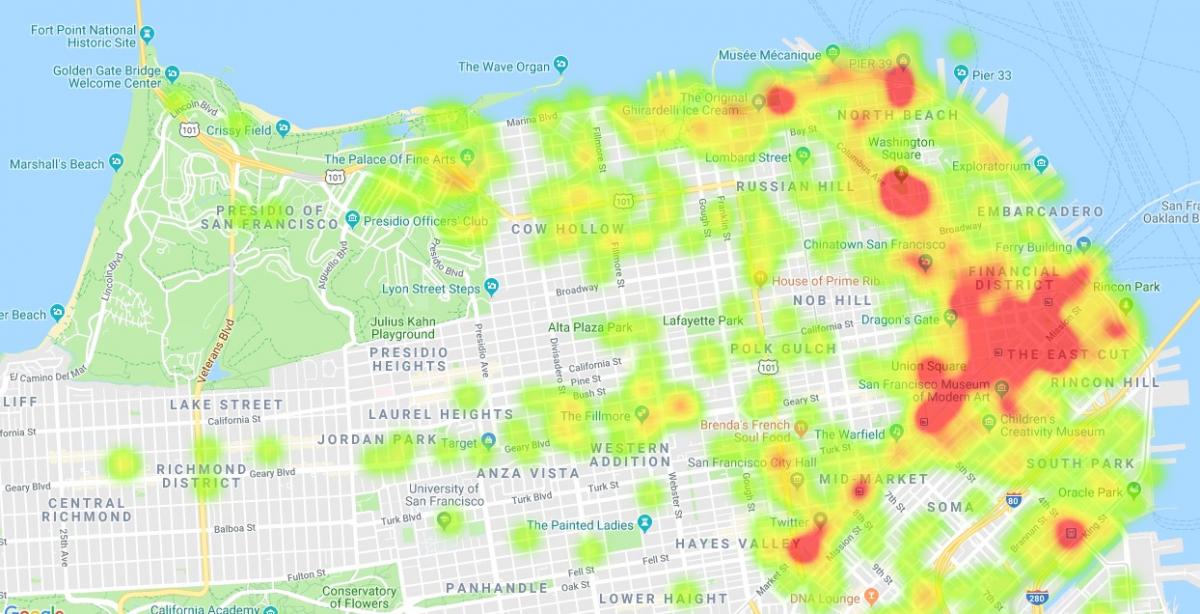
Orange and red areas denote higher concentrations of responses.
Next Steps
After compiling and further analyzing this feedback, we will begin looking at some potential extension routes from an engineering standpoint to better understand the potential trade-offs and benefits. We will reach out again to share them with the community for additional input. Our goal will be to narrow the options to two or three for further planning, environmental review, and design, contingent on identification of funding.
More Information
For more information, visit the Central Subway Extension project page where you can sign up for email updates.
Published February 26, 2020 at 11:08PM
https://ift.tt/2Ps4Qqd
Show HN: AsOne – Reddit and Patreon for Research https://ift.tt/2waIUZW
Show HN: Inline, Promise based wrapper around JavaScript Web Workers https://ift.tt/394DQ85
Show HN: OpenSourceWeekly.org – The best open source projects, curated by hand https://ift.tt/2Pp8kK3
Show HN: Remote Contract Only Job Board https://ift.tt/2vkioNF
Show HN: Runnaroo – A new web search engine https://ift.tt/32AFXhG
Show HN: Opensource.builders, open-source alternatives to commercial software https://ift.tt/38543lE
Show HN: SpectX launches the free edition of its raw log file / blob analyzer https://ift.tt/387myWR
Show HN: Magit for VSCode (Alpha) https://ift.tt/2PsdgxS
Show HN: Chops – Make beats with your voice https://ift.tt/2HZZVsF
Show HN: Spectroomz – Freelancing Platform for Autistics and Aspies https://ift.tt/2Vk9MBs
Show HN: Just One Earth – Bite sized climate existentialism https://ift.tt/2TlNXi6
Show HN: Changelog.gy – A changelog page for all your products https://ift.tt/2w8KETs
Show HN: Writing Maintainable Unit Tests Course https://ift.tt/2VqPzdc
Show HN: GitHub's tree-sitter meets Docker https://ift.tt/3cdhdQL
Show HN: Telegram Bot Wrapper for the Rubygems.org API https://ift.tt/2VqMnye
Show HN: Word Champions, a word game written in ClojureScript https://ift.tt/37Wzoqx
الثلاثاء، 25 فبراير 2020
Show HN: PyTorch C++ Tutorials from Beginner to Advanced https://ift.tt/2PrXvqG
Show HN: NestDrop – realtime VJ engine using Milkdrop https://ift.tt/2PpjK0A
Show HN: Killed for Food https://ift.tt/391cSOK
Show HN: Querying JSON documents using SQL-like language in Scala https://ift.tt/3a4qadh
Show HN: My self hosted project management and billing app (Trello alternative) https://ift.tt/2Vifnbv
Show HN: Helium – Lighter web automation based on Selenium https://ift.tt/32x5ZlN
Show HN: A (very) simple proof-of-work blockchain written in Rust https://ift.tt/2HTBlcR
Show HN: Hyperdoc - We make code walkthrough guides (Moment.js) https://ift.tt/3809i6f
Show HN: EasyLlama – Sexual Harassment Training Made Easy (Required in NY/CA/IL) https://ift.tt/3c6Zdrp
Show HN: Yes and No design studio – We solve design problems for startups https://ift.tt/3c6Z2fv
Show HN: Shox: A customisable status bar for your terminal https://ift.tt/2Pqsu6B
Show HN: Generate fake UI design clients to practice UI design https://ift.tt/37T4i3a
Show HN: Web-based Babel alternative for React/JSX (ultra-fast and tiny 5.1 kB) https://ift.tt/2HY4Vha
Show HN: Hacker News Rankings https://ift.tt/2Tc4plc
Show HN: Mount S3 cloud storage directly to Windows Explorer [New link within] https://ift.tt/3a0k11O
Show HN: Decentralized Automation Framework in YAML https://ift.tt/3c4ZV8z
الاثنين، 24 فبراير 2020
Show HN: TribePulse – more thoughtful internal discussion platform for teams https://ift.tt/38ZksJQ
Liked on YouTube: مين بيحب الاكله دى زى 👌يعمل لايك تشجيع 😋
اشتركوا وفعلوا الجرس ليصلكم منى كل جديد نورتونى
via YouTube https://youtu.be/LfPLDU8Z81U
Show HN: AiDee – a open source micro-framework for Touch ID and Face ID https://ift.tt/2HROHX5
Show HN: Back pain triage web-app, solution MVP https://ift.tt/2Tehpqi
Reminder: Service Changes Now in Effect
By Enrique Aguilar
This past Saturday, the San Francisco Municipal Transportation Agency (SFMTA) made several changes to improve Muni service. These changes will improve reliability and connections, reduce crowding and provide one-seat rides for weekend early morning Metro service with bus substitutions. Affected routes include the J, KT, L, M and N Metro lines, 7 Haight-Noriega, 23 Monterey, 1AX, 1BX, 31AX, 31BX, 38AX, and 38BX.
Weekend Early Morning Metro Bus Service
To reduce the need for transfers during early weekend morning service, all metro lines will be served by bus after the end of Owl service and before Metro stations open. Metro stations open at 6 a.m. on Saturday and 8 a.m. on Sundays. The new early morning metro bus will be a one-seat ride to your destination.
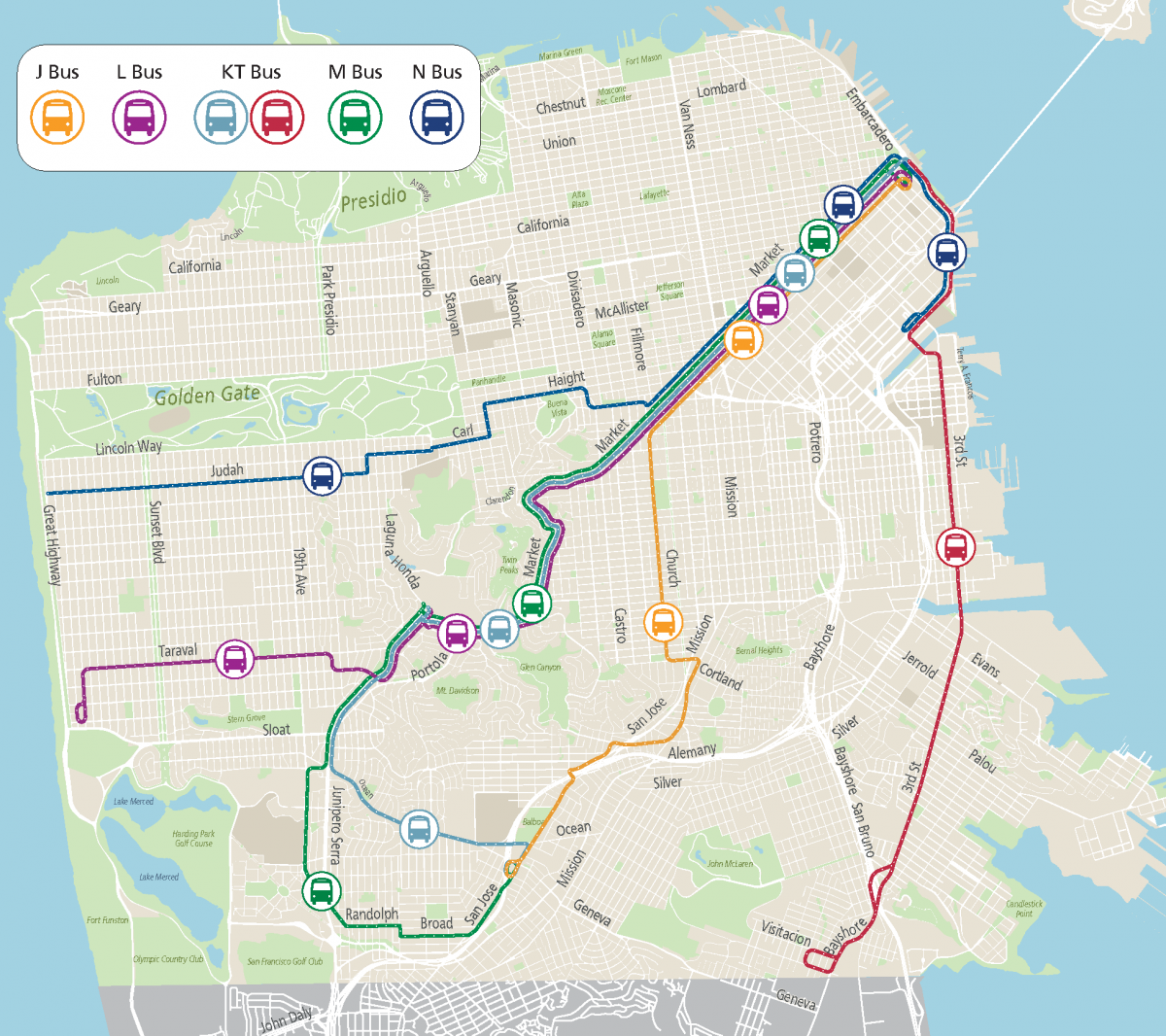
To reduce overcrowding and increase transit reliability on weekdays, the 7 Haight/Noriega will begin running 60-foot buses. Adding bigger buses to weekday service will provide Muni customers more seats and comfort during morning and evening commutes.
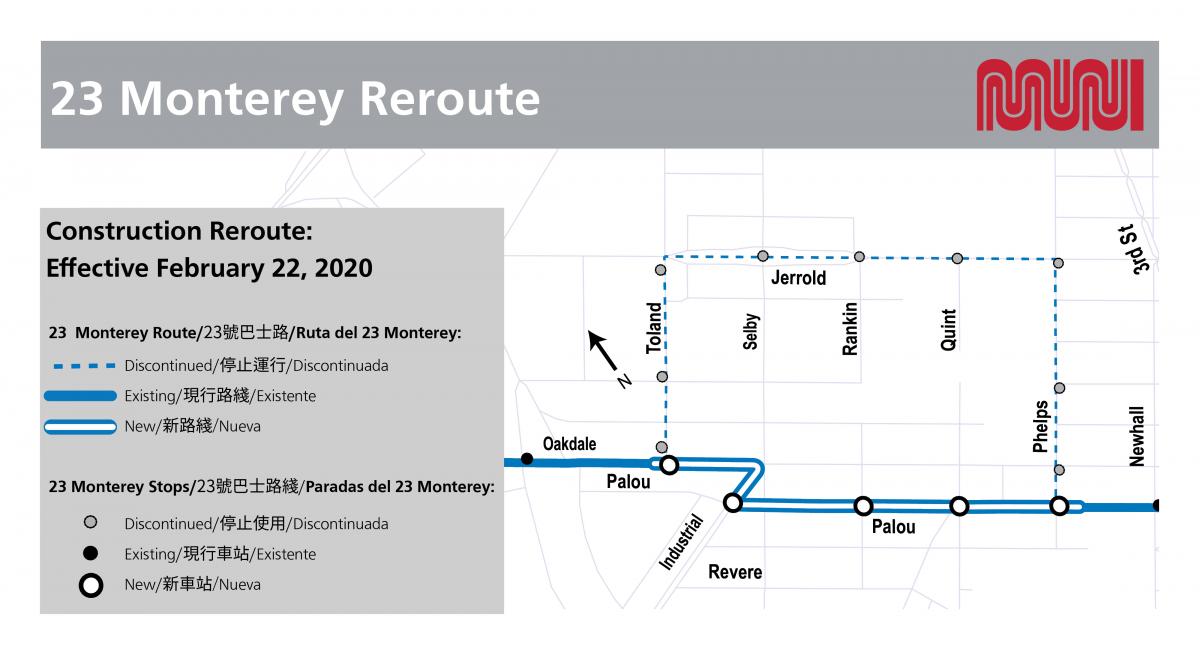
23 Monterey Reroute
Due to construction at SFPUC’s Southeast Treatment Plant, the 23 Monterey will be rerouted from Jerrold to Palou between Toland and Phelps. New bus stops will align with the 24 Divisadero.
Richmond Expresses
The last runs of the day for Muni’s evening Richmond Express service will change, which includes the 1AX, 1BX, 31AX, 31BX, 38AX, and 38BX. Customers are advised to check schedules and note alternate routes. For customers traveling outbound at 7:00 p.m., alternate routes include the 1 California on Davis and Sacramento streets or the 38 Rapid at Fremont and Market streets.
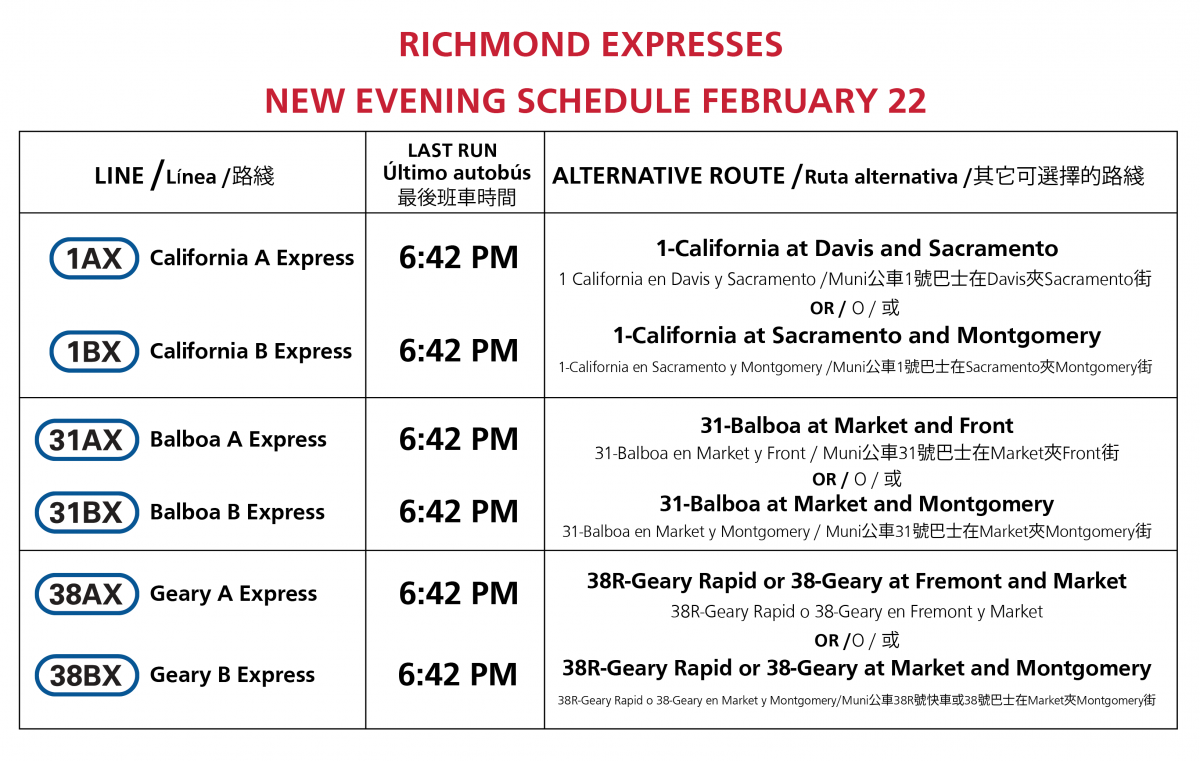
Please pay attention to Muni Alert signs for instructions or look for Muni ambassadors near the affected bus route stops to answer your questions.
12 Folsom/Pacific Extension in Spring 2020
As Muni prepares to update the 12 Folsom/Pacific route to travel through Rincon Hill, we've been keeping a close eye on construction on Folsom Street. Although the Transbay Folsom Streetscape Improvement Project is making progress, conditions on Folsom east of 2nd Street are not yet ready to serve the 7,000 daily customers who ride the 12 Folsom/Pacific. If construction proceeds at the current pace, we anticipate launching the new route in Spring 2020
To learn more, please visit the project page.
Published February 24, 2020 at 10:12PM
https://ift.tt/2Vi4QwN
Show HN: Py package to collect normalized news from (almost) any website https://ift.tt/38VpeYN
Show HN: AirPPT – Go from PowerPoint to HTML/CSS UI in Seconds https://ift.tt/2SUy4QH
Launch HN: Syndetic (YC W20) – Software for explaining datasets https://ift.tt/2Pl92s6
Show HN: Asynq – Simple, reliable, and efficient distributed task queue for Go https://ift.tt/3a1FEio
Show HN: Neo.mjs, the webworkers driven UI framework https://ift.tt/2SU7Q0P
Show HN: City Filter – Travel to the Right Cities at the Right Time https://ift.tt/2STUEZX
Show HN: Bubblemon, System load meter for human beings https://ift.tt/2VotEU9
Show HN: An Online Personal Organizer https://ift.tt/3a0SMUV
الأحد، 23 فبراير 2020
Show HN: Java full-stack starter template for side projects https://ift.tt/3bZgzGt
Show HN: LinkedIn for Chatbots https://ift.tt/395vEnW
Liked on YouTube: فيديو مؤثر لعجوز في الـ90 طردها ابناؤها إلى الشارع ببراقي في العاصمة
مؤثر ...فيديو متداول لعجوز في الـ90 طردها ابناؤها إلى الشارع ببراقي في العاصمة
via YouTube https://youtu.be/2EdazJgXFmM
فيديو مؤثر لعجوز في الـ90 طردها ابناؤها إلى الشارع ببراقي في العاصمة
Show HN: Damnshort – dotcoms for startups and side projects https://ift.tt/2w1U9Up
Show HN: Netboot diskless Windows machines from a Linux server for LAN parties https://ift.tt/2wEh8W1
Show HN: Memoly, a subscription manager app built without code https://ift.tt/2HOTlFa
Show HN: Self Managed Link Aggregator https://ift.tt/37QVESL
Show HN: JAI: A Lego-Style Deep Learning Library on PyTorch https://ift.tt/38SxAA5
Show HN: Search code in GitHub repos using regular expressions https://ift.tt/2HTVxet
Show HN: Leadership-Library.dev – The Leadership Library for Engineers https://ift.tt/2SPDexq
السبت، 22 فبراير 2020
Show HN: Proxyman – native HTTP/HTTPS requests observation and manipulation app https://ift.tt/39QvKQq
Show HN: GitSpo – Monitoring and Analytics for Open-Source Projects https://ift.tt/37OPJxx
Show HN: WeKeep – A spreadsheets-first accounting software https://ift.tt/2vSKJLd
Show HN: Single-Instruction (Subleq) Programming Game https://ift.tt/2wEJYWq
Show HN: AntiVirus Monitor – GitHub Action to combat false positives https://ift.tt/2HLGQKv
Show HN: Epictopus, a Collaborative Writing Platform https://ift.tt/38Otklq
Show HN: Provision and automate cloud hosts with Go https://ift.tt/2w0x5FB
Show HN: Parallel – a simple Go parallel processing library https://ift.tt/3c0SPSz
Show HN: MindForger Markdown editor just got live preview https://ift.tt/32iqDpD
Show HN: Inlets PRO Is a Cloud Native Tunnel for L4 TCP Traffic https://ift.tt/3bVurBz
Show HN: A first project in Rust – in-memory order book https://ift.tt/2uk5E9o
الجمعة، 21 فبراير 2020
Show HN: Strategr – cross-platform time management application written in C++ https://ift.tt/32jBpfb
Director of Transportation Report: February 18, 2020
By
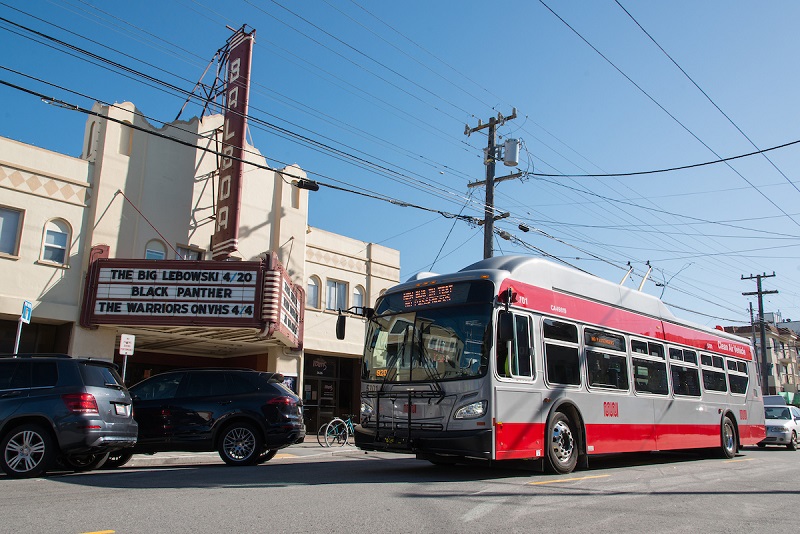
In this week’s Director’s Report from the SFMTA Board of Directors meeting, Jeffrey Tumlin gave updates on the following topics:
Washington, DC Visit
- House Energy & Commerce Subcommittee on “Autonomous Vehicles: Promises and Challenges of Evolving Automotive Technologies” held last week in Washington, D.C.
- Testified, providing city perspective on what we believe federal AV legislation should include ensuring safety and accountability.
- Urged the Committee members NOT to preempt state and local authority to take measures we think are necessary to protect the public as the technology is tested on public roads during the many years we expect before the federal government adopts AV minimum safety standards.
Muni Service Change
- Starting Saturday (Feb. 22) numerous service changes go into effect to improve reliability, connections and reduce crowding. Affected routes include the Metro lines, 7 Haight-Noriega, 23 Monterey and the 1AX/BX, 31AX/BX and 38AX/BX.
- All metro lines will be served by bus after the end of Owl service and before Metro stations open Saturdays at 6 a.m. and Sundays at 8 a.m., providing customers a one-seat ride to destinations without a transfer.
- The 7 Haight-Noriega will begin running larger 60-foot buses to reduce overcrowding and increase reliability on weekdays.
Black History Month
- To celebrate the two courageous women depicted in the video, the SFMTA’s Black & African American Affinity Group (BAAAG) will be hosting the inaugural event for staff during Black History Month. On hand for the celebration will be Mayor London Breed and Kimberly Erickson, Acting Chief of Staff for Director Toks Omishakin, California Department of Transportation.
Church Station Elevator Upgrades
- Upgrades to the Church Station outbound street elevator will begin the first week of March.
- This will require the elevator to be out of service for about three months while work is being done.
- The station's inbound escalator will be available for customers with disabilities. Wheelchair users traveling outbound will be directed to the elevators at either Castro or Van Ness stations, or to the parallel bus or F Line streetcar service.
Our Board of Directors meeting is usually held on the first and third Tuesdays of each month. To watch the meeting in full, go to SFGovTV.
Published February 21, 2020 at 09:52PM
https://ift.tt/3bZjXkT
Show HN: Free startup ideas, analysis, validation and first steps https://ift.tt/3bVlgkF
Show HN: TVnfo – Television Information https://ift.tt/2vTGAqa
Show HN: MDAnki – convert Markdown to Anki cards https://ift.tt/3bZWEHk
Launch HN: A text recognition service for 1/3rd Price of Google, Amazon https://ift.tt/37LXaWf
Launch HN: Freshpaint (YC S19) – an automated, retroactive Segment alternative https://ift.tt/2uVF9rl
Show HN: Hawkeye Access – Control your Mac using head movements https://ift.tt/2SNZF6a
Show HN: Build your own Vim emulation for VS Code https://ift.tt/3bYy1er
Show HN: Low code with easy sharing Notebook alternative https://ift.tt/38OqmgK
Show HN: Monthly newsletter with most trending articles from 15 top newsletters https://ift.tt/2V94KaQ
Show HN: Kubenav – An open source mobile app to manage Kubernetes cluster https://ift.tt/2Vepfmr
Show HN: Darknet.py – A TOR Transparent Proxy Written in Python https://ift.tt/38OidsC
Show HN: A Tool for Rapid Learning Process (It's like Anki + Workflowy) https://ift.tt/38M9TJL
Show HN: A Credit Card Scanner Using Vision Framework in iOS https://ift.tt/2uiQ8e3
الخميس، 20 فبراير 2020
Show HN: CAVI, how video sharing should be https://ift.tt/3bUAMNJ
Show HN: Yabc – open-source Bitcoin tax calculator https://ift.tt/38Osfdd
Show HN: User flow done in seconds, not hours https://ift.tt/3bXT7JA
This Weekend: Russian Festival and Pop Art Show
By Schad Dalton
Service Change Reminder: Starting February 22, 2020, the San Francisco Municipal Transportation Agency (SFMTA) is making service changes to improve Muni service. These changes will improve reliability and connections, reduce crowding and provide one-seat rides for weekend early morning Metro service with bus substitutions. Affected routes include the J, KT, L, M and N Metro lines, 7 Haight-Noriega, 23 Monterey, 1AX, 1BX, 31AX, 31BX, 38AX, and 38BX. For more details, visit https://www.sfmta.com/servicechanges.
Events: There are a plethora of events, large and small, taking place throughout this coming weekend. Take in a free show by the San Francisco Chamber Orchestra at the Herbst Theater on Friday evening, February 21, Take the family out for an education fix on Saturday during the weekly free de Young Museum Day for Bay Area residents or the Cal Academy of Science's Neighborhood Free Days. Be sure to visit the Academy's website to make sure you live in a neighborhood being offered the free visit or to plan ahead for when your neighborhood is on the docket. Those looking to get into the Mardi Gras spirit can head up to North Beach on Saturday for the Mardi Gras Second Line March beginning at North Star Cafe. Throughout the weekend in Pacific Heights the annual Russian Festival will return to celebrate the Russian American experience and, in SoMa, pop culture art fans will have three days to enjoy various works of pop art from some of the world's best-known franchises. Read more about our featured events below.
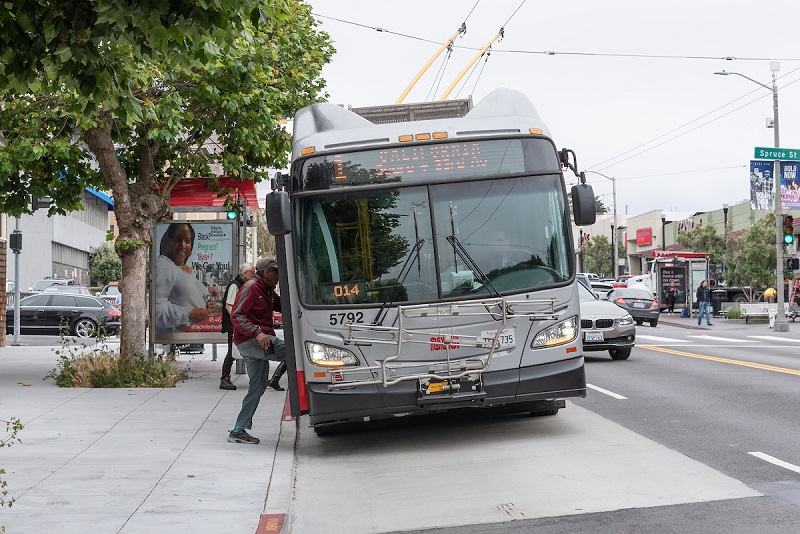
The 1 California will take riders heading to the Russian Festival with a short walk of the event on Sutter Street. Photo: SFMTA Archive
Russian Festival
Friday-Sunday, Various times
Pacific Heights
Piroshki, borsch, and flavored vodkas, oh my! Those are just a few of the highlights of the celebration of the Russian American that is the annual Russian Festival. Over the course of three days at the San Francisco Russian Center in Lower Pacific Heights, attendees will be treated to folk song and dance, ballet performances and much more.
How to Get There on Muni: The 1 California, 2 Sutter/Clement, 3 Jackson, 22 Fillmore, 24 Divisadero, 38 Geary, 38R Geary Rapid and the 43 Masonic routes all have stops within easy walking distance of the event.
Muni Service Notes: There are no planned service changes for this event.
Pop Culture Art Show
Friday-Sunday, Various times
SoMa
Fans of pop culture art or perhaps a fan of such franchises as Harry Potter or Star Wars should set aside some time throughout this weekend to head downtown for the free Pop Culture Art Con at the Palace Hotel. The show will feature nationally-recognized artists and their works showcasing characters and scenes from Disney, Marvel and DC Comics, the aforementioned Harry Potter and Star Wars franchises and much more.
How to Get There on Muni: Riders may utilize an Muni Metro line to downtown, the F Market and Wharves Line, any Market Street bus route as well as the 8 Bayshore, 10 Townsend, 12 Folsom/Pacific, 14 Mission, 14R Mission Rapid, 25 Treasure Island, 30 Stockton or 45 Union/Stockton routes to near the event.
Muni Service Notes: There are no planned service changes for this event.
Remember that you can take Muni for the entire day for a single $5 fare. The new $5 Day Pass, available on MuniMobile®, is part of Muni’s recent fare changes. The pass is intended to encourage a safe, convenient way to pay your fare and quickly board Muni vehicles, which reduces overall travel time for everyone. The $5 Day Pass is Muni bus, rail and historic streetcars only.
“On Tap” gives you a heads up about the big events in town and what Muni routes and lines will get you to the party. Look for this feature to be posted usually on Thursdays for a look ahead to the weekend. Check out our Weekend Traffic & Transit Advisory for more details.
Published February 20, 2020 at 10:02PM
https://ift.tt/2HFp0J0
Launch HN: App Brainstorm – Predesign Prototyping for Drafting Apps https://ift.tt/2SHDaQh
Show HN: Build your own location-aware logistics app in an hour https://ift.tt/2uQZZYR
Show HN: Gripeless – Capture Complaints https://ift.tt/2HDfCWy
Show HN: Data store with change-request mechanic https://ift.tt/2ugjycB
Show HN: EVILVIL.space – My tiny 2D Zombie Game https://ift.tt/2V6Pnja
Launch HN: PostHog (YC W20) – open-source product analytics https://ift.tt/2T4oSs3
Show HN: Orbital Index, started on HN, is 1 year old today https://ift.tt/2HEVfbp
Show HN: A better unicorn IPO leaderboard https://ift.tt/39UpQh5
Show HN: Ciid – Chronological Image Identifier, Written in Rust https://ift.tt/37CYVoI
Show HN: Asciibook – An eBook Generator for AsciiDoc https://ift.tt/2uRiZ9G
Show HN: Kasaya – A “WYSIWYG” scripting language for browser automation https://ift.tt/2VeocCS
Show HN: Walling comes to Windows to help you organize your ideas https://ift.tt/3bSoiGn
الأربعاء، 19 فبراير 2020
Show HN: Most recommended programming books of all time https://ift.tt/2HI8N5O
Show HN: Top Fantasy Reads – Fantasy books Reddit is reading https://ift.tt/2HEzSqU
Liked on YouTube: مواطنون ببلدية برج الكيفان يشتكون لوالي العاصمة من "المير"
للإشتراك في قناتنا إضغط هنا http://goo.gl/as3vlY "النهار تي في" أول فضائية إخبارية في الجزائر، الأخبار تصلكم حيثما كنتم أول بأول موقعنا الإلكتروني للجريدة https://ift.tt/1omG8Am موقعنا الإلكتروني للقناة https://ift.tt/1JgsSZY رابط صفحتنا المليونية على الفايسبوك https://bit.ly/2GGVnrV رابط صفحتنا على الأنستڨرام https://bit.ly/2YufM9B رابط صفحتنا على تويتر http://goo.gl/MkpI9M رابط صفحتنا على جوجل بلس http://goo.gl/yUxXty قناة النهار الإخبارية الأولى في الجزائر ، أخبار دون توقف #برج_الكيفان #والي_العاصمة #المير #النهار #قناة_النهار #EnnaharTV
via YouTube https://youtu.be/SAa6spdrUng
Show HN: Ldapper – A simple, ergonomic Python ORM for interacting with LDAP https://ift.tt/2Vcft46
Show HN: Fastest GeoIP Country Library for Go https://ift.tt/2SHZjOq
Liked on YouTube: (الخطوبة) بين الماضي والحاضر "عين صالح"
via YouTube https://youtu.be/YMB_OLE0nOk
Launch HN: Goodcover (YC S17) – Cooperative Renters Insurance for Half the Price https://ift.tt/2SG7rih
Show HN: The declarative way of documenting components https://ift.tt/2P2zrdZ
Show HN: Larq – Binarized Neural Network Inference with MLIR and TFLite https://ift.tt/2vM2I5W
Show HN: Bootstrapping a community-based startup for AR creators. Catchar 2.0 https://ift.tt/2P8LLJI
Show HN: Hyvor Talk – a better way to add comments to blogs https://ift.tt/37MCE88
Show HN: Derek – automate GitHub and delegate to your OSS community https://ift.tt/32djbfp
Show HN: iLert – one platform for uptime monitoring, alerting and being on-call https://ift.tt/38GSMsJ
Show HN: Erase your support, employment from Lambda School from your Twitter https://ift.tt/2P9aU6Z
Show HN: Docs2Book – Distribute your Google Documents in a whole new way https://ift.tt/39Pirj4
Show HN: Consultant Daily – An E-Mag for Consulting Professionals https://ift.tt/38JXFSa
Liked on YouTube: اسكتش انا وامي فدار استديو ناس لبلاد "عين صالح"
حن دائماااا نتشرف بمشاهدتكم لئ اعمالنا ونطمح في المزيد من تفعلكم معنا وذالك طبعاااا بتشجعكم لنا ووضع ارائكم حول مانقدم لكم ولا تنسو ان تشترك في القناة لي يصلكم الجديد دائمااااا ان شاء الله
via YouTube https://youtu.be/YKOk-cwluzI
Show HN: Final Fantasy VII Running on Vulkan https://ift.tt/37FZbTV
Show HN: Build a JS-only interactive product walk-through for your landing page https://ift.tt/37EcunN
Show HN: Know when your emails are opened https://ift.tt/2HEiZfT
Show HN: Acmedns Authenticator Plugin for Certbot https://ift.tt/2SGdRhw
الثلاثاء، 18 فبراير 2020
Show HN: Ahab – Dockerize your project, Git style https://ift.tt/3bMXHdL
Liked on YouTube: الفيلم القصير الجزائري (رفقاء السوء في المدارس)
اضغط على ذلك المستطيل الاحمر.
via YouTube https://youtu.be/nRAa63waq3M